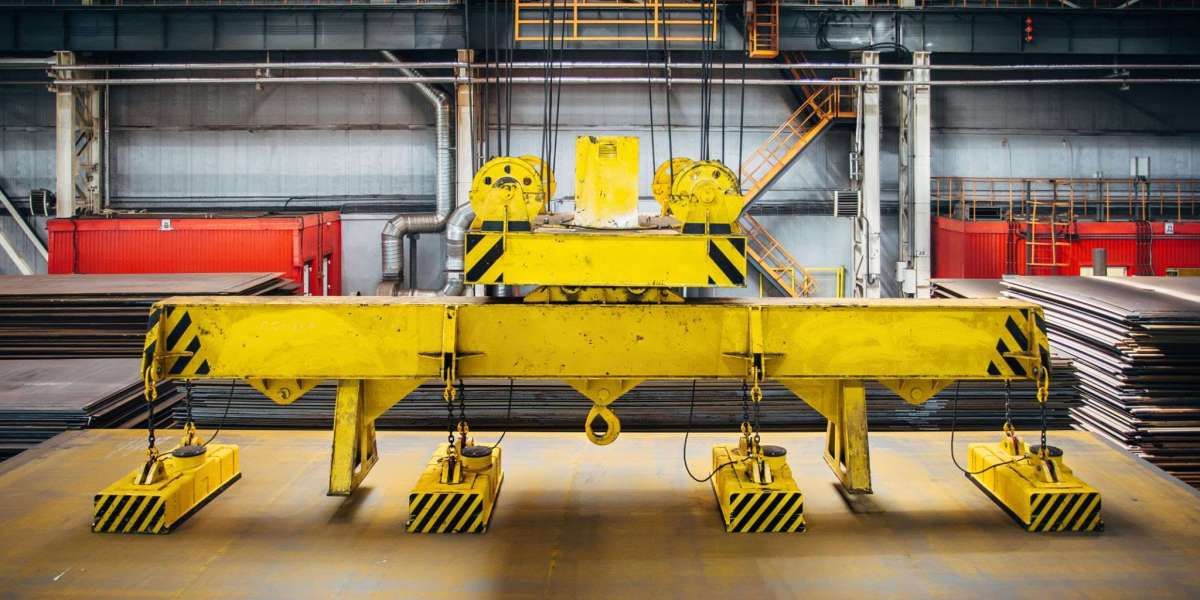

Warehouse automation is transforming supply chains across industries. As businesses strive to meet rising customer expectations, faster delivery timelines, and higher inventory accuracy, automated warehouses have become essential for maintaining operational efficiency. Technologies such as robotics, automated guided vehicles (AGVs), warehouse management systems (WMS), and smart conveyor networks are reshaping how goods move through distribution centers.
However, automation alone cannot solve every material handling challenge. Heavy machinery, oversized pallets, industrial equipment, steel components, and irregularly shaped loads often require specialized lifting solutions that standard warehouse equipment cannot safely manage. This is where specialized below-the-hook lifting devices play a vital role.
From improving worker safety to increasing throughput and reducing product damage, specialized lifting devices have become indispensable in modern automated warehouses.
The Rise of Warehouse Automation
Automation has rapidly expanded beyond large e-commerce companies. Manufacturers, logistics providers, distributors, and industrial suppliers now rely on automated warehouses to improve productivity and reduce operating costs.
Modern automated warehouses commonly include:
Automated Storage and Retrieval Systems (AS/RS)
Autonomous Mobile Robots (AMRs)
Automated Guided Vehicles (AGVs)
Robotic palletizers
Conveyor systems
Smart inventory tracking
AI-powered warehouse management software
Despite these innovations, many facilities still require lifting equipment capable of safely handling heavy or uniquely shaped products.
What Are Specialized Lifting Devices?
Specialized lifting devices are engineered attachments used with cranes, hoists, and overhead lifting systems to safely move materials that cannot be handled by conventional hooks or forklifts.
Examples include:
Spreader beams
Lifting beams
Vacuum lifters
Magnetic lifters
Coil lifters
Plate clamps
Drum lifters
C-hooks
Mechanical grabs
Custom below-the-hook lifting devices
Each device is designed to provide maximum load stability while minimizing risk during lifting operations.
Why Automated Warehouses Need Specialized Lifting Devices
Warehouse automation increases productivity, but heavy material handling remains a critical challenge. Specialized lifting devices complement automation by ensuring safe and efficient movement of industrial loads.
1. Improved Workplace Safety
Heavy materials pose significant risks if lifted incorrectly. Specialized lifting devices provide secure load engagement, reducing the likelihood of dropped loads, shifting cargo, and worker injuries.
Benefits include:
Reduced manual handling
Lower injury rates
Improved ergonomics
Better operator visibility
Enhanced load stability
2. Faster Material Movement
Automated warehouses rely on continuous workflows. Delays in handling oversized components can disrupt the entire operation.
Specialized lifting devices help:
Reduce loading time
Increase throughput
Minimize bottlenecks
Improve warehouse efficiency
This enables facilities to process more inventory with fewer interruptions.
3. Better Protection for High-Value Products
Many warehouses store expensive industrial components such as:
Electric vehicle batteries
Industrial machinery
Precision equipment
Steel fabrications
Engineered lifting devices distribute weight evenly, reducing product damage during transportation.
4. Support for Heavy and Irregular Loads
Forklifts cannot safely handle every type of product.
Specialized lifting equipment is ideal for:
Steel coils
Large pipes
Heavy machinery
Construction materials
Industrial molds
Fabricated metal structures
Custom lifting fixtures ensure these products remain stable throughout the lifting process.
5. Integration with Smart Warehouse Systems
Industry 4.0 technologies increasingly connect lifting equipment with warehouse management systems.
Modern lifting solutions may include:
IoT sensors
Load monitoring
RFID tracking
Wireless diagnostics
Predictive maintenance
Digital inspection records
These technologies improve visibility while reducing unexpected equipment failures.
Industries Benefiting from Automated Warehouse Lifting Solutions
Specialized lifting devices support automated warehouses across numerous sectors.
Manufacturing
Factories use lifting devices to transport heavy production components between workstations.
Aerospace
Aircraft parts require precision lifting to prevent structural damage.
Automotive
Battery packs, engines, and chassis components are safely handled using custom lifting equipment.
Steel Processing
Steel mills rely on lifting beams, clamps, and coil lifters to transport large materials.
Renewable Energy
Wind turbine components and generators require engineered lifting solutions during storage and distribution.
Choosing the Right Specialized Lifting Device
Several factors influence equipment selection:
Load capacity
Product dimensions
Center of gravity
Lifting frequency
Environmental conditions
Crane compatibility
Industry regulations
Selecting the appropriate lifting solution ensures both operational efficiency and workplace safety.
Organizations looking for dependable below-the-hook lifting devices can explore a wide range of industrial material handling products through Internet of Industrials.
Related Industry Reports
Including market research enhances credibility and aligns with EEAT best practices.
1. Warehouse Automation Market
Industry reports forecast strong global growth driven by e-commerce expansion, AI, robotics, and supply chain modernization.
Key Insight: Automated warehouses increasingly require specialized material handling equipment to support heavy-load operations.
2. Material Handling Equipment Market
Demand for cranes, hoists, lifting devices, and automated handling systems continues to rise across manufacturing and logistics.
Key Insight: Safety-focused lifting solutions are becoming essential investments for warehouse modernization.
3. Smart Manufacturing Market
Digital factories continue integrating robotics, IIoT, and automated material handling systems.
Key Insight: Connected lifting equipment supports seamless movement of heavy materials in automated facilities.
4. Industrial Robotics Market
Industrial robotics adoption continues expanding worldwide.
Key Insight: Robotic production lines require complementary lifting systems for oversized or high-value components.
5. Global Logistics Market
Supply chain modernization continues driving investments in warehouse automation and advanced material handling technologies.
Key Insight: Specialized lifting devices help improve warehouse productivity while reducing workplace risks.
Frequently Asked Questions
What are specialized lifting devices?
Specialized lifting devices are engineered attachments used with cranes and hoists to safely lift, position, and transport heavy or irregularly shaped materials.
Why are they important in automated warehouses?
They improve safety, reduce manual handling, prevent product damage, and increase operational efficiency when handling loads that conventional equipment cannot manage.
Which industries use specialized lifting devices?
Manufacturing, aerospace, automotive, logistics, steel processing, renewable energy, construction, and heavy industrial sectors.
Can specialized lifting devices integrate with smart warehouses?
Yes. Many modern systems include IoT sensors, digital monitoring, RFID tracking, and predictive maintenance capabilities.
Where can businesses source below-the-hook lifting devices?
Industrial sourcing platforms such as Internet of Industrials provide access to a broad range of below-the-hook lifting devices designed for automated warehouses and industrial material handling.
Final Thoughts
As warehouse automation continues to evolve, specialized below-the-hook lifting devices remain essential for safely handling heavy, oversized, and high-value materials. These engineered solutions complement robotics and automated systems by improving worker safety, reducing product damage, minimizing downtime, and enhancing overall operational efficiency.
Businesses investing in modern material handling equipment are better positioned to build safer, more productive, and future-ready warehouse operations. Reliable sourcing partners like Internet of Industrials help organizations find the right below-the-hook lifting devices to support today's increasingly automated supply chains.