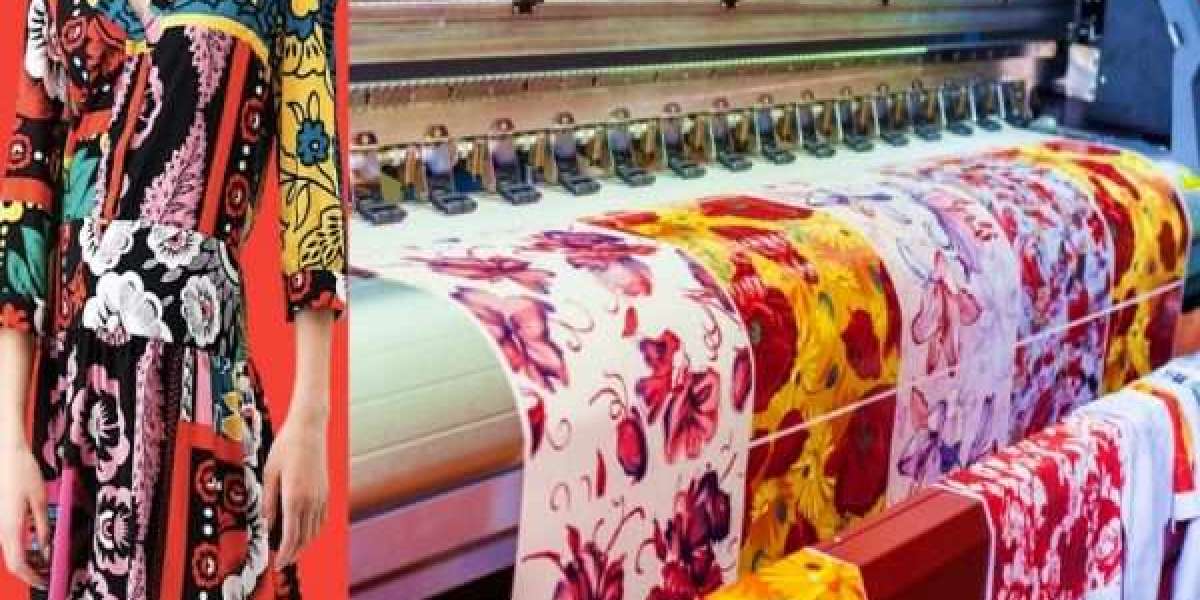

Digital printing on fabric is a textile decoration process that uses digital files and specialized inkjet equipment to place ink directly onto textile materials. Instead of creating physical screens or engraved rollers for each design, the printer receives artwork from a computer and deposits precise ink droplets onto the fabric. This allows manufacturers to reproduce detailed patterns, photographs, gradients, logos, and customized artwork with considerable flexibility.
The growing use of digital printing on fabric has changed how textile businesses develop and manufacture printed materials. Fashion brands can produce samples and limited collections without committing to large quantities. Interior companies can create customized curtains and decorative fabrics, while businesses can produce personalized flags, banners, and promotional textiles. The final quality, however, depends on more than printer resolution. Fabric composition, ink type, pretreatment, color management, fixation, and finishing all influence the result.
What Is Digital Printing on Fabric?
Digital textile printing is similar in principle to an inkjet printer used for paper, but textile printers are designed to handle fabric and specialized textile inks. The digital artwork is converted into printing instructions, and printheads place controlled droplets of ink in precise positions.
The ink technology must match the textile. Cotton, polyester, silk, wool, viscose, nylon, and blended fabrics have different chemical and physical properties. A printing system that works well on polyester may not be suitable for cotton.
Unlike many conventional printing techniques, digital printing can reproduce complex artwork without requiring a separate physical screen for every color. This is one reason the process is particularly useful for detailed and customized designs.
How Digital Fabric Printing Works
1. Creating the Digital Design
The process starts with artwork created in graphic design software. The design may be a repeating pattern, photograph, illustration, logo, or combination of different elements.
Image resolution is important. A low-resolution image can appear blurry or pixelated when enlarged. Designers should also consider the final dimensions of the fabric and whether the artwork needs to repeat across the material.
2. Selecting the Fabric
The fabric must be compatible with the selected printing technology. Its fiber content, weave, weight, surface texture, and intended application all matter.
For example, polyester is commonly associated with sublimation printing, while cotton is frequently printed with reactive or pigment systems.
3. Pretreating the Textile
Some digital printing processes require pretreatment before ink is applied. Pretreatment controls how ink interacts with the fabric and can improve color development and print definition.
Poor or uneven pretreatment can result in inconsistent color, bleeding, or weak print quality.
4. Applying the Ink
The prepared fabric is placed into the digital textile printer. Printheads move across the material while depositing microscopic droplets according to the digital artwork.
Printer speed, ink volume, fabric movement, and drying conditions need to be controlled carefully. Incorrect settings may create banding, uneven coverage, bleeding, or color differences.
5. Fixing the Print
The printed fabric may need steaming, heat curing, or another fixation method depending on the ink technology. Fixation helps the color become durable and suitable for its intended use.
Some processes also require washing after fixation to remove unfixed dyes and processing chemicals.
6. Finishing
The final fabric may be dried, softened, pressed, coated, or otherwise finished depending on its application. Finishing can influence appearance, texture, dimensional stability, and performance.
Main Types of Digital Fabric Printing
Reactive Printing
Reactive digital printing is commonly used for cotton, linen, viscose, and other cellulose-based fabrics. The dye chemically reacts with suitable fibers during fixation.
It can produce strong colors, sharp details, and good washing durability when the fabric is correctly pretreated and processed. It is widely suited to apparel and home textile applications.
Pigment Printing
Pigment printing uses colored particles combined with a binder that holds them to the fabric. It can be used on several textile types and can simplify the overall processing requirements.
Its performance depends on the quality of the ink, binder, curing conditions, and fabric. Properly processed pigment prints can provide useful durability while maintaining an appropriate appearance and hand feel.
Acid Printing
Acid inks are generally used with fibers such as silk, wool, and some polyamide fabrics. They are capable of producing vivid colors and detailed images.
The printed fabric commonly requires steaming and washing to achieve proper fixation and remove excess materials.
Dye Sublimation
Dye sublimation is mainly used with polyester. Heat converts the dye into a gas, allowing it to penetrate the polyester fibers.
Because the color becomes integrated into the fiber, sublimation can produce a soft print with good resistance to cracking and peeling. It is widely used for sportswear, flags, banners, displays, and other polyester products.
Key Benefits of Digital Printing on Fabric
Detailed Designs
Digital printers can reproduce fine lines, small graphics, photographic images, and gradual color transitions. This gives designers more freedom when creating complex patterns.
A design containing hundreds of colors does not necessarily require hundreds of physical screens, which makes intricate artwork more practical.
Customization
Digital printing makes personalized textile production easier. Designs can be changed directly in the digital file without preparing a new physical screen.
For example, a clothing manufacturer could produce several color variations of one pattern within a single production workflow.
Short Production Runs
Digital printing is particularly useful for small quantities. Traditional processes can involve setup expenses that become significant when only a small amount of fabric is required.
This makes digital technology useful for prototypes, samples, limited collections, personalized products, and test marketing.
Faster Design Development
A designer can modify a digital file and produce another sample without creating new screens or rollers. This shortens the time between design development and physical testing.
Reduced Inventory Risk
On-demand production can help businesses avoid printing excessive quantities before knowing whether a design will sell. This does not eliminate textile waste, but it can support more controlled production planning.
Practical Considerations Before Printing
Match the Ink to the Fiber
The fiber composition should be checked before selecting the printing system. Using an unsuitable ink can result in poor color development, weak adhesion, or unsatisfactory durability.
Test Color Accuracy
Monitor colors are produced using light, while printed fabrics are viewed through reflected light. As a result, a color that looks correct on screen may appear different on fabric.
Color profiles, calibrated equipment, and physical strike-offs can help improve consistency.
Test Washing and Rubbing
For apparel and home textiles, the finished fabric should be tested according to its expected use. Washing, dry rubbing, wet rubbing, and light exposure may affect different prints in different ways.
Consider Fabric Texture
A smooth, tightly woven fabric can reproduce fine details differently from a loosely woven or textured material. Testing the actual production fabric is therefore more reliable than judging the design only on screen.
Common Challenges of Digital Textile Printing
Color Consistency
Maintaining the same shade across different production batches can be difficult. Changes in fabric lots, pretreatment, ink, humidity, temperature, or printer calibration may affect results.
Pretreatment Uniformity
Uneven pretreatment can produce visible differences across the fabric. Professional production requires controlled application and drying conditions.
Durability
Not every digital print has the same resistance to washing, abrasion, sunlight, or chemicals. The printing method should be selected according to the product's performance requirements.
Production Economics
Digital printing can be cost-effective for customized and shorter runs, but traditional printing may remain competitive for very large quantities of an unchanged design.
Printer Maintenance
Digital textile printers require regular maintenance. Dried ink, dust, and contamination can affect printheads and cause inconsistent results. Preventive maintenance is therefore an important part of production.
Applications of Digital Fabric Printing
Fashion and Apparel
Digital printing is used for dresses, shirts, scarves, sportswear, children's clothing, and fashion accessories. It allows designers to use photographic artwork, detailed illustrations, and unusual patterns.
Home Textiles
Curtains, cushions, bedding, table linens, and decorative fabrics can all benefit from digitally printed designs. Businesses can create collections around specific interior themes or customer requirements.
Sportswear
Polyester-based sportswear is well suited to sublimation printing. Team names, numbers, logos, graphics, and full-surface patterns can be incorporated into garments.
Promotional Materials
Flags, banners, backdrops, exhibition graphics, and promotional displays often use digital textile printing because designs can be customized quickly.
Frequently Asked Questions
1. What is digital printing on fabric?
Digital printing on fabric is a process in which specialized digital printers apply textile ink directly to fabric according to a digital design file.
2. Which fabrics can be digitally printed?
Many fabrics can be digitally printed, including cotton, polyester, silk, wool, viscose, nylon, and blends. The appropriate ink and process depend on the fiber composition.
3. Is digital printing suitable for cotton?
Yes. Cotton is commonly printed using reactive or pigment technologies. The choice depends on the required color intensity, durability, production method, and available equipment.
4. Is digitally printed fabric washable?
Many digitally printed fabrics can be washed successfully when the correct ink, fixation, and finishing process is used. Washing performance should be tested for the specific product.
5. Is digital printing better than screen printing?
It depends on the job. Digital printing is strong for detailed artwork, customization, samples, and shorter runs. Screen printing can be more economical for high-volume production of the same design.
Conclusion
Digital printing on fabric offers textile manufacturers and designers a flexible way to create detailed, customized, and commercially useful printed materials. Its direct-to-fabric approach reduces many traditional setup requirements and makes short runs, prototypes, and personalized designs more practical.
However, successful textile printing requires careful control of the complete process. Fabric selection, ink compatibility, pretreatment, artwork preparation, color management, fixation, finishing, and quality testing all contribute to the final result. When these factors are properly managed, digital textile printing can deliver sharp designs, consistent color, and suitable durability across a wide range of applications.