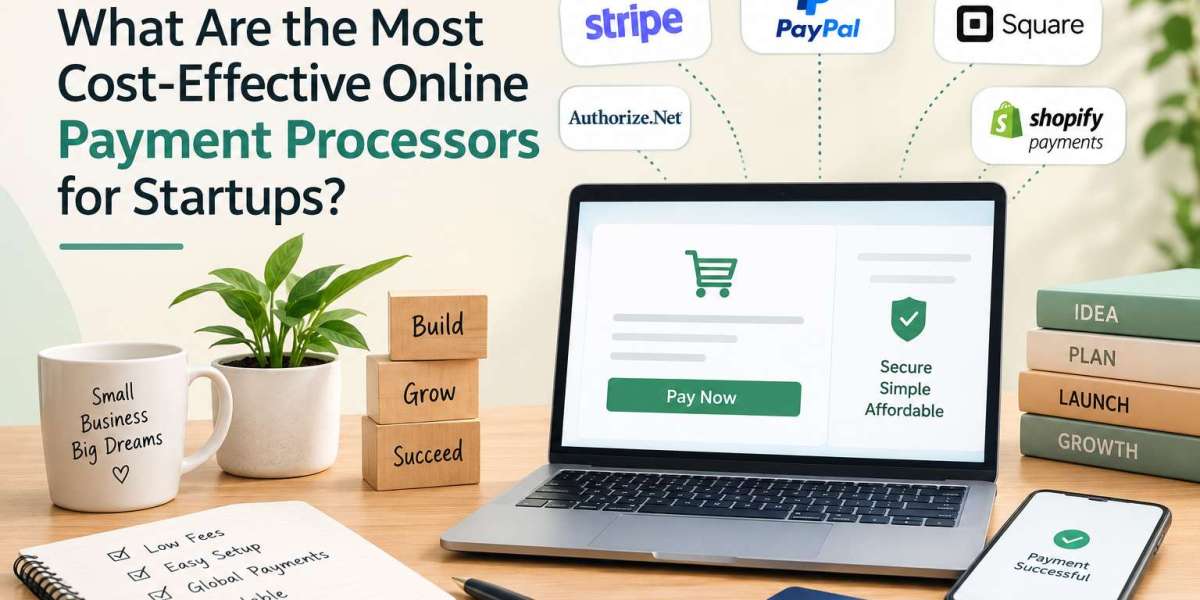

For startups, choosing an online payment processor is about more than finding the lowest advertised transaction fee. The actual cost can also depend on international payments, currency conversion, refunds, chargebacks, recurring billing, account requirements, and payment methods.
A PayPal processor can be a practical option for startups that want to accept payments from customers who already recognize PayPal. However, it is worth comparing the total cost and features with other payment processors before making a decision.
The most cost-effective option depends on your business model, average transaction size, customer location, monthly payment volume, and risk profile.
What makes a payment processor cost-effective?
The percentage charged per transaction is only one part of the overall cost.
Before choosing a processor, look at:
Transaction percentage and fixed fees
Domestic versus international transaction charges
Currency conversion fees
Refund and dispute-related costs
Chargeback fees
Monthly or account maintenance fees
Recurring-payment costs
Settlement timeframes
Payment-method support
Account restrictions and reserve requirements
For example, a processor with a low domestic card rate may not be the most economical choice for a startup receiving most of its revenue from international customers.
The better approach is to estimate your actual monthly processing costs using your expected transaction volume and customer locations.
Is PayPal a good option for startups?
A PayPal processor can be useful when a startup wants a familiar payment method and expects customers to use PayPal for online purchases.
PayPal provides business payment services for accepting online payments, and its pricing varies according to factors such as transaction type, market, currency, and payment method.
For startups receiving international payments, currency conversion and cross-border charges deserve particular attention. These additional costs can make a noticeable difference as payment volume increases.
PayPal may therefore be worth considering, but startups should avoid choosing it solely because it is widely recognized. Calculate the effective cost for your specific payment pattern.
When should you compare other payment processors?
Another processor may be worth considering if your startup needs specialized payment features, subscription billing, extensive payment-method support, or more control over the checkout experience.
Some providers offer tools for recurring payments, invoicing, fraud prevention, payment links, and developer integrations. These features can reduce operational work as a startup grows.
However, additional features do not automatically make a processor more affordable. Consider whether you will actually use them and whether their associated costs fit your business.
A useful comparison should answer three questions:
How much will the processor cost at your current payment volume?
What will happen to costs as transaction volume grows?
Does the processor support the countries, currencies, and payment methods your customers need?
What changes for high-risk startups?
Some businesses face additional payment-processing challenges because their industry, transaction patterns, or chargeback exposure may be considered higher risk.
For these businesses, a high risk payment gateway may be more appropriate than a standard payment solution.
High-risk processing can involve different underwriting requirements, pricing, reserves, transaction limits, or settlement arrangements. Consequently, looking only for the lowest processing percentage can be misleading.
When comparing the best high-risk processor, examine the complete pricing and account terms rather than focusing on one advertised rate.
Pay particular attention to:
Processing fees
Rolling reserves
Chargeback fees
Monthly minimums
Contract requirements
Early termination conditions
Settlement schedules
Transaction limits
Supported countries and currencies
Restricted business activities
The same principle applies when evaluating a best high risk merchant account. The account needs to accommodate the actual characteristics of the business, not simply offer an attractive headline rate.
How should startups compare payment processors?
Start by estimating four numbers:
Average transaction value
Number of monthly transactions
Percentage of international transactions
Expected monthly payment volume
Then calculate the likely total processing cost.
A startup making many small transactions may be affected more by fixed per-transaction charges. A business processing fewer, larger payments may focus more heavily on percentage-based fees.
International businesses should also calculate currency conversion and cross-border costs rather than treating them as minor details.
It is useful to perform the calculation at both your current volume and a realistic future volume. A processor that appears affordable during the early stages may have different economics once your sales increase significantly.
Don't ignore account stability
Payment processing is a critical part of a startup's operations. A slightly lower fee may not be helpful if payment settlements are unpredictable or the business encounters restrictions it did not anticipate.
Before signing up, review the processor's terms and understand what documentation may be required. Check which products and services are permitted, how disputes are handled, and whether reserves or transaction limits may apply.
For high-risk businesses, these considerations can be particularly important.
What is the most cost-effective choice?
There is no single payment processor that is cheapest for every startup.
A PayPal processor may suit businesses that value customer familiarity and need to accept online or international payments. Other processors may be more suitable when a startup needs specific integrations, recurring billing capabilities, payment methods, or pricing structures.
For businesses considered high risk, the calculation becomes broader. Processing fees, reserves, chargebacks, settlement terms, account requirements, and long-term account stability should all be considered.
The most practical approach is to compare the total cost of processing for your actual business model, rather than choosing a provider based on its advertised transaction rate alone.
Frequently Asked Questions
Is PayPal affordable for small startups?
It can be, depending on transaction volume, payment type, customer location, and applicable fees. Small startups should calculate their expected effective processing cost before choosing a provider.
Are high-risk payment processors more expensive?
They can have different pricing and account requirements because higher-risk businesses may present greater exposure to chargebacks or payment disputes. Compare the complete fee structure and contractual terms.
Should startups prioritize low transaction fees?
Not necessarily. Reliability, supported payment methods, settlement times, international capabilities, account requirements, and scalability can all affect the real cost of payment processing.
What should a startup check before opening a merchant account?
Review transaction fees, international charges, currency conversion, chargeback policies, reserves, settlement schedules, contract terms, transaction limits, and prohibited business categories.
A careful comparison can help a startup choose a payment setup that remains practical as its customer base and transaction volume grow.
Need Help Evaluating Your Payment Processing Options?
Choosing the right payment processor can be difficult when fees, international transactions, chargebacks, and high-risk requirements all need to be considered. For guidance on evaluating payment-processing options for your business, Trinity Consultings can help you understand the factors worth considering before making a decision.