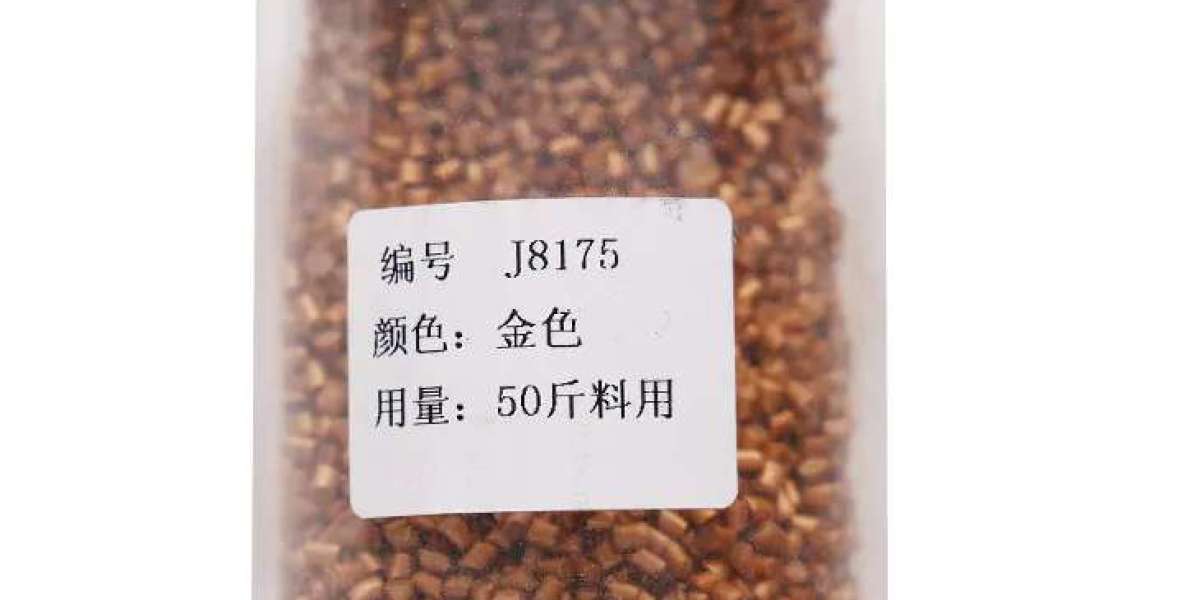

Designers, converters, and brand managers approach a Pearlescent Color Masterbatch with three questions in mind: Will the colour match the concept, will it survive the process, and will the cost fit the brief? Addressing these needs up front shortens development cycles and avoids late-stage surprises.
Colour matching begins with a physical sample. Most users submit a Pantone swatch or finished part; the masterbatch supplier returns a draw-down card on the chosen resin. Under D65 daylight and 3000 K retail lighting, the card should show ΔE under 0.5. If the target is a warm champagne on a PP lid, the supplier adjusts mica coating thickness rather than adding dyes, preserving the interference effect and preventing colour drift during UV exposure.
Processing compatibility is next. Injection moulders running thin-wall yoghurt cups need a concentrate with carrier MFI close to the base PP; this prevents tiger stripes. Extrusion coaters producing metallised film require platelets that survive 260 °C for 30 seconds without agglomeration. A quick torque rheometer test—shared in the technical datasheet—confirms the concentrate will feed smoothly through side-stuffers or loss-in-weight blenders.
Cost control is managed through pigment loading. A 2 % addition rate delivers a satin glow on translucent PET bottles, while 4 % creates a mirror finish on opaque ABS shells. Users balance loading against cycle time: higher loadings can slow cooling, so mould temperature is raised by 5–10 °C to maintain surface gloss. For seasonal promotions, converters order small lots (25 kg) in custom colours; for core SKUs, they lock in annual volumes at fixed pricing.
Shelf-life concerns focus on platelet settling. Suppliers ship the Pearlescent Color Masterbatch in moisture-barrier bags with desiccant; once opened, the bag should be resealed or used within 30 days. A simple storage tip—keep pallets away from direct sunlight—prevents premature oxidation of the carrier resin.
By aligning colour target, process window, and budget from the first meeting, users turn the Pearlescent Color Masterbatch into a reliable tool for shelf-ready shimmer.



Popular Posts










