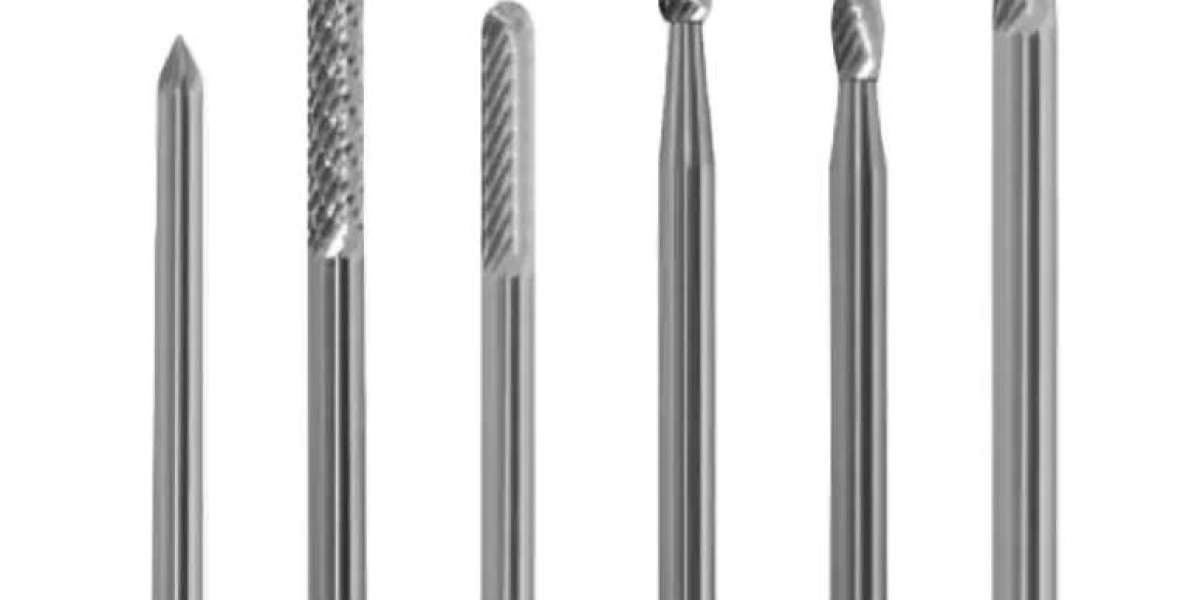

Solid Carbide Burs are renowned for their hardness, precision, and durability, making them a preferred choice for machining challenging materials such as stainless steel and titanium alloys. These metals are notoriously difficult to cut due to their high strength, work-hardening tendency, and poor thermal conductivity. The ability of the burs to maintain stable performance under these demanding conditions is critical for ensuring quality, efficiency, and tool longevity.
When cutting stainless steel, Solid Carbide Burs must handle the material’s toughness and tendency to work-harden. If cutting parameters are not optimized, excessive heat may build up at the interface, leading to premature wear, loss of cutting edge sharpness, or surface irregularities. By carefully selecting spindle speed, feed rate, and appropriate bur geometry, operators can achieve consistent material removal while minimizing stress on the tool. Burs with optimized flute designs help facilitate chip evacuation, reducing friction and heat generation, which directly contributes to operational stability.
Titanium alloys present a different challenge. While strong and lightweight, titanium has low thermal conductivity, which makes it prone to localized heating during cutting. Solid Carbide Burs are particularly effective in these conditions because of their high hardness and thermal resistance. Maintaining steady, moderate feed pressure and using adequate coolant are essential for preventing heat-induced tool degradation. The burs’ sharp edges and rigid structure allow them to cut precisely without deflection, maintaining stable performance even in complex shapes or tight tolerances.
The stability of these burs also depends on their coating and design. Coatings such as titanium nitride or diamond-like carbon reduce friction, enhance wear resistance, and extend tool life. Combined with the carbide’s inherent hardness, these coatings enable burs to withstand repeated use on stainless steel and titanium without significant degradation. Additionally, choosing the correct bur type—whether cylindrical, ball, or conical—for the specific cutting task ensures optimal contact angles and minimal vibration, further enhancing stability.
Automation and CNC control further support consistent performance. By precisely regulating spindle speed, feed rate, and coolant application, machine-controlled operations reduce variability that could arise from manual handling. This ensures that Solid Carbide Burs perform reliably over extended production runs, maintaining both dimensional accuracy and surface finish quality. In manual operations, skilled operators must adjust parameters dynamically to match the metal’s behavior, emphasizing the importance of technique alongside tool quality.
In conclusion, Solid Carbide Burs demonstrate stable and reliable performance when machining stainless steel and titanium alloys, provided that appropriate cutting parameters, cooling, and bur selection are observed. Their inherent hardness, thermal resistance, and design adaptability make them capable of handling the unique challenges posed by these materials, delivering consistent results and maintaining precision over prolonged use. Stability is achieved not only through the tool’s quality but also through careful application and controlled machining practices.