
The Rise of Mobile Crushing Solutions
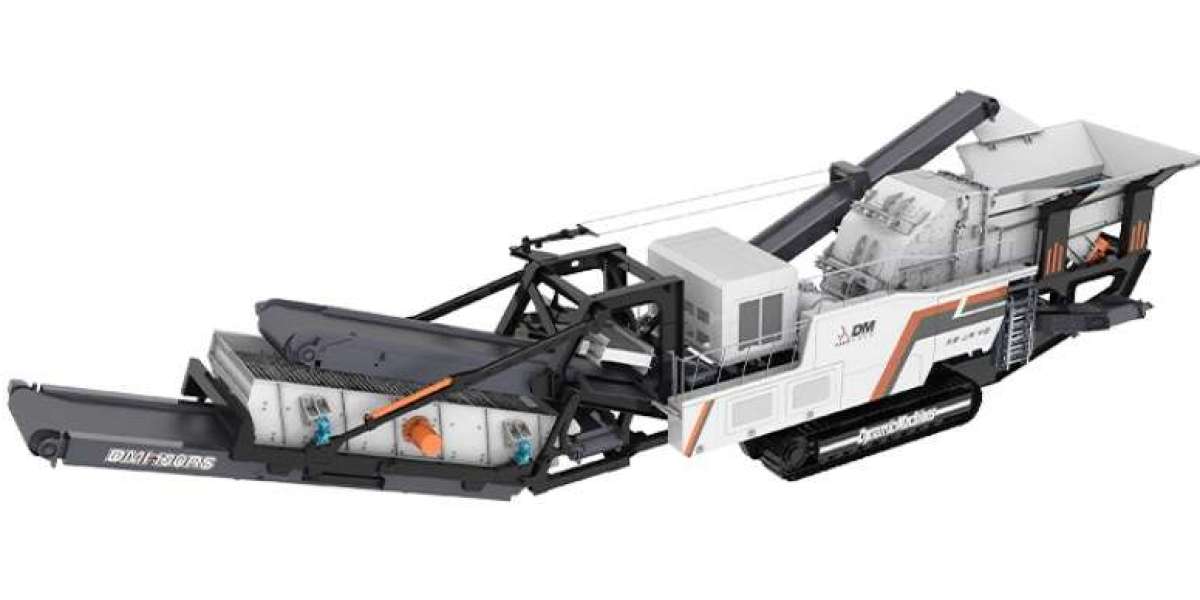
In modern quarrying and construction projects, flexibility and efficiency are increasingly important. Equipment supplied by a Mobile Crusher Factory is designed to meet these demands by integrating crushing, screening, and conveying functions into a single mobile platform. When compared with traditional stationary cone crushers or impact crushers, mobile crushers offer unique advantages, but they also come with certain limitations that must be carefully considered.
Mobility and On-Site Flexibility
The most significant advantage of mobile crushers is their ability to move directly to the job site. Unlike cone or impact crushers that usually require fixed installations and extensive civil works, mobile units can be transported and deployed quickly. This mobility reduces material hauling distances and allows crushing operations to follow the working face. As a result, overall project timelines can be shortened, and logistics costs significantly reduced.
Integration and Space Efficiency
Mobile crushers typically combine multiple functions in a compact layout. Feeding, crushing, and sometimes screening are integrated into one system, which minimizes the need for additional equipment. For projects with limited space or temporary operations, this compact design is highly beneficial. In contrast, stationary cone and impact crushers often require separate feeders, conveyors, and foundations, increasing both footprint and setup complexity.
Operational Convenience and Labor Savings
Automation and centralized control are commonly built into modern mobile crushing systems. Operators can adjust settings, monitor performance, and respond to faults from a single control panel. This level of integration reduces labor requirements and simplifies daily operation. Traditional cone or impact crushers, while efficient, usually depend on a more complex plant layout and greater operator involvement to coordinate multiple machines.
Limitations in Capacity and Specialization
Despite their versatility, mobile crushers generally have lower maximum capacity compared to large stationary cone or impact crushers. For high-volume, long-term production in a single location, stationary equipment often delivers better throughput and lower cost per ton. Additionally, cone and impact crushers are more specialized in their crushing roles, offering finer control over particle shape and gradation for specific applications.
Maintenance and Operating Costs
Mobile crushers are exposed to vibration and frequent relocation, which can increase wear on chassis components and auxiliary systems. Maintenance may be more complex due to the compact arrangement of parts. Stationary cone and impact crushers, by comparison, benefit from stable foundations and easier access for servicing, which can reduce long-term maintenance challenges in fixed installations.
Choosing the Right Solution
When evaluating options from a Mobile Crusher Factory, the decision should be based on project duration, material type, production scale, and site conditions. Mobile crushers excel in short-term projects, recycling applications, and remote locations where flexibility is critical. Cone and impact crushers remain strong choices for large-scale, permanent operations requiring high output and specialized crushing performance.
Balanced Perspective on Advantages and Limits
Mobile crushers offer unmatched mobility, rapid setup, and operational convenience, making them ideal for dynamic and space-constrained projects. However, their limitations in capacity and long-term cost efficiency mean they are not a universal replacement for stationary cone or impact crushers. Understanding these strengths and constraints allows operators to select the most effective crushing solution for their specific needs.