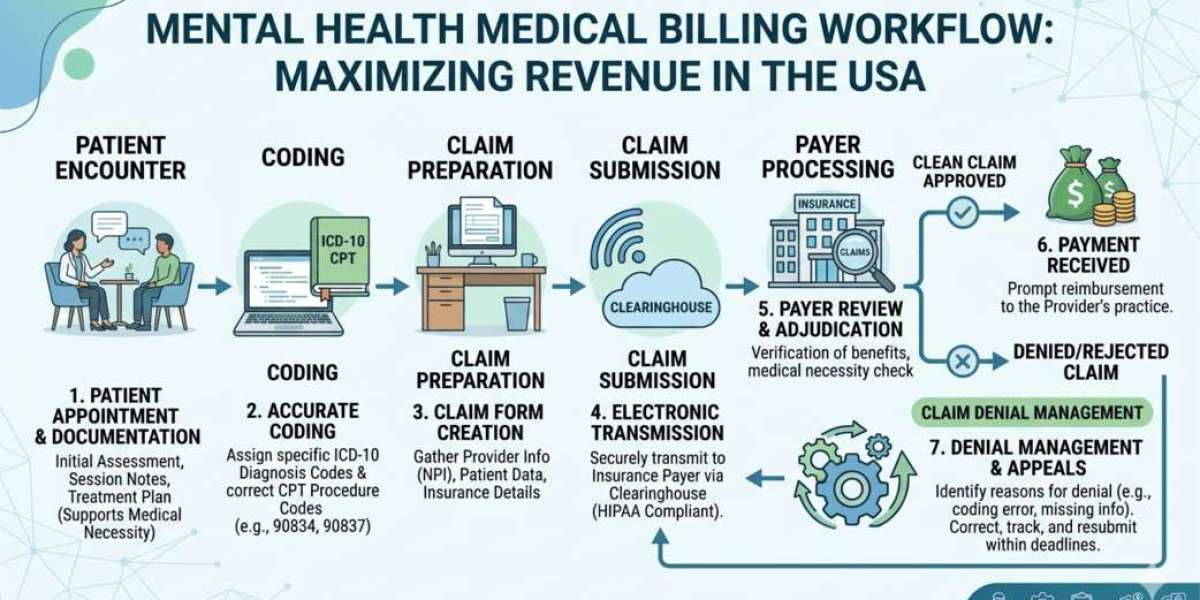

Mental health practices across the United States are growing rapidly, but with that growth comes a complex financial challenge—mental health billing. From payer rules to coding nuances and documentation requirements, even small mistakes can lead to denials, delayed reimbursements, and revenue loss. This guide breaks down everything providers need to know in a clear, practical way so you can improve collections while staying compliant.
Key Highlights You Should Know
- Accurate billing for mental health providers directly impacts cash flow and practice sustainability
- Proper coding and billing for mental health services reduces claim denials
- Outsourcing mental health billing can improve efficiency and reduce administrative burden
- Understanding payer-specific rules is critical for faster reimbursements
- Documentation plays a vital role in billing Medicare for mental health services
What Is Mental Health Billing and Why It Matters
Mental health billing refers to the process of submitting and managing claims for services like psychotherapy, psychiatric evaluations, medication management, and counseling. Unlike general medical billing, mental health medical billing involves unique coding systems, time-based CPT codes, and strict documentation requirements.
Providers offering billing for mental health therapists or clinics must ensure that each service is coded correctly, justified clinically, and aligned with payer guidelines. Even minor inconsistencies can trigger audits or denials.
In today’s competitive healthcare environment, efficient billing services for mental health clinics are not just operational support—they are a strategic necessity.
Understanding the Core Components of Mental Health Billing
1. Patient Eligibility and Benefits Verification
Before delivering care, verifying insurance coverage is essential. This step ensures that the patient’s plan includes billing for mental health services and clarifies co-pays, deductibles, and session limits.
2. Accurate Coding and Billing for Mental Health Services
Coding is the backbone of mental health billing. Providers use CPT codes such as:
- 90791 for psychiatric diagnostic evaluation
- 90834 for 45-minute psychotherapy
- 90837 for 60-minute psychotherapy
Accurate coding and billing for mental health services ensures that claims are processed without delays. Errors in time-based coding or mismatched diagnoses often result in rejections.
3. Documentation Requirements
Payers require detailed documentation to justify services. Notes should include:
- Medical necessity
- Treatment goals
- Session duration
- Progress updates
Strong documentation supports billing medicare for mental health services and protects providers during audits.
4. Claims Submission and Follow-Up
Submitting clean claims is only part of the process. Effective mental health billing services also include tracking claim status, handling denials, and ensuring timely reimbursements.
Common Challenges in Mental Health Medical Billing
Mental health providers often face unique challenges compared to other specialties.
Complex Coding Requirements
Billing mental health services involves time-based codes and therapy-specific modifiers, increasing the risk of errors.
Frequent Claim Denials
Incorrect documentation or coding issues often lead to denials. Without proper follow-up, this can significantly impact revenue.
Insurance Limitations
Some insurance plans restrict the number of therapy sessions or require pre-authorizations, complicating billing for mental health.
Administrative Burden
Managing billing internally can overwhelm staff, especially for small practices.
Benefits of Outsourcing Mental Health Billing
Many practices are turning to outsourcing mental health billing as a strategic solution. Instead of handling everything in-house, providers partner with experts who specialize in behavioral and mental health billing services.
Improved Accuracy and Compliance
Professional billing teams stay updated with coding changes and payer regulations, reducing errors in medical billing for mental health.
Faster Reimbursements
Efficient claim submission and follow-up lead to quicker payments and improved cash flow.
Reduced Administrative Workload
Outsourced billing for mental health allows providers to focus more on patient care rather than paperwork.
Cost-Effective Solution
Choosing a cheap outsource mental health billing company can be more affordable than maintaining an in-house team, especially for small practices.
How to Choose the Best Mental Health Billing Partner
Selecting the right partner for mental health billing solutions is critical for long-term success.
Experience in Behavioral Health
Look for companies specializing in behavioral and mental health billing services, as they understand therapy-specific requirements.
End-to-End Services
The best outsource mental health billing and coding services offer complete support, including coding, claims submission, denial management, and reporting.
Transparency and Reporting
Choose a provider that offers clear insights into your revenue cycle and claim performance.
Compliance and Security
Ensure the company follows HIPAA guidelines and maintains data security.
Mental Health Billing and Credentialing Services
Credentialing is often overlooked but plays a crucial role in billing success. Without proper credentialing, providers cannot bill insurance companies.
Mental health billing and credentialing services ensure that:
- Providers are enrolled with insurance networks
- Claims are processed without delays
- Reimbursement rates are optimized
Combining credentialing with billing services for mental health creates a seamless revenue cycle.
Medicare Billing for Mental Health Services
Billing Medicare for mental health services comes with specific guidelines.
Covered Services
Medicare covers:
- Individual and group therapy
- Psychiatric evaluations
- Medication management
Documentation Standards
Providers must clearly demonstrate medical necessity and maintain detailed records.
Compliance Requirements
Incorrect billing can lead to audits and penalties, making accuracy essential.
Understanding these rules is critical for providers offering billing for mental health providers who treat Medicare patients.
Best Practices to Improve Mental Health Billing Performance
Regular Staff Training
Keep your team updated on coding changes and payer rules.
Use Advanced Billing Software
Automation reduces errors and speeds up claim processing.
Monitor Key Metrics
Track denial rates, reimbursement timelines, and revenue trends.
Focus on Clean Claims
Submitting accurate claims the first time reduces rework and delays.
Consider Outsourcing
Outsourcing mental health billing ensures professional handling and consistent revenue growth.
Future Trends in Mental Health Billing
The mental health industry is evolving, and so is billing.
Telehealth Expansion
Virtual therapy sessions require updated billing practices and coding adjustments.
Value-Based Care Models
Providers are shifting from fee-for-service to outcome-based reimbursement models.
Automation and AI
Advanced tools are improving accuracy and efficiency in mental health billing services.
Why Professional Billing Services Matter More Than Ever
As regulations become stricter and payer requirements more complex, relying on expert billing services for mental health is no longer optional. Practices that invest in efficient systems and experienced professionals see better financial outcomes and fewer compliance risks.
Partnering with a reliable provider ensures that every aspect of mental health billing—from coding to collections—is handled with precision.
Toward the end of your revenue cycle strategy, integrating comprehensive support such as medical billing services, medical coding services, medical billing and coding services, revenue cycle management services, and credentialing services can significantly enhance operational efficiency and profitability. Companies like 247 Medical Billing Services provide a complete ecosystem designed to support mental health practices at every stage.
Conclusion
Mental health billing is a complex but essential part of running a successful practice. From accurate coding and documentation to efficient claims management, every step plays a role in financial stability.
Whether you manage billing internally or choose outsourced billing for mental health, the goal remains the same—maximize reimbursements while minimizing errors and administrative stress.
By adopting best practices, staying compliant, and leveraging expert support, mental health providers can focus on what truly matters: delivering quality care to patients.
FAQs
What is mental health billing?
Mental health billing is the process of submitting insurance claims and managing payments for therapy, counseling, and psychiatric services.
Why is billing for mental health services complex?
It involves time-based coding, strict documentation requirements, and varying insurance policies, making accuracy critical.
Should I outsource mental health billing?
Yes, outsourcing mental health billing can improve accuracy, reduce workload, and increase revenue efficiency.
What are mental health billing solutions?
These are services or systems designed to handle coding, claims submission, denial management, and reporting for mental health providers.
How does billing Medicare for mental health services work?
It requires proper documentation, correct CPT codes, and adherence to Medicare guidelines for covered services.
What should I look for in a billing partner?
Choose a provider with experience in behavioral and mental health billing services, transparent reporting, and end-to-end support.
Can small practices benefit from outsourced billing?
Yes, even small clinics can improve revenue and reduce administrative stress by using outsourced billing for mental health.