
Walk into any facility that assembles heavy equipment, and you will find flange bolts in abundance. They appear on pipe flanges, bracket connections, gearbox covers, and structural joints — and for good reason. These fasteners carry a deceptively simple concept into demanding real-world environments, delivering consistent clamping performance across a range of conditions that would challenge ordinary hardware.
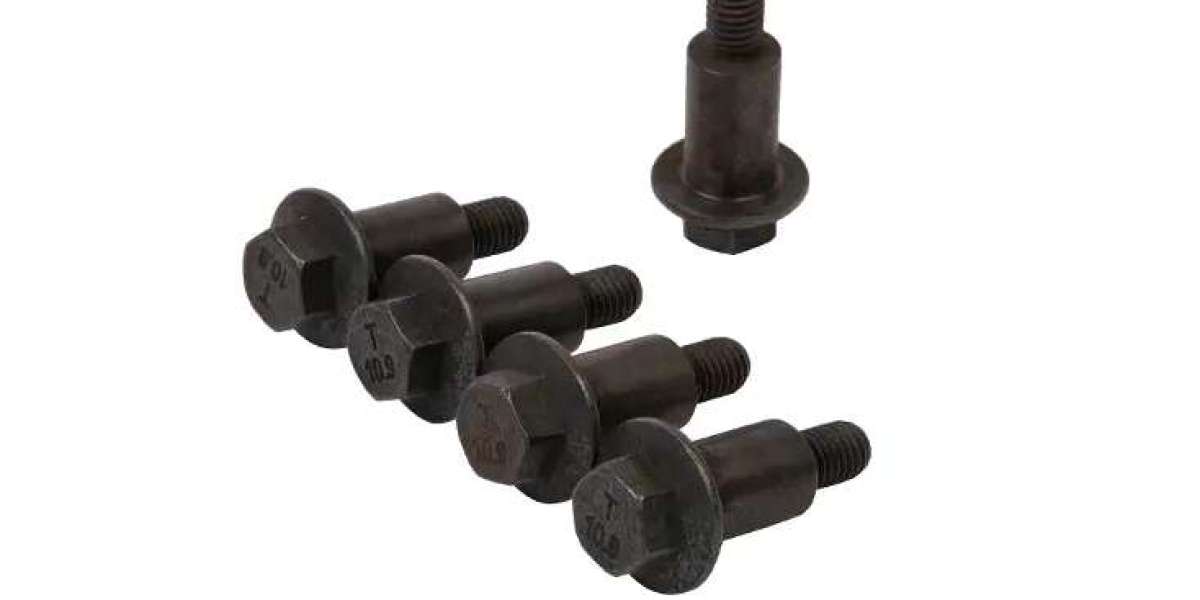
The defining feature of a flange bolt is its bearing surface: the wide, flat flange that extends outward from the bolt head. While this might look like a minor geometric detail, it changes the mechanics of the joint in meaningful ways. A standard hex bolt concentrates its clamping force beneath the comparatively narrow head. A flange bolt spreads that same force across the full diameter of the flange, reducing the contact pressure per unit area. This protects coated surfaces from indentation, prevents pull-through in thin sheet materials, and maintains gasket sealing integrity in flanged pipe connections.
Manufacturing flange bolts demands tight dimensional control. The flange must be concentric with the shank, the bearing face must be perpendicular to the thread axis, and the thread profile must meet the specified pitch and tolerance class. Cold forging is the dominant production method for high-volume flange bolts, producing consistent grain flow in the metal and achieving the mechanical properties required by ISO, DIN, or ASTM standards. After forging, heat treatment — typically quenching and tempering for high-strength grades — develops the tensile and proof load values listed in the specification.
Surface coatings serve two purposes: corrosion protection and, in some cases, friction control. Electroplated zinc is cost-effective and widely used for indoor or mildly humid environments. Hot-dip galvanizing provides heavier zinc coverage for outdoor structural applications where long-term exposure is expected. Mechanical zinc plating offers a hydrogen-embrittlement-free alternative for high-strength fasteners. When a specific coefficient of friction is critical for torque-tension relationships, wax-based or polymer coatings are applied to the thread and flange bearing surface, giving engineers predictable clamp load from a measured torque input.