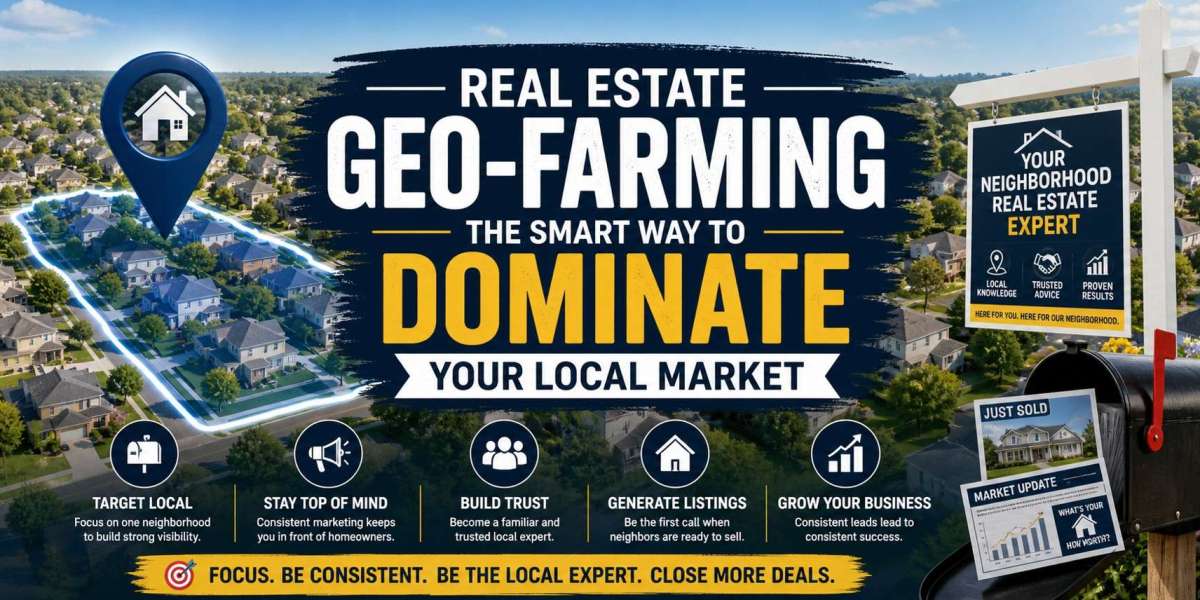

Real estate success often depends on one simple factor: visibility within a specific neighborhood. Agents who consistently appear in front of local homeowners usually become the first person people think of when they plan to sell. That is exactly where real estate geo-farming becomes valuable.
Real estate geo-farming is a marketing strategy that focuses on a specific geographic area. Instead of trying to reach everyone, agents concentrate on one neighborhood or community. As a result, they build familiarity, credibility, and trust with homeowners in that location.
Furthermore, this focused approach allows agents to become the local market expert. Over time, residents begin to recognize the agent's name, marketing materials, and market updates. Subsequently, when someone decides to buy or sell, that agent is often the first person they contact.
This guide explains how real estate geo-farming works, why it is effective, and how agents can apply it to build a strong presence in their chosen area.
What Is Real Estate Geo-Farming?
Real estate geo-farming refers to targeting a specific neighborhood or community with consistent marketing efforts. Instead of spreading advertising across an entire city, agents select a defined area and concentrate their outreach there.
Typically, the selected area includes between 500 and 2,000 homes. This size is large enough to generate leads yet small enough to manage effectively.
For example, an agent might choose a subdivision, a cluster of streets, or a condominium complex. After that, the agent sends postcards, shares market reports, hosts events, and engages with residents online.
As a result, the agent becomes familiar with the people living in that area. Over time, the repeated exposure builds recognition. Eventually, homeowners begin to view the agent as the neighborhood specialist.
Why Real Estate Geo-Farming Works So Well
Many marketing strategies try to reach a broad audience. However, real estate transactions usually happen locally. Buyers and sellers care most about neighborhood expertise.
Therefore, geo-farming works because it creates strong local visibility.
Builds Trust Through Familiarity
When residents repeatedly see the same agent’s name, they begin to trust that person. This recognition grows through mailers, online ads, community involvement, and signage.
Eventually, the agent becomes a familiar presence in the neighborhood.
Establishes Local Expertise
Homeowners want agents who understand their market. Geo-farming allows agents to focus deeply on one location. As a result, they learn property values, buyer demand, and local trends.
This knowledge strengthens the agent’s reputation as a reliable source of information.
Generates Consistent Listings
A neighborhood typically experiences turnover every year. Some homeowners relocate, while others upgrade or downsize.
By maintaining strong visibility, agents place themselves in the best position to capture those listings when they appear.
How to Choose the Right Area for Geo-Farming
Selecting the right neighborhood is one of the most important steps in real estate geo-farming. A poorly chosen area may produce limited results.
However, a well-selected farm area can produce leads for many years.
Look for Moderate Turnover
First, analyze the number of homes sold in the area during the past year. Ideally, the turnover rate should fall between 5% and 7%.
If turnover is too low, fewer opportunities exist. Conversely, extremely high turnover may indicate intense competition.
Study the Competition
Next, check if another agent already dominates the neighborhood. Mailers, signs, and online presence often reveal this information.
If competition appears overwhelming, selecting a nearby area may produce better results.
Evaluate Property Values
Higher property values usually generate larger commissions. Therefore, agents often focus on neighborhoods where listing prices align with their business goals.
Nevertheless, affordability also matters. Marketing costs should match potential earnings.
Effective Real Estate Geo-Farming Strategies
Successful geo-farming depends on consistent marketing across several channels. Agents who combine multiple approaches usually gain stronger results.
Direct Mail Campaigns
Direct mail remains one of the most common geo-farming methods.
Agents often send:
Market updates
Just sold postcards
Home value reports
Neighborhood newsletters
Because these mailers arrive regularly, homeowners continue seeing the agent’s name. Over time, that repetition builds recognition.
Local Social Media Advertising
Social media platforms allow agents to target very specific locations. As a result, ads reach homeowners living inside the chosen farm area.
Agents may promote neighborhood statistics, open houses, or home value offers.
Furthermore, consistent online visibility strengthens the overall geo-farming effort.
Community Involvement
Community engagement helps agents build genuine connections.
For example, agents may sponsor local events, support school activities, or participate in neighborhood gatherings.
Consequently, residents begin to associate the agent with positive local involvement.
Door Knocking and Personal Introductions
Face-to-face interaction still plays a valuable role in real estate marketing.
Agents often introduce themselves to homeowners, offer market insights, or share recent sales information. Although this method requires confidence, it can produce strong relationships.
Creating a Long-Term Geo-Farming Plan
Geo-farming is not a short-term tactic. Instead, it works best when agents maintain consistency for at least 12 to 18 months.
A structured plan improves results significantly.
Month 1–3: Establish Awareness
During the first stage, the goal is simple visibility.
Agents introduce themselves through postcards, social media ads, and neighborhood reports. At this point, recognition begins to grow.
Month 4–9: Build Familiarity
Next, agents continue sending mailers and sharing market insights.
Meanwhile, they participate in community events and strengthen local connections.
As a result, homeowners begin to recognize the agent’s name more frequently.
Month 10–18: Capture Listings
Finally, consistent visibility starts producing real results.
Homeowners preparing to sell often contact the agent they see most frequently. Therefore, the agent begins receiving listing opportunities from that neighborhood.
Common Mistakes in Real Estate Geo-Farming
Although geo-farming offers strong potential, many agents stop too early or apply inconsistent marketing.
Inconsistent Outreach
Sending one or two mailers rarely produces results. Instead, consistent communication is necessary for recognition.
Regular monthly contact keeps the agent visible.
Choosing an Area That Is Too Large
Some agents attempt to cover thousands of homes at once. However, this approach often becomes expensive and difficult to maintain.
A smaller, focused farm area usually performs better.
Ignoring Digital Marketing
Traditional mailers remain effective. However, combining them with online advertising significantly increases exposure.
Therefore, agents should maintain both offline and online presence.
Measuring Geo-Farming Success
Tracking results helps agents adjust their strategy.
Key performance indicators include:
Number of listing appointments
Direct inquiries from the neighborhood
Website visits from residents
Engagement on social media ads
When these numbers increase, it indicates growing recognition in the farm area.
Eventually, this recognition turns into listings and closed transactions.
Conclusion
Real estate geo-farming remains one of the most effective ways for agents to build a dominant presence in a local market. By focusing on a specific neighborhood, agents strengthen recognition, build credibility, and position themselves as trusted experts. Consistent marketing, community engagement, and long-term commitment allow this strategy to generate steady leads and listing opportunities year after year.
If you want consistent listings and stronger local visibility, start applying real estate geo-farming today. Focus on one neighborhood, build trust with homeowners, and grow your real estate business steadily.