
A Strategic Perspective on the Future of CNS Drug Development
Denis Katz, MD, MHA
Founder, Salience Clinical
Executive Summary
Neurology is undergoing a fundamental reclassification.
For decades, central nervous system disorders have been diagnosed and treated according to clinical syndromes observable collections of symptoms that often concealed multiple underlying biological processes. While this framework enabled progress, it also imposed significant limitations on therapeutic development.
Today, advances in molecular biology, biomarker science, neuroimaging, digital phenotyping, and computational analytics are revealing what many investigators have long suspected: conditions such as Alzheimer's disease, Parkinson's disease, major depressive disorder, and neurodegenerative syndromes are not singular diseases but biologically diverse populations grouped under common labels.
As a result, the future of CNS development will be defined less by diagnosis and more by biological identity.
The organizations that successfully transition from symptom-based development to biology-driven development will possess a significant competitive advantage in regulatory approval, clinical differentiation, and commercial value creation.
The challenge is no longer discovering novel mechanisms.
The challenge is identifying the right patients, measuring the right biology, and generating evidence that regulators, clinicians, and payers can act upon.
The Hidden Economics of Heterogeneity
One of the most expensive problems in drug development is often invisible.
Most CNS programs do not fail because the therapeutic mechanism is ineffective.
They fail because potentially effective therapies are evaluated within biologically heterogeneous populations where treatment effects become diluted beyond statistical detection.
Traditional diagnostic categories aggregate patients who may share symptoms while possessing fundamentally different disease drivers.
The consequences are profound:
- Increased placebo variability
- Reduced effect size
- Larger sample requirements
- Higher development costs
- Greater late-stage failure risk
In many cases, promising biological signals disappear not because they are absent, but because they are overwhelmed by population noise.
This reality has transformed patient selection from an operational consideration into a strategic imperative.
The central question is no longer:
"Does the drug work?"
The central question is:
"For whom does the drug work?"
Pillar One: Defining Disease Through Biology
The era of biological classification has arrived.
Modern CNS development increasingly relies on biomarkers capable of identifying disease mechanisms, progression trajectories, and treatment-responsive populations.
Fluid Biomarkers as Scalable Precision Tools
Recent advances in blood-based biomarkers have dramatically expanded the feasibility of precision medicine.
Markers such as p-tau217, neurofilament light chain (NfL), and GFAP now provide scalable approaches for disease detection, staging, and enrichment that were previously dependent upon invasive procedures or expensive imaging platforms.
For sponsors, this represents more than a scientific advancement.
It represents a fundamental shift in trial economics and operational efficiency.
Demonstrating Target Engagement
In contemporary development programs, demonstrating biological activity is rarely sufficient.
Sponsors must establish a clear chain of evidence linking:
- Target engagement
- Pharmacodynamic response
- Biological modification
- Clinical relevance
PET imaging, cerebrospinal fluid markers, and emerging molecular diagnostics increasingly serve as critical tools for establishing mechanistic credibility and supporting regulatory interactions.
The strongest development programs create evidence that explains not only whether a therapy works, but why it works.
Biomarkers as Regulatory Assets
A biomarker possesses value only when its intended purpose is clearly defined.
Whether used for patient enrichment, disease stratification, endpoint support, or companion diagnostics, regulatory expectations differ substantially.
Organizations frequently underestimate the validation burden associated with biomarker implementation, leading to delays, redesigns, and missed opportunities.
Successful programs integrate biomarker strategy early enough to influence development architecture rather than attempting to retrofit precision elements into studies designed around traditional syndromic populations.
Pillar Two: Reducing Noise and Amplifying Signal
CNS trials are often described as underpowered.
More accurately, they are frequently overwhelmed by variability.
The future of successful development lies not simply in increasing sample size but in improving signal quality.
Precision Enrollment
Advanced analytics now enable identification of patient populations with greater biological homogeneity and lower placebo susceptibility.
Combining clinical, molecular, genetic, and behavioral data allows sponsors to enrich trials for participants most likely to demonstrate measurable therapeutic response.
The result is improved statistical efficiency and reduced development risk.
Digital Phenotyping and Continuous Measurement
Traditional neurological assessments provide periodic snapshots.
Digital technologies provide continuous observation.
Wearable devices, passive behavioral monitoring, speech analytics, and digital biomarkers offer new opportunities to capture disease dynamics in real-world environments.
Instead of measuring symptoms every few weeks, sponsors can increasingly monitor functional trajectories across days, months, and years.
This shift transforms endpoint sensitivity and expands understanding of treatment impact.
Precision as an Economic Strategy
Precision medicine is often discussed as a scientific concept.
Its most immediate impact may be financial.
Reducing unnecessary enrollment, improving responder identification, and shortening development timelines can significantly decrease capital requirements while increasing the probability of success.
In an environment where late-stage failure remains one of the largest drivers of value destruction, precision is increasingly a capital-allocation strategy as much as a clinical strategy.
Pillar Three: Integrating Regulation and Market Access
Scientific innovation alone does not create successful products.
Many promising therapies encounter obstacles because development programs are designed sequentially rather than strategically.
Regulatory planning, diagnostic development, payer evidence generation, and commercialization considerations must evolve together.
Synchronizing Therapeutics and Diagnostics
Precision therapeutics frequently depend upon precision diagnostics.
When a therapeutic claim relies on biomarker identification, assay development cannot remain a secondary consideration.
Analytical validation, regulatory engagement, and diagnostic readiness must advance in parallel with clinical development.
Failure to synchronize these activities can jeopardize otherwise successful programs.
Building Evidence for Adoption
Regulatory approval represents only one milestone.
Clinical adoption depends upon evidence that physicians can apply and payers can justify.
Organizations that begin translating biological findings into treatment algorithms, health-economic narratives, and practical clinical tools during development create stronger foundations for long-term market success.
Why Specialized Expertise Matters
Precision neurology demands decisions that are increasingly interdisciplinary.
Biomarker strategy influences trial design.
Trial design influences regulatory pathways.
Regulatory pathways influence commercial positioning.
Commercial positioning influences evidence requirements.
Each decision affects every subsequent stage of development.
Large operational organizations provide scale.
Precision programs require strategic integration.
Success often depends less on execution volume and more on the quality of decisions made before execution begins.
The Neurology Landscape of 2030
The next decade will witness a transformation comparable to the shift from empirical medicine to molecular medicine.
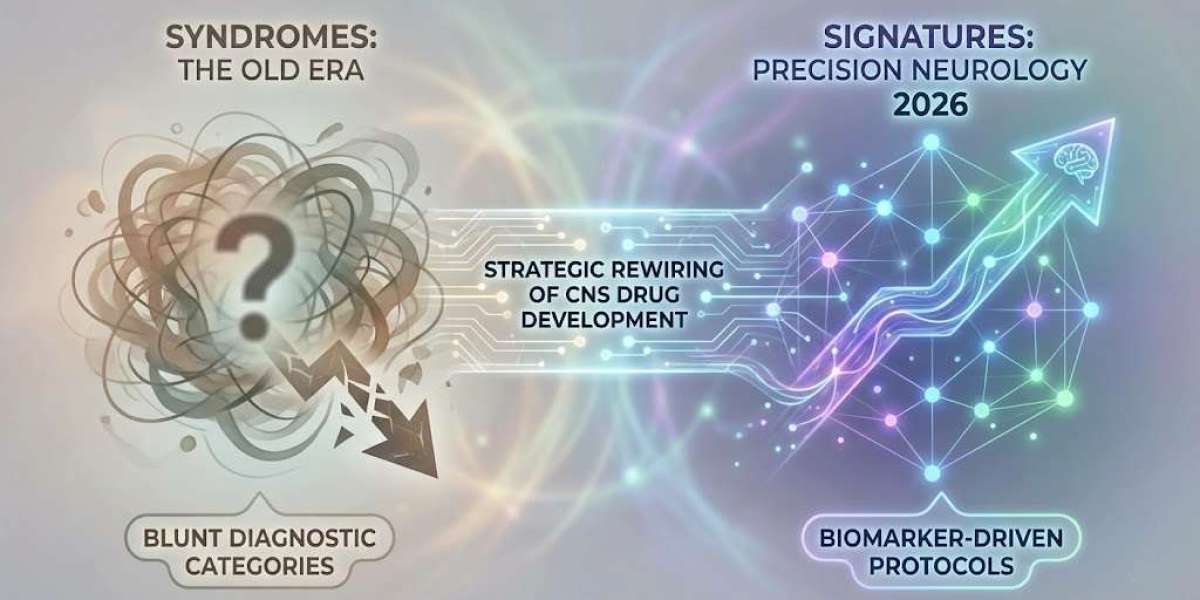
Neurologists will increasingly classify patients according to biological signatures rather than symptom clusters.
Clinical trials will be designed around disease mechanisms rather than diagnostic labels.
Digital biomarkers will complement traditional assessments.
Regulatory frameworks will increasingly support biologically defined populations.
The organizations that recognize this transition early will shape the future of CNS therapeutics.
Those that delay adaptation may find themselves attempting to solve twenty-first century problems with twentieth century development models.
The movement from syndromes to signatures is not a trend.
It is the emerging foundation of precision neurology.
About Salience Clinical
Salience Clinical partners with biotechnology and pharmaceutical organizations to design biologically informed development strategies across neuroscience and neurodegenerative disease programs.
Our focus is the integration of translational science, biomarker strategy, regulatory planning, and commercial positioning into development frameworks that improve decision quality and increase the probability of clinical and regulatory success.
Because in precision neurology, the greatest competitive advantage is not simply discovering new biology.