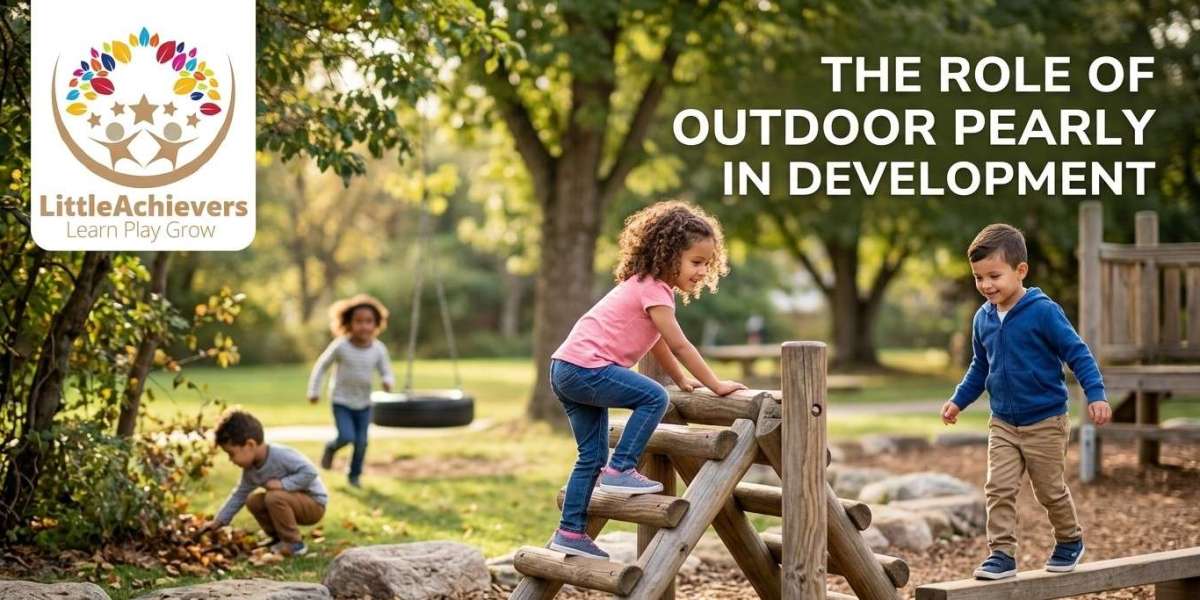

One of the most vital components of a young child’s life is outdoor play. It allows for exploration and discovery through which children learn many essential and practical things that contribute to their physical, social, emotional and cognitive development. In a world so saturated with technology, structured activities and screen time, it is more vital than ever for young children to play outdoors.
Recognising that the outdoor environment lends itself to a type of learning that is rarely seen or even possible indoors, many educators and parents now know that through play such as running, climbing, digging, creating and just plain observation, they are building the fundamental skills which will equip them with lifelong development.
Supporting Physical Development
Perhaps one of the most direct positive influences of playing outdoors relates to the physical health and development benefits. Open and outdoor environments invite children to use their bodies in a variety of ways, thus fostering strength, coordination, balance and motor skills.
Through running, jumping, climbing and riding bicycles, children gain a full-body workout, thus developing strong muscles and improving cardiovascular fitness. All of these activities promote the development of gross motor skills that contribute to basic life skills and eventual sport-specific participation.
Outdoor play also provides opportunities for physical challenge, risk assessment and risk-taking. By crossing uneven terrain, climbing obstacles or walking along fallen logs, children are provided opportunities to assess their abilities and to build confidence in them.
Encouraging Cognitive Growth
There are so many different learning and problem-solving opportunities available to children in the outdoors. Exploring outdoors tends to spark natural curiosity in the children and as a result, they ask many questions about the world around them as well as having many ideas that they would like to explore.
Basic outdoor activities like collecting different types of leaves, making sandcastles, investigating different kinds of insects, painting with nature-inspired media, etc. Stimulate thought and creativity. In different ways these activities allow for the development of skills such as observing, predicting, reasoning and decision-making.
High-quality play-based learning environments understand that exciting and relevant learning occurs through investigation and discovery. A well-designed play-based learning centre encourages children to investigate, experiment and learn through meaningful experiences.
Building Social Skills
When children play outdoors, they need to work with, talk to and team up with their peers. By playing a game together, building a cubby house, or working on a fantasy story the children learn social skills as they work together.
In these experiences children are sharing, taking turns, bargaining, negotiating and working through conflicts. They develop social skills such as seeing things from someone else’s perspective, understanding other people’s emotions and demonstrating empathy.
An outdoor setting has far more freedom than an indoor setting. Children are less restricted; they are more likely to get the chance to talk and collaborate with one another. These valuable interactions are often encouraged and supported within an early education centre, where children are given opportunities to engage in group learning experiences.
Supporting Emotional Wellbeing
A child’s emotional well-being is promoted by taking part in activities in nature. Children often feel more relaxed and better able to cope with their feelings and emotions in the natural world.
A child’s self-confidence and sense of self-efficacy grow with opportunities to explore, try things and develop self-control as they can take calculated risks during play (e.g., the challenge of climbing a structure, building in the sandpit and seeing their success when they build something great).
Children also build up their ability to cope with failure and adversity in their play. They are encouraged to learn from mistakes and persist when they cannot achieve what they desire straight away.
Good quality, experienced early education centre recognise that emotional development is just as important as learning other concepts and experiences in nature help build independence and confidence in children.
Fostering Creativity and Imagination
There are many types of play at home, which have a set way of happening. Outdoor play, though, often doesn’t need any rules or specific outcome. It can just be open-ended to let the child play as they see fit.
For instance, a twig may turn into a magic wand, the sword of a pirate, or the rod of a fisherman. A grassy area can turn into a jungle, a castle or a race track. These fantasies can increase the child’s vocabulary and storytelling ability, as well as foster their creativity.
The great number of natural objects available outside, such as leaves, stones, twigs and sand, provides a source of material that the child can turn into whatever they wish. This way of playing enables children to develop ideas and learn problem-solving skills.
Connecting Children with Nature
Outside, children learn to value the natural world around them. Outside activities enable children to gain an understanding of the seasons and the weather, plants and animals, and respect for the environment.
Often such experience leads to children becoming interested in nature and keen to learn how the world around us operates. Having outdoor experiences is more likely to give children respect for nature and a need to conserve it.
If you’re searching for an early learning centre Brunswick East, the opportunity to spend time in a stimulating outdoor learning environment will be relevant to your child’s learning journey.
Preparing Children for Lifelong Learning
There’s hardly an aspect of development that can’t be attributed to outdoor play. It positively influences physical health, relationships and social interactions, emotions, and intellectual development through exploration and discovery.
The most important fact is that it builds a love of learning for children. When children are given the opportunity to explore their passions, ask questions and play with the world around them, they learn about what’s important to them. They become more engaged and participatory in the learning process.
Quality early childhood programs understand that outdoor play isn’t an interruption of the learning day; it is an integral part of the day. When a play-based learning centre incorporates intentional outdoor experiences into the daily schedule of young children, it contributes to the development of the skills, confidence and curiosity that contribute to children’s success in all their endeavours.
As parents and educators provide experiences that continue to support the development of our children, continued attention on outdoor play will remain among the most beneficial investments we can provide. It nurtures children’s physical, emotional, social, and intellectual development while building connections to the world through exploration, movement, creativity and nature.