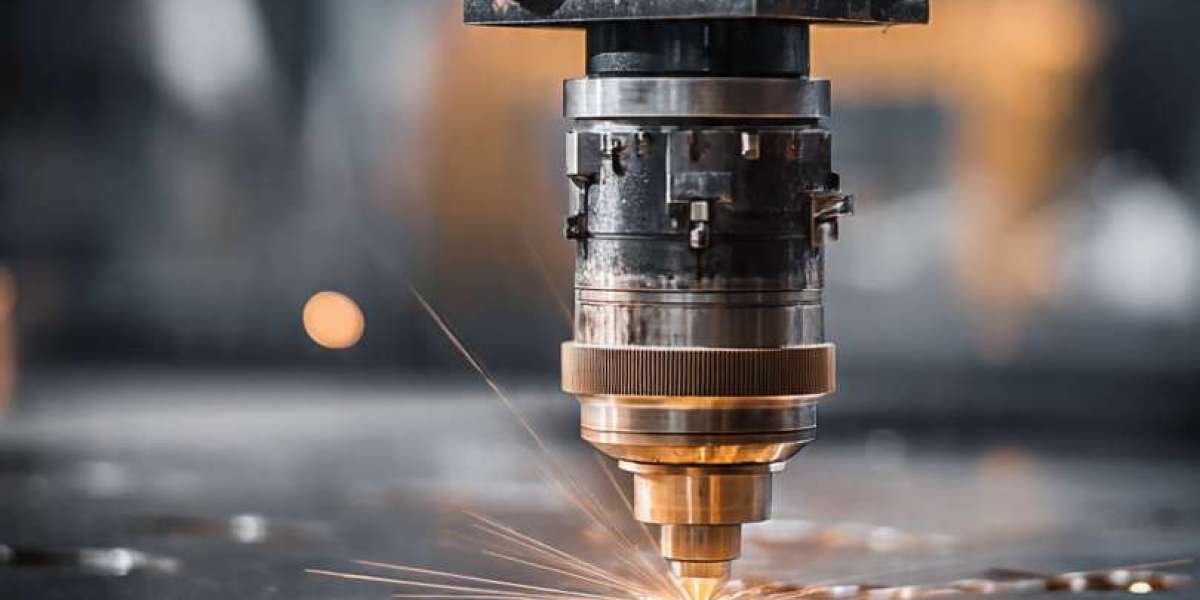

At some point in most engineering projects, someone asks whether you really need precision CNC machined parts, or whether something cheaper will do the job. It's a fair question. The honest answer is: it depends on what the part actually needs to do. For applications where fit, function, and long-term reliability matter, the answer tends to come down on the side of getting it right. This post looks at what CNC machining actually delivers, and where precision parts manufacturing makes the difference between components that perform and ones that merely pass inspection.
CNC Machining and Precision Parts Manufacturing: A Natural Partnership
Modern CNC machining has shifted what's achievable in precision parts manufacturing. Control systems that drive cutting tools with sub-micron resolution, combined with rigid machine structures and good tooling, mean that tolerances once reserved for specialist manual machines are now held routinely on production CNC centres.
Repeatability is where CNC really earns its place. A skilled machinist can hit a tight tolerance on a one-off component. Holding that same tolerance across 50 or 500 identical parts is a different challenge, and it's where CNC process control comes into its own. Tool life monitoring, statistical process control, and automatic compensation for thermal growth all contribute to consistent output that manual methods can't replicate at scale.
Understanding Tolerances: The Language of Precision
When engineers specify precision CNC machined parts, the tolerances on the drawing are the primary instruction. But what those numbers mean in practice is worth understanding properly. A tolerance of +/-0.05mm sounds tight to some people and loose to others. Context is everything.
A bearing bore needing an interference fit on a shaft might need +/-0.01mm or better. A flanged face seating against a gasket might be fine at +/-0.1mm. Good drawing practice applies the right tolerance to each feature based on what it needs to do. Blanket tight tolerances add cost without necessarily adding function.
Geometric tolerances (GD&T — Geometric Dimensioning and Tolerancing) add another layer beyond simple dimensional limits. Specifying that a bore must be round within 0.005mm, or that a face must be perpendicular to a datum within 0.01mm, are the kinds of controls that a capable CNC machining operation needs to both understand and achieve reliably.
Materials and Machinability in Precision Work
Not every material behaves the same way under a cutting tool, and this is where process knowledge matters. Mild steel is forgiving. Stainless steel work-hardens quickly and requires specific cutting parameters to avoid inducing residual stress or producing a poor surface finish. Titanium tends to weld to cutting tools if coolant management and feeds aren't right. Inconel is notoriously slow to machine and hard on tooling.
A precision machining operation that works regularly with demanding materials builds up process knowledge over time: the right speeds and feeds, the tooling choices, the fixturing approaches that keep parts stable. That knowledge doesn't show up in a quotation. It shows up in the quality of the finished part, and in whether a batch of 50 components all come out the same.
Surface Finish: The Detail That Gets Overlooked
Surface finish is specified less carefully than dimensions in a lot of drawings, and it causes more problems than it should. For sealing surfaces, bearing journals, and hydraulic bores, surface roughness directly affects how well the part functions. An Ra value (arithmetic mean roughness) in micrometres is the standard way to specify it: Ra 0.8 is a good machined finish; Ra 0.4 or better is often needed for lapped sealing faces.
Getting a consistent surface finish across a batch of precision CNC-machined parts requires attention to tooling condition, cutting parameters, and how the workpiece is held. A worn tool or a part that flexes in the fixture will produce a worse finish even when dimensions are within tolerance. That's the difference between parts that pass inspection and parts that perform well in service.
Conclusion
Precision CNC-machined parts cost more to produce than rough-tolerance components. That's true and worth acknowledging. But the cost of a part failing in service the downtime, the safety exposure, the damage to a customer relationship almost always exceeds the premium paid for getting it right the first time. In critical applications, that's not a difficult calculation to make. If you're looking at options for precision CNC machined parts for your next project, the harder part is usually finding a manufacturer who genuinely understands what precision means in practice, rather than one who just says so.
FAQs
Q: What's the tightest tolerance achievable on a standard CNC machining centre?
On modern, well-maintained CNC machines with good temperature control, tolerances of +/-0.005mm are routinely achievable on bores and turned diameters. Tighter than this typically requires grinding or other finishing operations on top of machining.
Q: How does batch size affect precision CNC machining costs?
Setup and programming costs are largely fixed regardless of quantity, so the unit cost falls significantly as quantities increase. Small batches of complex parts carry the highest per-unit cost; larger runs spread those fixed costs across more pieces.
Q: Can CNC machined parts be made from plastics as well as metals?
Yes. Engineering plastics like PEEK, Delrin, nylon, and PTFE are all commonly machined to precise tolerances. Each has specific machining characteristics that a capable shop will account for in their process.
Q: How should I specify surface finish on a precision machined part drawing?
Use Ra values in micrometres. Common references: Ra 3.2 is standard machined; Ra 1.6 is fine machined; Ra 0.8 is typical for ground or fine-turned surfaces; Ra 0.4 and below for lapped or honed finishes. Apply the tighter callouts only where the function genuinely requires them.