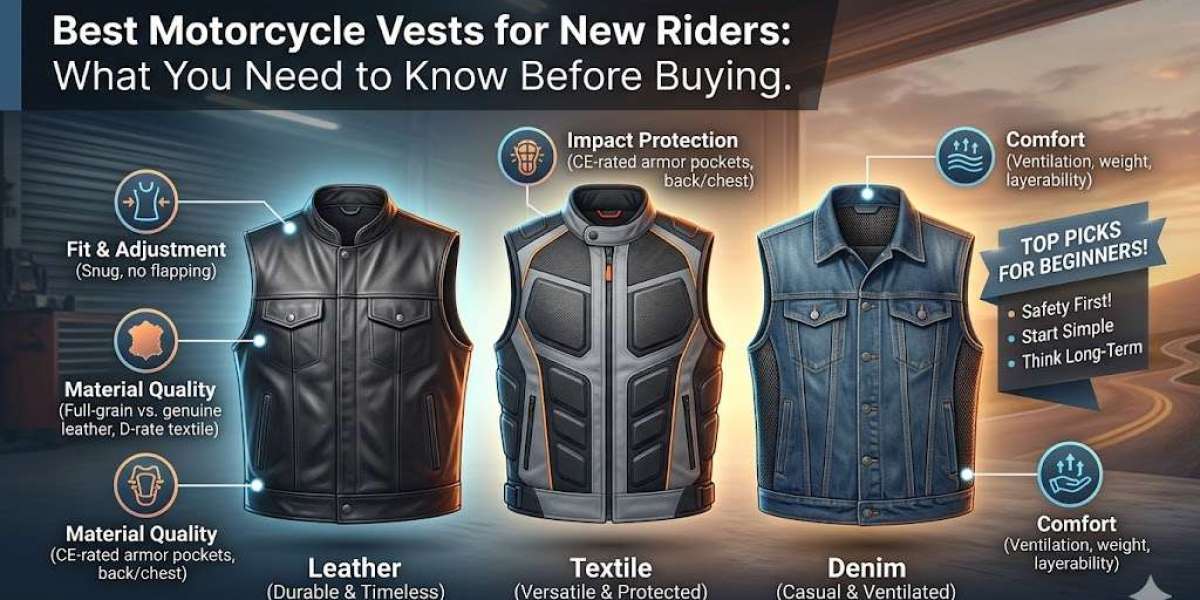

You've got your bike and your helmet. Now you're looking at motorcycle vests for men or women and wondering: Do I actually need one? What should I look for? And how much should I spend?
Vests are one of the most popular pieces of motorcycle gear, versatile, affordable, and functional. But walking into a store or browsing online as a new rider can be overwhelming. Leather, textile, mesh, prices from $50 to $500, where do you even start?
Here's what new riders actually need to know before buying their first vest, without the marketing fluff or assumptions you already understand biker culture.
Why Riders Wear Vests
Before you buy, understand what vests actually do.
Wind protection: Vests block wind across your core, keeping you warmer without restricting arm movement. This matters more than you think at highway speeds.
Extra layer without bulk: Adding warmth without the weight of a full jacket. Easy to throw on or take off as temperatures change.
Storage: Multiple pockets for phone, wallet, keys, and essentials. Keeps your jacket pockets free or gives you storage when riding in just a shirt.
Style and identity: Vests are part of motorcycle culture. They're a canvas for patches, club colors, or just a classic biker look.
Affordability: Quality vests cost less than jackets while still offering some protection and functionality.
Vests don't replace jackets for serious protection, but they add value in ways new riders don't always expect.
Types of Vests New Riders Should Know
Not all vests serve the same purpose. Here's what's out there.
Leather Vests
The classic choice. Men's leather motorcycle vests and highway ready women's leather biker vests are durable, wind-resistant, and develop character over time.
Pros: Long-lasting, blocks wind well, timeless style, takes patches easily.
Cons: Heavier, requires maintenance (conditioning), limited breathability in heat, higher upfront cost.
Best for: Riders who want traditional biker style, year-round versatility, or plan to add patches over time.
Textile Vests
Made from synthetic materials like nylon or polyester. Often includes waterproofing or reflective elements.
Pros: Lightweight, affordable, often machine washable, may include armor pockets.
Cons: Less durable than leather, doesn't age as well, less wind-resistant.
Best for: Budget-conscious riders, those wanting low-maintenance gear, or riders prioritizing function over tradition.
Mesh Vests
Open-weave fabric designed for maximum airflow in hot weather.
Pros: Extremely breathable, lightweight, affordable.
Cons: No wind or weather protection, minimal abrasion resistance, seasonal use only.
Best for: Hot-climate riders, summer-only riding, or as a secondary vest for specific conditions.
High-Visibility Vests
Bright colors (neon yellow, orange) with reflective strips for maximum visibility.
Pros: Dramatically improves visibility to other drivers, affordable, lightweight.
Cons: Not stylish, offers no protection beyond visibility.
Best for: Commuters, safety-focused riders, or anyone riding in heavy traffic or low-light conditions.
Key Features to Look For
Whether you're buying a premium handcrafted men's leather motorcycle vest or textile option, check these features:
Adjustable fit: Side laces, belts, or snaps let you customize fit and accommodate layering. New riders often change what they wear under vests as they figure out their preferences.
Quality stitching: Double or triple stitching at stress points. Check seams at armholes, pockets, and closures. Cheap stitching fails fast.
Pockets: Deep, secure pockets placed where you can actually reach them while riding. Interior pockets for valuables, exterior for quick access.
Armor pockets (optional): Some vests include pockets for back armor. Not essential for new riders but nice to have if you decide to add protection later.
Hardware quality: Metal snaps over plastic. YKK or quality zippers. Hardware that feels solid when you test it.
Appropriate sizing: Extended sizing availability means better chance of finding proper fit. Vests should fit your shoulders correctly first, then adjust from there.
What New Riders Should Avoid
Certain mistakes are common when buying a first vest.
Don't buy based on price alone: The cheapest vest is tempting but often falls apart quickly. Mid-range options ($80-150) usually offer better value than rock-bottom prices.
Avoid vests that are too small: New riders often buy vests too tight, thinking leather will stretch. It won't stretch enough to fix a genuinely wrong size.
Don't add patches immediately: Wait until you're sure the vest fits and you'll actually wear it. Patches are permanent, you can't return a vest once patched.
Skip vests with pre-attached patches you don't understand: Some vests come with patches representing clubs or groups. Don't wear patches you haven't earned or don't belong to.
Don't prioritize style over function initially: Your first vest should fit well and serve a purpose. You can buy a flashier second vest later.
Related read: How to Wear Leather Vest?
Budget Guide for New Riders
How much should you spend?
Under $80: Expect basic construction, textile or thin leather, limited features. Fine for testing whether you'll actually wear vests, but don't expect years of use.
$80-150: The sweet spot for new riders. Quality leather or heavy-duty textile, decent construction, functional features. These vests last 3-7 years with care.
$150-300: Premium leather, better hardware, more features like armor pockets or custom details. Worth it if you know you'll wear vests frequently.
Over $300: Custom-built, top-tier materials, specialized features. Not necessary for new riders still figuring out preferences.
Start in the $80-150 range. Once you know what you want, you can upgrade or add a second vest.
Men's vs Women's Vests: Does It Matter?
Yes, fit matters significantly.
Men's leather motorcycle vests are cut straight through the torso with wider shoulders. They work for male body proportions but often fit women poorly, too wide in shoulders, no shaping through the waist or bust.
Women's leather biker vests are tailored for women's bodies: contoured through the bust, shaped at the waist, proportioned shoulders, and appropriate torso length.
Buy vests designed for your body type. A properly fitted vest looks better, feels more comfortable, and functions as intended.
Buying Tips for First-Time Buyers
Try before you buy if possible: Online shopping is convenient, but trying on vests reveals fit issues you can't see in photos.
Measure accurately: If buying online, measure your chest, waist, and shoulders. Compare to size charts, don't guess based on your shirt size.
Read reviews from other riders: Look for comments about sizing (runs small/large), quality, and durability. Filter out fashion buyers; focus on actual riders.
Check return policies: You might need to exchange sizes. Make sure returns are easy and affordable.
Consider the season: Buying in off-season (late fall/winter) often means better deals on vests.
Ask experienced riders: Local riders, forum members, or shop staff can offer guidance based on your riding style and climate.
Care Basics Every New Rider Should Know
Vests last longer with minimal care.
Leather vests: Wipe down after dusty rides. Condition every 3-4 months with leather conditioner. Store on a padded hanger away from heat and sunlight.
Textile vests: Most are machine washable. Check labels. Air dry, never use high heat.
All vests: Inspect stitching and hardware regularly. Fix small issues (loose snap, minor tear) before they become major problems.
Proper care means your first vest lasts years instead of one season.
Final Thoughts
Your first motorcycle vest doesn't have to be perfect or expensive. It should fit well, serve a purpose, and work with how you actually ride.
Start with something functional in the $80-150 range. Choose leather for durability and tradition or textile for affordability and low maintenance. Make sure it fits your body type, men's or women's sizing matters.
Avoid common beginner mistakes: buying too cheap, sizing wrong, or adding patches before you're sure. And remember, you can always buy a second vest later once you know what you actually need.
Focus on fit and function first. Style comes naturally once you're comfortable on the bike.