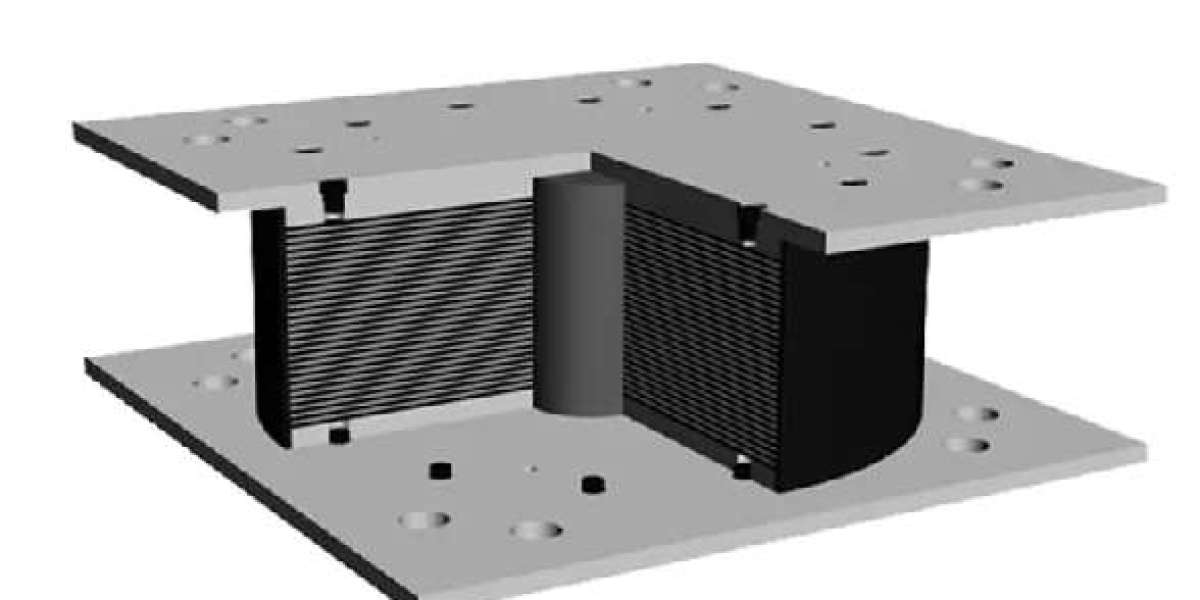

A viscoelastic damper works by converting structural movement into energy dissipation through material deformation. However, buildings do not move uniformly during wind or seismic events. Some floors experience higher interstory drift, while other areas remain relatively stable. Because of this uneven movement, damper efficiency is strongly influenced by placement rather than quantity alone.
In many cases, a viscoelastic damper installed in a structurally active zone can absorb significantly more energy than one placed in a low-movement region. Engineers therefore analyze displacement patterns, stiffness distribution, and torsional response before finalizing installation positions. Even small differences in structural layout can change how vibration energy flows through the building.
Temperature conditions also influence damper behavior. The viscoelastic material inside a damper changes stiffness depending on environmental temperature, which affects how energy is dissipated. In colder conditions, the material may behave more rigidly, while higher temperatures may soften its response. This variation can gradually influence overall damping performance across seasons.
Wind and seismic forces also produce different movement patterns. Wind loading typically creates continuous low-amplitude vibration, while seismic activity generates sudden and high-intensity displacement. A viscoelastic damper must therefore perform across different loading conditions, which makes placement and structural coordination even more important.
In retrofit projects, installation conditions are often constrained by existing building layouts. Engineers may need to adapt damper positioning based on available space, structural connections, and stiffness variations. These limitations can affect ideal theoretical placement.
Ultimately, the effectiveness of a viscoelastic damper depends not only on its material properties but also on how well its position aligns with actual structural movement behavior during real operating conditions.