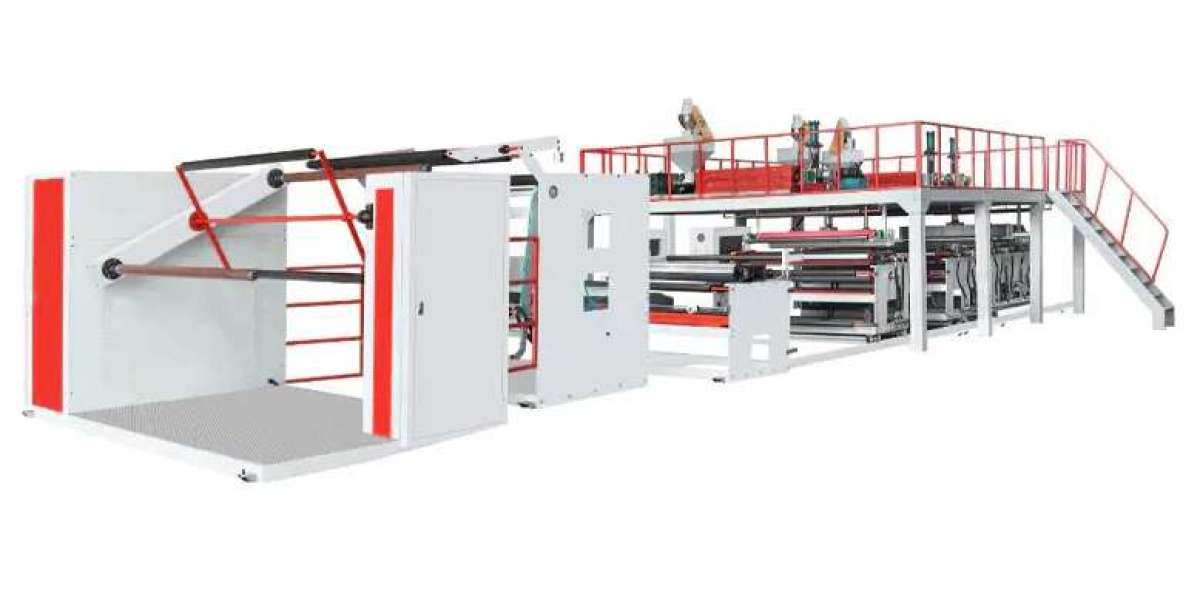

Bubble wrap film is one of those packaging materials that seems simple until you're responsible for producing it consistently at scale. A bubble wrap film machine capable of running continuously across multiple shifts, maintaining uniform bubble integrity, and processing different polyethylene resin grades without constant adjustment is a more sophisticated piece of equipment than its output suggests. Buyers investing in production capacity — whether for in-house packaging operations or commercial film supply — benefit from understanding where the performance variables actually live.
Resin selection has a direct effect on bubble wrap film quality that the machine itself can only partially compensate for. Low-density polyethylene — LDPE — remains the standard resin for bubble wrap film production because of its flexibility, clarity, and ability to form consistent bubble cavities without tearing during the vacuum forming stage. Linear low-density polyethylene — LLDPE — is often blended in to improve puncture resistance and tensile strength, particularly for bubble wrap film intended for heavier-duty protective packaging. A bubble wrap film machine with a well-designed extruder screw handles both pure LDPE and blended formulations without requiring significant process adjustments between runs.
Air retention is the performance metric that end users care about, and it traces directly back to seal quality on the bubble wrap film machine's lamination station. The bond between the bubble film layer and the flat cap film needs to withstand handling, compression, and storage without delaminating or allowing air to migrate between bubbles. Inadequate lamination nip pressure or inconsistent temperature at the sealing station produces film where bubbles deflate under moderate pressure — a quality failure that packaging operations notice immediately and trace back to their film supplier.
Roll winding quality affects how bubble wrap film performs in downstream packaging operations. Film wound with inconsistent tension develops telescoping or edge deformation that causes feeding problems in automated packaging lines. A bubble wrap film machine with a closed-loop tension control system on the winding station produces rolls with uniform density and stable geometry that handle well in both manual and automated applications. For buyers supplying film to packaging operations with automated dispensing equipment, roll geometry consistency is a specification point worth raising explicitly.
After-sales support and spare parts availability deserve attention during the equipment sourcing process. A bubble wrap film machine running at commercial capacity accumulates wear on forming drums, die lips, and drive components over time. Suppliers who maintain spare parts inventory and provide accessible technical support reduce the downtime risk that comes with operating production equipment at high utilization rates. Buyers evaluating bubble wrap film machine suppliers should treat parts availability and service response as sourcing criteria alongside machine specification and unit price.