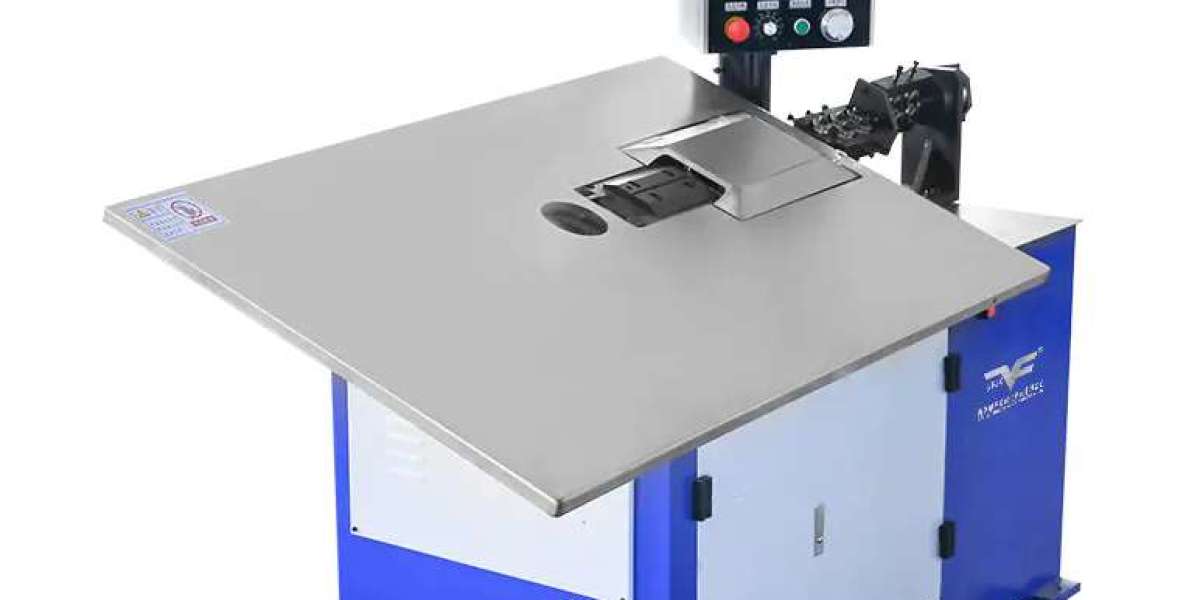

A Camless Wire Bending Machine has become an important piece of equipment in modern wire forming workshops. Unlike traditional mechanical systems that rely on fixed cams, this type of machine uses servo-driven technology to control wire movement and bending actions. The result is a production process that can adapt to different wire shapes without requiring extensive mechanical adjustments.
In many industries, wire products are used in daily applications, including automotive components, hardware accessories, furniture fittings, household tools, and industrial assemblies. As product designs become more diverse, manufacturers often need equipment capable of handling frequent design changes. A Camless Wire Bending Machine addresses this challenge by allowing operators to modify programs through a control interface instead of replacing physical cams.
The working process begins with wire feeding. Servo motors accurately guide the wire material into the forming area according to programmed dimensions. Once the wire reaches the designated position, bending tools perform a series of movements to create the required angles and curves. Because each axis is independently controlled, multiple operations can be completed during a single production cycle.
One advantage of a Camless Wire Bending Machine is its adaptability. A production facility may manufacture different wire forms on the same day. Instead of spending significant time changing hardware components, operators can load a new program and begin producing another design. This capability supports shorter production runs and customized orders.
Precision is another factor contributing to the popularity of this equipment. Servo systems provide controlled movement, helping maintain consistent dimensions across production batches. This consistency can reduce material waste and support quality management objectives.
Maintenance practices also differ from traditional cam-driven systems. Since fewer mechanical cams are involved, wear associated with continuous cam contact may be reduced. Routine inspections still remain important, including lubrication, wire guide examination, tooling checks, and servo system monitoring.
The integration of software functions further enhances machine operation. Production parameters, bending sequences, and wire feeding lengths can be stored digitally for future use. This simplifies repeat production and helps manufacturers maintain process consistency.
As manufacturing environments continue to emphasize flexibility and efficiency, the Camless Wire Bending Machine remains a practical solution for producing a wide range of wire components. Its combination of programmable control, precise movement, and production adaptability makes it suitable for businesses seeking efficient wire forming processes while accommodating changing market demands.
https://www.spring-machine.net/product/wire-bending-machines/