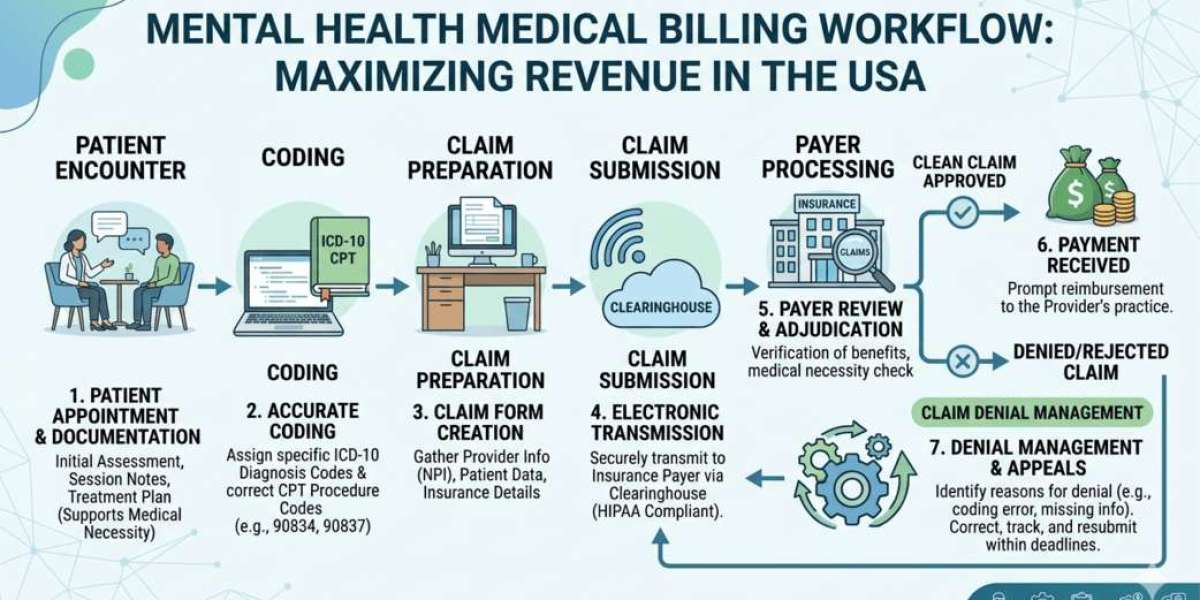

Mental health care has become an essential part of the healthcare system in the USA. As more people seek counseling, therapy, psychiatric care, and behavioral health treatment, providers face increasing pressure to maintain accurate documentation while ensuring timely reimbursement. This is where coding and billing for mental health services plays a critical role.
Even experienced providers can encounter claim denials, delayed payments, or compliance issues when coding guidelines are misunderstood. Understanding how the billing process works helps practices improve cash flow, reduce administrative stress, and focus more on delivering quality patient care.
In this guide, we'll explore the fundamentals of mental health coding and billing, common challenges, best practices, and ways to improve reimbursement without compromising compliance.
Why Accurate Coding and Billing Matter in Mental Health
Mental health billing is different from many other medical specialties because reimbursement often depends on factors such as:
- Session duration
- Type of therapy provided
- Provider credentials
- Place of service
- Documentation quality
- Insurance-specific policies
A small coding mistake can result in denied claims or payment reductions. Proper billing ensures providers receive appropriate reimbursement while maintaining compliance with payer requirements.
Accurate coding also supports better reporting, audit readiness, and long-term financial stability for behavioral health practices.
Understanding the Mental Health Billing Process
Successful billing involves several connected steps rather than simply submitting a claim.
Patient Registration
Collect complete patient information, including:
- Insurance details
- Demographic information
- Referral requirements
- Consent forms
Incorrect patient data is one of the most common reasons claims are rejected before processing.
Insurance Verification
Before treatment begins, practices should verify:
- Active insurance coverage
- Mental health benefits
- Copayments
- Deductibles
- Authorization requirements
- Visit limitations
Eligibility verification helps reduce unexpected billing issues later.
Clinical Documentation
Documentation should clearly explain:
- Diagnosis
- Treatment goals
- Services provided
- Session duration
- Progress notes
- Medical necessity
Incomplete documentation often creates compliance risks during audits.
Coding the Services
Once documentation is complete, appropriate diagnosis and procedure codes are assigned before claim submission.
Common Codes Used for Mental Health Services
Behavioral health providers regularly use diagnosis and procedure codes that reflect the patient's condition and the services performed.
Examples may include services such as:
- Individual psychotherapy
- Family therapy
- Group therapy
- Psychiatric diagnostic evaluations
- Medication management
- Crisis intervention
- Telehealth behavioral health visits
The selected code must always match the documented clinical service. Even small inconsistencies between documentation and coding can lead to payment delays.
Challenges in Coding and Billing for Mental Health Services
Mental health practices frequently experience billing challenges that affect reimbursement.
Changing Insurance Policies
Insurance companies regularly update their reimbursement rules. Providers must stay informed about:
- Coverage policies
- Authorization requirements
- Documentation expectations
- Modifier usage
Ignoring payer updates can increase denial rates.
Time-Based Billing
Many psychotherapy services are billed according to session length.
If documentation does not accurately support the reported duration, claims may be denied or downcoded.
Authorization Requirements
Certain services require prior authorization before treatment begins.
Failure to obtain authorization may result in the insurer refusing payment even when medically necessary care was provided.
Frequent Coding Updates
Diagnosis and procedure coding standards evolve every year.
Keeping coding knowledge current helps practices remain compliant while minimizing errors.
Best Practices to Improve Billing Accuracy
Mental health providers can strengthen their revenue process by following consistent billing practices.
Maintain Detailed Documentation
Documentation should be:
- Complete
- Accurate
- Timely
- Consistent
- Legible
- Clinically relevant
Well-prepared documentation supports both reimbursement and compliance.
Verify Benefits Before Every Visit
Insurance plans may change throughout the year.
Checking eligibility before appointments helps identify:
- Policy changes
- Coverage limitations
- Copayment updates
- Authorization needs
Submit Claims Promptly
Delayed claim submission may exceed payer filing deadlines.
Submitting claims quickly also improves overall cash flow.
Perform Regular Claim Reviews
Internal claim audits help identify:
- Coding mistakes
- Missing modifiers
- Documentation gaps
- Denial trends
- Training opportunities
Small improvements made consistently can significantly reduce claim rework.
The Role of Compliance in Mental Health Billing
Compliance goes beyond selecting the correct code.
Providers should ensure that billing follows:
- Federal regulations
- State-specific requirements
- Insurance payer policies
- Documentation standards
- Privacy regulations
Maintaining compliance reduces legal risks while supporting accurate reimbursement.
Routine staff education and periodic internal audits help practices stay aligned with evolving healthcare regulations.
Telehealth and Mental Health Billing
Telehealth has transformed behavioral healthcare across the USA.
Many patients now receive counseling and psychiatric care through secure virtual platforms.
Billing telehealth services correctly requires attention to:
- Appropriate place-of-service indicators
- Required modifiers
- Payer-specific telehealth rules
- Documentation supporting virtual care
Although telehealth reimbursement has expanded significantly, payer requirements continue to evolve, making ongoing education essential.
Reducing Claim Denials in Behavioral Health Practices
Denied claims consume valuable administrative time and delay revenue.
Some of the most common causes include:
- Incorrect diagnosis codes
- Missing documentation
- Invalid modifiers
- Eligibility issues
- Expired authorizations
- Coding inconsistencies
- Duplicate claim submissions
Practices that regularly analyze denial reports can identify recurring problems and implement corrective measures before they become larger financial issues.
How Technology Supports Mental Health Billing
Modern practice management systems simplify many administrative tasks.
Technology can assist with:
- Eligibility verification
- Electronic claim submission
- Coding validation
- Payment posting
- Denial tracking
- Reporting and analytics
Automation reduces manual errors while allowing staff to focus on patient support rather than repetitive administrative work.
Supporting Practice Growth Through Efficient Revenue Management
Financial stability depends on more than collecting payments.
Strong operational processes help practices:
- Improve reimbursement speed
- Reduce billing errors
- Increase operational efficiency
- Strengthen compliance
- Enhance patient satisfaction
Many healthcare organizations also work with experienced teams providing medical billing services, medical coding services, credentialing, and revenue cycle management to streamline administrative responsibilities while maintaining billing accuracy.
For growing practices, experienced partners like 247 Medical Billing Services can help simplify complex billing workflows and support long-term operational efficiency without taking attention away from patient care.
Frequently Asked Questions
1. What is coding and billing for mental health services?
It is the process of documenting patient diagnoses, assigning the correct diagnosis and procedure codes, submitting insurance claims, and managing reimbursement for behavioral health services.
2. Why is documentation so important in mental health billing?
Documentation supports medical necessity, justifies the services billed, helps ensure compliance, and provides evidence during insurance reviews or audits.
3. What causes most mental health claim denials?
Common reasons include incorrect coding, incomplete documentation, insurance eligibility issues, missing authorizations, invalid modifiers, and payer-specific billing errors.
4. Does telehealth require different billing procedures?
Yes. Telehealth services often require specific modifiers, place-of-service codes, and compliance with each payer's virtual care policies.
5. How often do mental health coding guidelines change?
Coding updates generally occur annually, while insurance companies may revise their billing requirements throughout the year. Regular training helps practices stay current.
6. How can providers improve reimbursement rates?
Providers can improve reimbursement by verifying insurance benefits, maintaining detailed documentation, coding accurately, submitting claims promptly, and reviewing denial reports regularly.
7. What services help improve the mental health billing process?
Many practices benefit from professional support in medical billing services, medical coding services, credentialing, and revenue cycle management, helping reduce administrative burden while improving claim accuracy and financial performance.