
Introduction
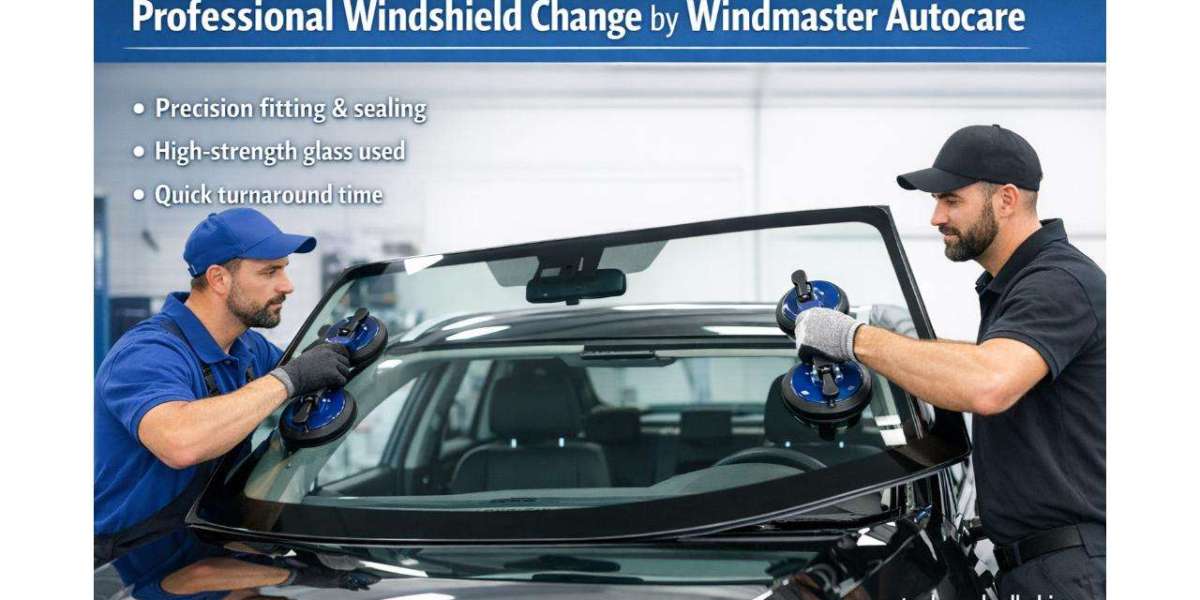
Think of your car's windshield as more than just a piece of glass that keeps bugs out of your teeth while you drive down the highway. In modern vehicles, that glass is actually a high-tech housing unit for some of the smartest safety features your vehicle owns. When you find yourself changing the windshield of the car, you aren't just doing a simple cosmetic swap. You are essentially disrupting the main sensory organ of your vehicle's safety network. A lot goes on behind the scenes when that glass gets swapped out, and it affects how your vehicle sees the road ahead. If you've ever wondered why a simple chip or crack replacement costs more or takes longer than it used to, it all comes down to the tech glued to the glass. By the end of this, you'll understand exactly why changing the windshield of the car requires a lot more precision than it did a decade ago.
Why Changing The Windshield of The Car Disrupts Your Vehicle's Brain
When you look at a modern car from the outside, you might notice a small, triangular plastic casing glued to the upper center of the glass, right behind the rearview mirror. Inside that casing sits a suite of forward-facing cameras, radar components, and laser sensors. This setup is the heart of your Advanced Driver Assistance Systems, or ADAS.
When a technician removes your old glass, they have to unclip these incredibly sensitive cameras and sensors. Even if they use the exact same bracket on a brand-new piece of glass, the physical positioning will change by a fraction of a millimeter. In the world of automotive technology, a millimeter of variance at the top of your windshield translates to a blind spot or a massive miscalculation hundreds of feet down the road. The car's computer suddenly loses its accurate sense of depth and alignment.
How Changing The Windshield of The Car Affects Safety Features
If the cameras are even slightly out of alignment after a glass swap, the safety features you rely on will start acting erratically or fail entirely. Because the camera's line of sight is altered, the vehicle can no longer calculate distances with absolute certainty.
Here is a quick look at the specific features that get thrown out of whack when your front glass is replaced without proper recalibration:
Lane Departure Warning Systems: This feature relies on cameras to read the white and yellow paint lines on the asphalt. If the camera angle is skewed downward or to the side, the system might think you are drifting out of your lane when you are perfectly centered, leading to annoying, false steering wheel vibrations or alarms.
Automatic Emergency Braking: This is perhaps the most dangerous feature to leave uncalibrated. If the system misjudges how close you are to the stopped bumper ahead of you because the lens angle changed, it might slam on the brakes too early, or worse, fail to brake until it is too late.
Adaptive Cruise Control: This system keeps a safe buffer between you and the commuter ahead. An uncalibrated sensor might fail to detect a car merging into your lane or lose track of the vehicle ahead while navigating a gentle curve.
Rain-Sensing Wipers and High-Beam Assist: Even these smaller conveniences depend on optical sensors tracking light and moisture through the specific thickness and tint of your glass.
The Vital Fix After Changing The Windshield of The Car
To get your vehicle back to a state where it can safely drive itself, technicians have to perform a process called calibration. This is essentially a digital eye exam for your vehicle. Once the new auto glass replacement is securely bonded to the frame, tools are plugged into the car's computer to reset the camera's baseline perspective.
There are two primary ways technicians perform this digital alignment. Sometimes they use just one method, while other vehicles require a combination of both to completely restore factory settings.
Static Calibration Sessions
This method happens entirely inside a specialized garage bay. Technicians set up highly specific, physical target boards with geometric patterns at exact distances around the vehicle. Using lasers and digital measuring tools, they ensure the car is perfectly level. The vehicle's internal computer is then booted into a learning mode, where it stares at these targets to relearn what "straight ahead" and "level" look like through the new glass pane.
Dynamic Calibration Drives
This is a real-world test. A technician hooks up a handheld diagnostic computer to your dashboard and takes the car out for a drive on the open road. The vehicle needs to travel at specific speeds on well-marked roads for a set period. As it drives, the computer watches the actual lane lines, road signs, and traffic patterns to adjust its visual parameters in real-time. If it's raining, snowing, or the road lines are faded, the technician has to wait for better weather to finish the job.
Conclusion
At the end of the day, your vehicle's safety systems are only as good as the vision provided by the glass they look through. Skipping the calibration step after a glass replacement is like getting a new pair of prescription glasses but keeping an old, blurry prescription template for your lenses. It simply won't work correctly, and it puts you at risk. Whenever your front glass suffers major damage, make sure you take it to professionals who treat the swap as a technical operation rather than a simple mechanical chore. For a seamless, safe, and expertly calibrated experience, trust the team at Windmaster Autocare LLC to handle your vehicle with the precision and care it deserves to keep you safe on every journey.