
Businesses across the UAE are no longer treating blockchain as a buzzword they are building real systems on it. From banks in DIFC to logistics firms in Jebel Ali, companies are turning to enterprise blockchain development to fix slow paperwork, weak data trust, and costly middlemen. If you are a CTO, founder, or decision-maker trying to understand what enterprise blockchain actually means, this guide breaks it down in plain language, with a UAE lens, so you can decide if it is right for your business.
What Is Enterprise Blockchain Development?
In simple words, enterprise blockchain development is the process of building private or permissioned blockchain networks for organizations, instead of public networks like Bitcoin or Ethereum that anyone can join. Enterprises want control, privacy, and speed so they choose frameworks like Hyperledger Fabric, R3 Corda, or Enterprise Ethereum (Besu) to build custom solutions. These systems record every transaction on a shared, tamper-proof ledger that all approved parties can trust, without needing a single central authority to manage the data.
Unlike public blockchain, an enterprise-grade blockchain solution lets a company decide who can view records, who can validate transactions, and how data flows between partners, suppliers, and regulators. This is exactly why banks, government departments, and large corporates prefer permissioned blockchain platforms over open networks.
Why UAE Businesses Are Investing in Blockchain Right Now
The UAE has quietly become one of the most advanced places in the world for regulated blockchain deployment. A recent industry report found that UAE blockchain adoption, digital asset infrastructure, tokenization initiatives, and regulated financial innovation are becoming core parts of the country's economic framework, moving well past small pilot programs into a national execution phase across government, finance, and payments.
A few reasons why this matters for enterprises here:
- Government backing is strong. The Dubai Blockchain Strategy is built on three pillars government efficiency, industry creation, and international leadership giving companies a clear direction to align with.
- Regulation is clear, not confusing. The Virtual Assets Regulatory Authority (VARA), along with the Dubai Blockchain Strategy, gives enterprises legal clarity to deploy blockchain at scale, particularly in finance, supply chain, and digital identity.
- Real systems are already running. UAE Pass, the country's digital identity platform, now serves more than 11 million users and has recorded billions of authentication eventsproof that blockchain-backed infrastructure works at national scale.
- Global players are moving in. Ripple opened a new Middle East headquarters in Dubai's International Financial Centre (DIFC), a step that could double its UAE team and reflects rising regional demand for compliant blockchain payment and custody solutions.
For any business exploring blockchain development in Dubai or the wider Emirates, this environment removes a lot of the guesswork that companies in other regions still face.
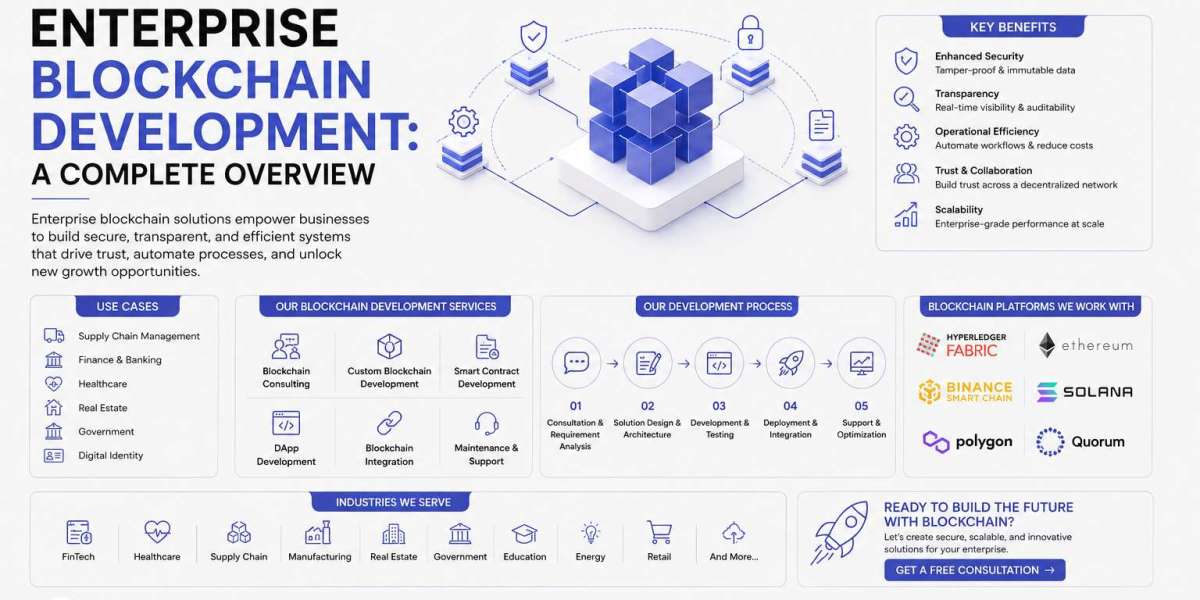
Core Enterprise Blockchain Use Cases
Enterprise blockchain solutions are not one-size-fits-all. Here is where they add the most value for UAE companies:
1. Supply Chain and Logistics Blockchain-based supply chain traceability lets every party supplier, shipper, warehouse, retailer see the same real-time record. A leading logistics company in the UAE adopted a private blockchain network to enhance supply chain traceability, achieving faster deliveries, improved inventory management, and increased customer satisfaction.
2. Trade Finance and Banking Cross-border payments, letters of credit, and settlement processes move faster and cheaper on blockchain rails, cutting out repetitive manual checks between banks.
3. Digital Identity and Government Services Secure, verifiable digital identity systems reduce fraud and paperwork UAE Pass is the clearest local example of this at scale.
4. Real Estate and Asset Tokenization Tokenizing property or investment assets brings fractional ownership, better liquidity, and transparent record-keeping — an area regulators in Dubai and Abu Dhabi are actively supporting.
5. Smart Contracts for Compliance Automated, self-executing agreements reduce human error and speed up approvals across finance, healthcare, and real estate workflows.
How Enterprise Blockchain Development Actually Works
A typical enterprise blockchain project moves through these stages:
- Discovery and feasibility — deciding whether blockchain genuinely solves the business problem, or whether a traditional database would do the job better.
- Framework selection — choosing between Hyperledger Fabric, Corda, Quorum, or a hybrid model based on privacy, speed, and integration needs.
- Architecture and consensus design — deciding how nodes validate data and who gets permission to write to the ledger.
- Smart contract development — coding the business logic that runs automatically once conditions are met.
- Legacy system integration — connecting the new blockchain layer with existing ERP, CRM, or banking systems without a full infrastructure rebuild.
- Testing, audit, and compliance — smart contract audits and security checks, especially important given VARA-compliant requirements in the UAE.
- Deployment and monitoring — rolling out in phases, starting with a pilot before scaling company-wide.
Common Challenges Enterprises Face
Even with a strong ecosystem, UAE businesses run into real hurdles: integrating blockchain with old legacy systems, hiring skilled blockchain developers in a competitive talent market, and keeping up with evolving regulatory requirements. The good news is that working with an experienced blockchain development company in the UAE one that understands VARA, ADGM, and DIFC rules helps enterprises avoid costly missteps and stay compliant from day one.
Choosing the Right Blockchain Development Partner in the UAE
When picking a partner for custom blockchain solutions, look beyond flashy portfolios. Check their experience with enterprise-grade blockchain platforms, ask about their approach to smart contract security audits, and confirm they understand UAE-specific compliance frameworks. A good partner will also recommend a modular, phased rollout instead of pushing a risky, all-at-once system replacement.
FAQs
What is enterprise blockchain development?
It is the process of designing and building private, permissioned blockchain networks tailored to a company's specific operational, security, and compliance needs, unlike public blockchains that anyone can access.
Is blockchain development legal and regulated in the UAE?
Yes. A UAE Blockchain Services License allows companies to legally provide blockchain-related solutions such as software development, smart contract creation, consulting, and system integration, under frameworks set by VARA and other regulatory bodies.
How much does enterprise blockchain development cost?
Costs vary widely depending on platform complexity, consensus mechanism, integrations, security testing, and long-term maintenance. A clear roadmap with defined requirements early on helps businesses set realistic budgets.
Which industries in the UAE benefit most from blockchain?
Finance, supply chain and logistics, real estate, healthcare, and government services are currently seeing the strongest results from enterprise blockchain adoption in the UAE.
How long does it take to build an enterprise blockchain solution?
A pilot project can take a few months, while a full enterprise-wide rollout with legacy system integration typically takes six months to over a year, depending on scope.
Final Thoughts
Enterprise blockchain development in the UAE has moved past the hype stage. With strong government support, clear regulation, and real-world systems like UAE Pass already proving the model, the region offers one of the most business-friendly environments globally for adopting this technology. The businesses that win will be the ones that start with a clear use case, choose the right development partner, and roll out blockchain in phases rather than rushing a full-scale overhaul.