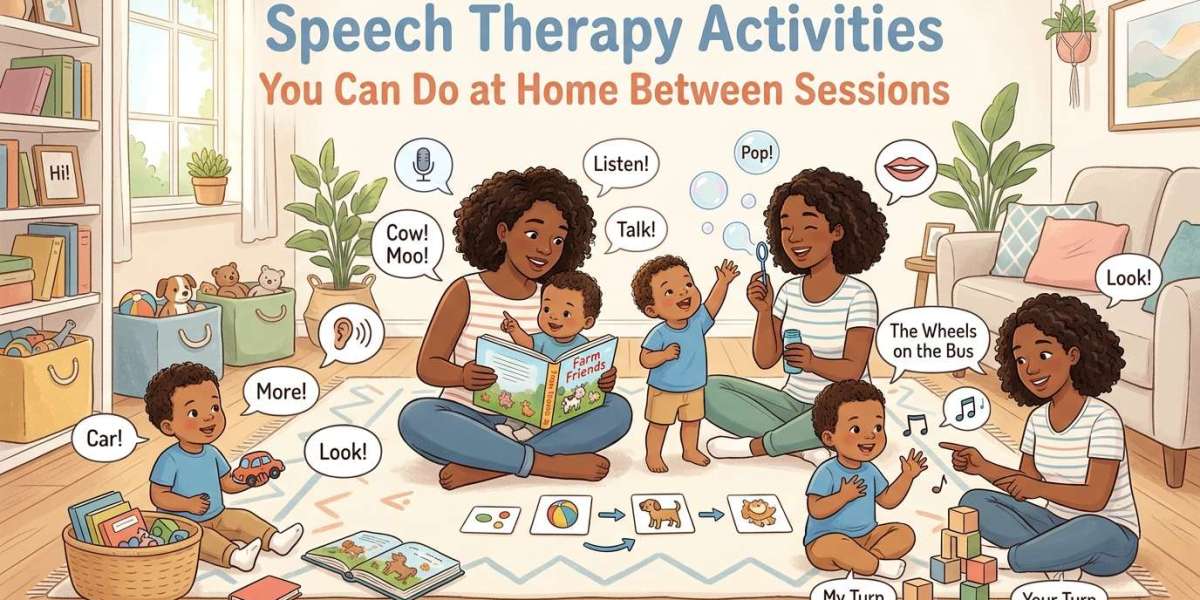

A weekly therapy session builds skills, but one hour a week won't fix speech on its own. If nothing happens in the other 167 hours, progress crawls. The good news: home practice doesn't need special equipment or training, just consistency.
Why Home Practice Decides How Fast Progress Happens
Therapists call it "carryover": whether a skill learned in session actually shows up in real conversations at home, school, or with friends.
A child might say a sound correctly in a structured exercise but revert to old habits the moment they're talking naturally. Carryover happens through repetition in everyday situations, not through more clinic time.
This is why families who practice a little every day, even ten minutes, tend to see faster and more lasting progress than families who rely on the weekly session alone.
Daily Activities That Build Language, Not Just Words
Effective home practice targets communication broadly, not just correct pronunciation of individual words.
● Narrate everything you do. Describe actions out loud while cooking, dressing, or driving. "I'm cutting the tomato. Now I'm washing my hands." This exposes children to sentence structure constantly.
● Ask open questions, not yes/no ones. Instead of "Do you want juice?" try "What do you want to drink?" Open questions push a child to generate words rather than just nod.
● Expand what your child says. If they say "car go," respond with "Yes, the car is going fast!" This models a fuller sentence without correcting them directly.
● Read the same book repeatedly. Repetition helps children predict and eventually say the words themselves, especially with rhyming or repeated phrases.
● Use choices to prompt speech. "Do you want the red ball or the blue ball?" forces a verbal response instead of pointing.
● Play pretend together. Pretend play, like feeding a doll or "cooking" toy food, naturally generates back-and-forth talk and new vocabulary.
None of these require flashcards. They work because they fit into a normal day.
Turning Ordinary Routines Into Therapy Moments
Bath time, mealtime, and the walk to the car are underused opportunities. Each one repeats daily, which means built-in repetition without extra effort.
At bath time, name body parts and actions: "Now we're washing your feet." At meals, talk through food choices and let your child ask for more instead of anticipating their needs. In the car, point out what you see outside and ask your child to describe it back.
Grandparents and older siblings can join in too. More people talking with a child, rather than just talking at them, multiplies practice opportunities without adding to a parent's workload.
Mistakes Parents Make During Home Practice
Constant correction is the most common mistake. Interrupting every sentence to fix pronunciation discourages a child from talking at all. Modeling the correct version naturally, without pointing out the error, works better.
Turning practice into a drill session also backfires. Ten minutes of forced, structured "homework" often produces less engagement than the same ten minutes woven into play.
Skipping practice on busy days and trying to make up for it with a long session later doesn't work either. Short, frequent practice beats occasional long sessions for language carryover. If home practice isn't translating into progress after a few weeks, it's worth checking in with a therapist to adjust the approach through best parent–child interactive therapy Lahore rather than guessing at home alone.
FAQs
How much home practice is actually needed each day?
Ten to fifteen minutes of focused interaction, done consistently every day, generally produces better carryover than one long session done occasionally. Frequency matters more than duration.
Should I correct my child every time they mispronounce a word?
No. Constant correction can make a child reluctant to talk. Repeating the word back correctly within your own sentence, without asking them to repeat it, models the right pronunciation more effectively.
Can home activities replace professional speech therapy sessions?
No. Home practice supports and extends what happens in professional sessions, but it doesn't replace the structured assessment and targeted techniques a qualified therapist provides, especially for a diagnosed speech or language disorder.