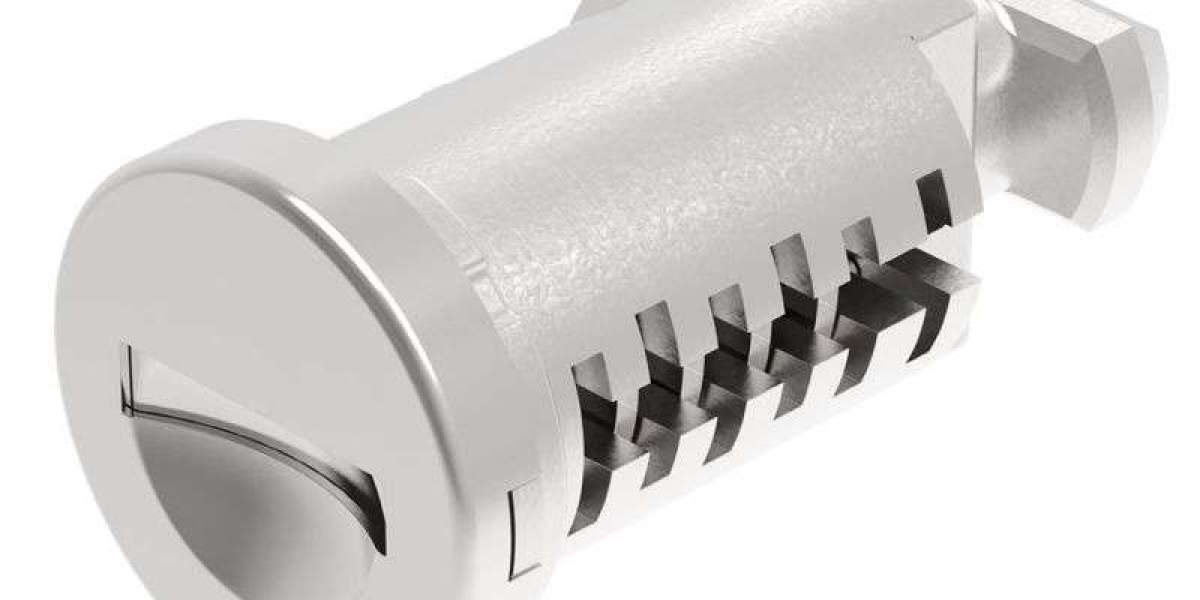

Quarter turn latches are easy to overlook because they are usually small, inexpensive, and visually uncomplicated. However, they play an important role in securing access panels, machinery covers, electrical cabinets, vehicle compartments, and industrial enclosures. Their main advantage is clear from the name: the latch can be locked or released with a rotation of approximately 90 degrees. This simple action makes access faster than using screws, bolts, or other threaded fasteners.To get more news about Quarter Turn Latches, you can visit forndlock.com official website.
In my view, the best hardware components are often the ones users barely notice. A well-designed quarter turn latch does not demand attention. It simply holds a panel securely, opens smoothly when required, and continues working after thousands of operating cycles. When the wrong latch is selected, however, users quickly notice vibration, rattling, difficult operation, corrosion, or poor panel alignment.
How Quarter Turn Latches Work
Most quarter turn latches include a housing, an actuator, a shaft, and a cam. When the actuator is rotated, the cam moves behind a frame or mounting surface. The cam then pulls the panel toward the frame and holds it in position. Turning the actuator in the opposite direction releases the panel.
Although the operating principle is simple, manufacturers offer many design variations. Some latches use fixed cams, while others allow cam adjustment to accommodate different panel thicknesses. Compression models pull the door inward during the final stage of rotation, creating a tighter seal and reducing vibration. These are particularly useful for outdoor cabinets, transportation equipment, and machinery exposed to dust or moisture.
The actuator style also varies. Common options include slotted heads, hex sockets, wing knobs, T-handles, and keyed locks. Tool-operated versions are suitable for maintenance panels that should not be opened casually. Hand-operated designs are more convenient when technicians need frequent access.
Materials and Surface Treatments
Material selection has a direct effect on latch durability. Zinc-plated steel is widely used because it offers a practical balance between strength and cost. It performs well in indoor machinery, general equipment, and controlled factory environments. Stainless steel is better for outdoor installations, food-processing equipment, marine applications, and humid conditions.
Plastic quarter turn latches are also available. They are lightweight, resistant to certain chemicals, and electrically nonconductive. However, they may not provide the same strength or temperature resistance as metal designs. For this reason, plastic latches are usually chosen for light-duty enclosures rather than heavy industrial doors.
Surface treatment is equally important. Powder coating, black oxide, chrome plating, and zinc plating can improve appearance and corrosion resistance. Buyers should not select a finish based only on color. The operating environment, chemical exposure, temperature, and expected service life should all be considered.
Applications Across Different Industries
Quarter turn latches are found in more industries than many people realize. Electrical cabinet manufacturers use them to secure control panels while allowing technicians to perform inspections. Automotive and transportation companies install them on battery compartments, storage doors, engine covers, and service panels. Telecommunications equipment often relies on sealed latches to protect sensitive components from rain and dust.
In manufacturing plants, quarter turn latches are common on machine guards and inspection covers. They reduce the time needed for maintenance because workers do not have to remove and store multiple screws. This may seem like a minor improvement, but it can save considerable labor over the life of a machine.
They are also used in HVAC systems, medical equipment, railway interiors, server cabinets, construction machinery, and agricultural vehicles. Each application has different requirements. A server cabinet may prioritize neat appearance and easy access, while a construction machine may require vibration resistance, high strength, and protection against mud.
Important Factors When Choosing a Latch
The first factor to consider is grip range, which refers to the distance the latch must cover between the panel and the frame. An incorrect grip range can cause a loose fit or make the latch impossible to close. Adjustable cams can solve minor dimensional differences, but accurate measurements are still necessary.
Load capacity is another important point. A small latch may be suitable for a lightweight access cover but inadequate for a large steel door. Designers should also consider vibration, shock, weather exposure, and the frequency of use.
Security requirements influence actuator selection. A simple wing knob provides quick access but almost no protection against unauthorized opening. A keyed lock offers better security, while a special tool-operated head can discourage accidental access without requiring a traditional key.
Installation quality matters as much as product quality. Poorly positioned mounting holes can create uneven pressure, panel distortion, or premature wear. The cam should engage fully with the frame, and the panel should close without excessive force.
Performance and User Experience
From a practical perspective, a good quarter turn latch should feel controlled rather than loose. The rotation should be smooth, and the closed position should feel positive. There should be no unnecessary movement between the panel and frame. In high-vibration environments, compression latches or spring-loaded designs usually deliver better results than basic fixed-cam models.
Maintenance requirements are generally low. Occasional inspection can reveal loose mounting hardware, worn cams, damaged seals, or corrosion. Light lubrication may help metal mechanisms, although lubricants must be compatible with nearby materials and operating conditions.
Buying Advice
The cheapest quarter turn latch is not always the most economical choice. A low-cost product may be acceptable for a light indoor enclosure, but demanding applications require better materials, tighter manufacturing tolerances, and proven durability.
Before purchasing, buyers should confirm panel thickness, grip range, cutout dimensions, cam direction, material, actuator type, and environmental protection requirements. Requesting samples for testing is especially useful for large production projects.
Quarter turn latches demonstrate how thoughtful engineering can simplify everyday operation. They provide fast access, dependable fastening, and flexible installation without complicated mechanisms. When selected carefully, they improve both equipment performance and user convenience. For designers and purchasing teams, this small component deserves far more attention than its size might suggest.