
The rapid adoption of smartphones, digital payments, and location-based services has transformed urban transportation. Customers now expect to book a ride within minutes, view an estimated fare, track the driver’s location, and make a payment through one convenient application.
This shift has created opportunities for taxi companies, fleet operators, mobility startups, airport transfer providers, and entrepreneurs. However, launching a reliable ride-hailing platform involves much more than designing a passenger application. The business also needs driver management, automated dispatching, live tracking, payment reconciliation, customer support, safety tools, and administrative controls.
An Uber-inspired platform provides a structured starting point for developing these capabilities while allowing the business to use original branding, customized workflows, and market-specific features.
What Is an Uber Clone?
An Uber clone is a custom ride-hailing platform based on the familiar operating model of leading on-demand transportation applications. It connects passengers searching for transportation with registered drivers who are available nearby.
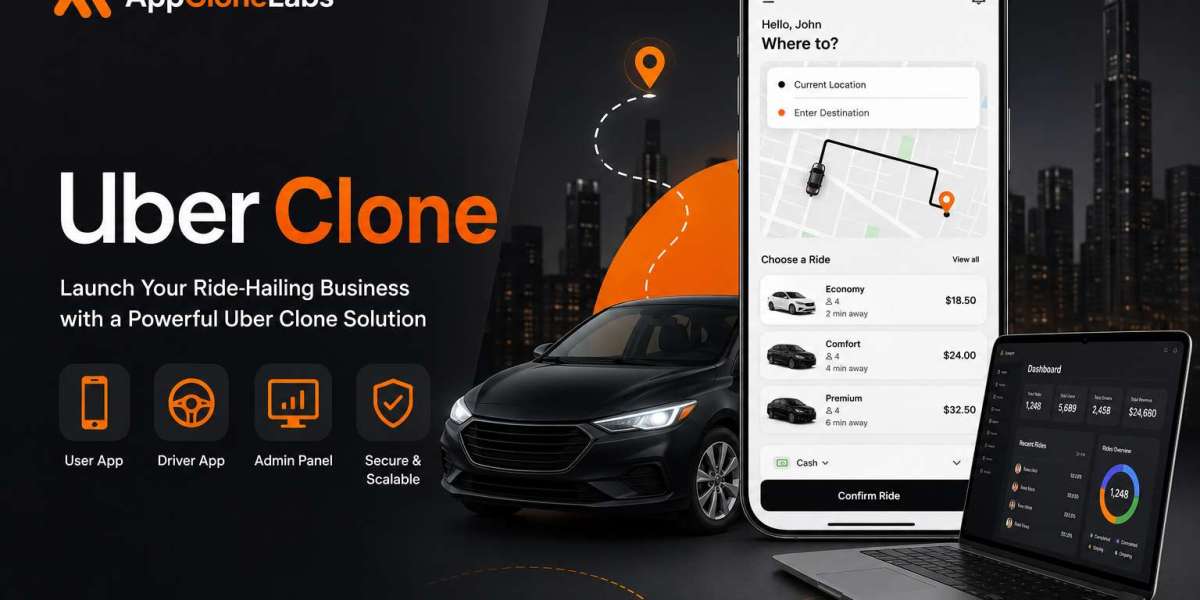
The complete platform normally includes a rider application, driver application, dispatcher console, and administrative dashboard. These interfaces work together to manage ride requests, driver assignments, trip progress, payments, commissions, ratings, and support issues.
A clone-inspired solution should not reproduce another company’s trademarks, interface, content, or protected assets. The business model can be used as a reference while the final platform is developed with original design, source code, branding, and operational rules.
Simplifying the Passenger Booking Experience
The rider application is the main customer-facing part of the platform. It should make the booking process fast and easy, even for people using the service for the first time.
Passengers should be able to register, enter pickup and destination locations, view available vehicle categories, receive a fare estimate, choose a payment method, and request a ride. Saved addresses can make repeat bookings more convenient, while scheduled rides can support airport transfers, business travel, and planned journeys.
Once a driver accepts the request, the passenger should receive the driver’s name, vehicle details, contact options, estimated arrival time, and live location. Notifications can communicate important updates, including driver arrival, trip commencement, payment completion, and cancellation.
The App Clone Labs solution includes pickup and destination autocomplete, fare previews, vehicle categories, coupons, waiting-time rules, cancellation logic, scheduled rides, and live estimated arrival times.
Supporting Drivers Through a Dedicated Application
Drivers require a separate application designed around their daily activities. The driver experience begins with registration, identity verification, driving licence submission, and vehicle-document approval.
After approval, drivers should be able to switch their availability status on or off. Available drivers can receive nearby ride requests containing pickup distance, estimated earnings, passenger details, and destination information according to the platform’s privacy rules.
During an active ride, the application should provide navigation, pickup confirmation, trip-start controls, destination guidance, and completion options. Drivers should also have access to earnings, incentives, tips, commissions, wallet balances, payout status, trip history, and support.
Clear financial records are particularly important. Drivers need to understand how their gross earnings, platform commission, cash collections, incentives, taxes, and adjustments affect the final payout.
Managing Driver Matching and Dispatch
Efficient driver assignment can determine whether passengers receive quick service or abandon their booking.
A basic dispatch system identifies suitable drivers based on their availability, distance from the passenger, vehicle category, and service zone. The request may initially be offered to the closest driver. When that driver does not respond, the platform can expand the search radius or contact another eligible driver.
The platform may also include manual dispatch tools. These are useful when automated assignment fails, a passenger requests specialized transportation, or an operator needs to manage airport queues and other high-demand locations.
App Clone Labs describes nearest-driver matching, radius expansion, scheduled rides, priority drivers, manual dispatch, and fallback assignment rules as important dispatch capabilities.
Using Live Maps and Accurate Fare Calculation
Maps are central to a ride-hailing business. They support pickup selection, destination search, route planning, driver tracking, estimated arrival times, service zones, and trip-distance calculations.
The system should update the driver’s movement throughout the journey while recalculating the estimated arrival time when traffic or route conditions change. Geofencing can also help determine whether a user is located within an active service area.
Fare calculation may consider a base charge, travel distance, trip duration, waiting time, airport charges, tolls, taxes, and demand-based pricing. Operators should be able to create different pricing rules for cities, zones, and vehicle types.
Transparent fare estimates can increase passenger confidence. The final receipt should explain the amount charged, including additional fees or discounts applied during the trip.
Processing Payments and Driver Settlements
A modern ride-hailing platform may support cards, digital wallets, UPI, cash, and region-specific payment gateways. The appropriate options depend on the target market and customer preferences.
Payment processing should be connected to trip status. The system must record successful payments, failures, refunds, promotional discounts, driver earnings, platform commissions, tips, and cash collections.
Administrative teams require settlement reports to identify how much the company earned and how much should be paid to each driver. Accurate transaction records also help resolve passenger disputes and driver payout questions.
The platform described by App Clone Labs supports cards, UPI or wallet payments, cash controls, tips, refunds, commissions, driver earnings, and payout reporting.
Improving Safety and Customer Trust
Safety features can help distinguish a professional transportation platform from a basic booking application.
Passengers may need access to emergency assistance, ride sharing, masked calling, driver information, complaint categories, and trip evidence. Drivers should also be able to report abusive passengers, unsafe situations, incorrect destinations, or payment issues.
A two-way rating system encourages responsible behaviour from both passengers and drivers. Administrators should be able to investigate low ratings, repeated cancellations, unusual trip behaviour, fraudulent accounts, and safety complaints.
Verification should continue after initial driver approval. Operators may need to monitor document expiration, vehicle information, performance history, complaints, and account suspensions.
Operating the Business Through an Admin Dashboard
The administrative dashboard acts as the control centre of the ride-hailing platform. It gives operators visibility into drivers, passengers, trips, payments, refunds, commissions, promotions, service zones, and support cases.
Administrators should be able to review driver documents, approve applications, suspend accounts, monitor live trips, adjust fares, process refunds, configure commissions, and generate financial reports.
A dispatcher may require access to live driver availability and trip exceptions without receiving complete financial permissions. Role-based access can therefore ensure that support agents, dispatchers, finance teams, and senior administrators only see the information relevant to their responsibilities.
Businesses exploring an Uber clone app development solution should evaluate the quality of these operational tools rather than concentrating only on the mobile app design.
Creating a Sustainable Revenue Model
The most common monetization model is a percentage or fixed platform fee collected from every completed trip. Different commission rates may be configured according to city, vehicle category, or driver plan.
The business may also earn through demand-based pricing, driver subscriptions, passenger ride passes, corporate accounts, premium vehicle access, priority bookings, and local promotions.
The first release should use a straightforward revenue structure. Adding too many subscription levels, commission rules, and promotional systems can make payment testing and financial reconciliation unnecessarily complex.
Launching a Focused MVP
A minimum viable product should provide one complete operating loop. A passenger requests a ride, an available driver accepts it, both users track the journey, payment is completed, and administrators can review the transaction.
Launching initially in one city with limited vehicle categories and simple pricing rules makes the platform easier to operate and test. The first version should include rider and driver applications, an admin console, live tracking, payment processing, ratings, notifications, and support.
Multi-city operations, corporate plans, airport queues, advanced driver incentives, demand forecasting, fraud detection, and automated support can be introduced after real-world usage validates the core service.
Conclusion
An Uber-inspired platform can help entrepreneurs launch a structured and scalable ride-hailing business. Its value comes from combining passenger convenience with reliable driver tools, intelligent dispatching, transparent payments, safety features, and strong administrative visibility.
Founders should treat the platform as an operational transportation system rather than simply a mobile application. By starting with an original brand, targeting a specific market, and launching a focused MVP, entrepreneurs can build a mobility service that is easier to manage, improve, and expand.