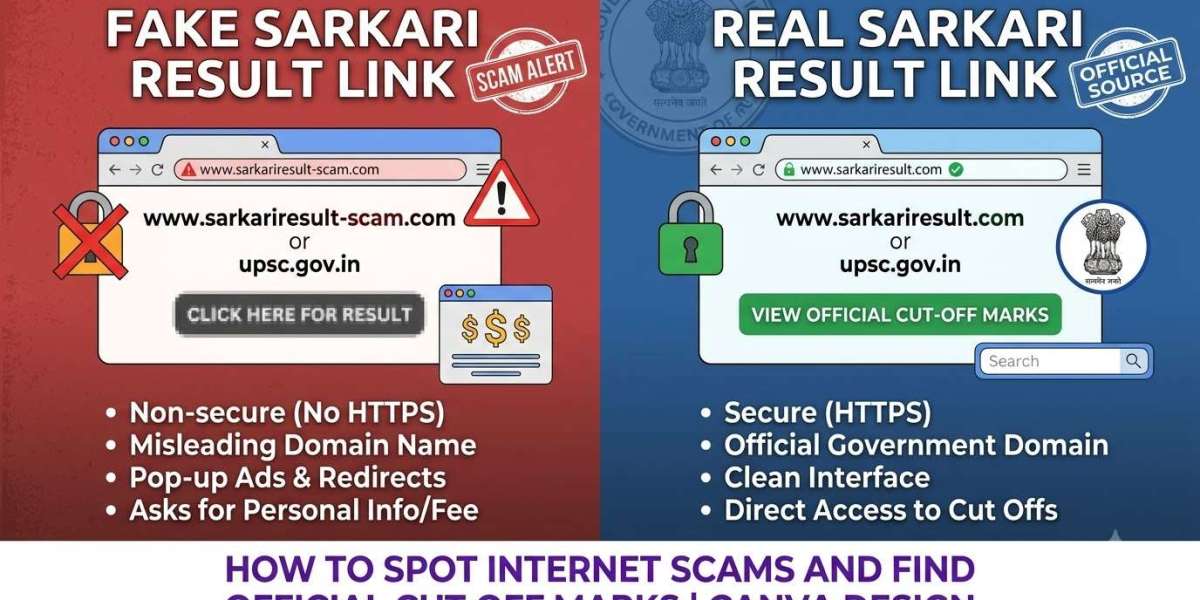

Yearly, millions of applicants use the internet to check their results, admit card, answer key, and cutoff marks through Sarkari Result or even official government portals. Regrettably, there are many people who are keen on using these opportunities offered to cheat applicants and create fake sites, phishing sites, and links, which are very similar to official government sites. Recruitment scams in 2026 will take advantage of applicants by offering immediate results, leaked cutoffs, assured selection list, or even paid merit list. Many applicants do not realize the truth behind such a scam and they end up losing some of their personal details, files or even money through the scam sites.
Why Fake Result Links Are Increasing
Recruitment exams of government jobs through SSC, UPSC, RRB, IBPS, State PSC and other organizations witness an influx of millions of aspirants.
Online fraudsters take advantage of the applicants by designing web pages which:
Copy the design of official portals
Use similar website names
Publish fake result notifications
Ask users to pay verification fees
Request Aadhaar, PAN, OTP, or banking details
Display misleading cut-off marks
Citizens have been alerted by Delhi Police Cyber Cell regarding the presence of fake government websites.
Difference Between Real and Fake Sarkari Result Links
Website Domain: The authentic links are on .gov.in or .nic.in domain extensions; whereas fake websites use .com, .org, and other such extensions.
Source: Authentic information is always published on the recruitment board’s official website; while the fake links get spread via WhatsApp, Telegram, SMS, or unknown websites.
Charge: The authentic websites do not charge any fee for checking cut-off marks or results; while fake websites charge fees for the verification and registration process.
Security: The authentic websites are secure with HTTPS link and official government authentication; while fake websites have redirects, pop-ups, etc.
Cut-Off Marks: Authentic cut-offs are always declared by recruiting authority; while fake websites publish wrong cut-off marks.
Verification: Authentic government websites have other government websites linking them; while fake websites do not.
Common Sarkari Result Scams in 2026
1. Fake Result Declaration Messages
The candidates get WhatsApp and SMS messages saying that results have been declared.
The message includes some suspicious links such as:
result-check-now.com
sarkariresult-update.in
government-job-result.org
Once clicked, users can be required to fill in personal details.
2. Fake Cut-Off Prediction Websites
Some sites have their own fabricated cut-off marks, even prior to the official cut-off marks.
Their objective is to draw traffic and gather potential information about applicants.
3. Paid Merit List Scams
Fraudsters say they can offer:
Final merit lists
Interview selection lists
Joining letters
There are no government recruitment agencies which sell merit list or selection information.
4. Fake Admit Card and Result Downloads
Cyber attackers can also sometimes craft downloadable PDF files that infect with viruses, malware or lead to some malicious websites on the web.
5. Scams on Social Media
There are a lot of fake groups on Facebook, Telegram, and WhatsApp claiming:
Guaranteed government jobs
Early access to results
Leaked cut-off marks
Authorities often advise candidates against believing such claims.
7 Warning Signs of a Fake Result Website
1. Suspicious Website Address
Do not ignore checking the address of the website carefully.
Example:
Valid: ssc.gov.in
Fraudulent: ssc-result2026.com
Sometimes even a small difference in the spelling indicates fraudulent activity.
2. Requirement for Money
Result verification on any website does not require payment. If a website asks you to pay:
Registration Fees
Verification Fees
Unlocking of result charges
you should leave that site immediately.
3. Requirement for OTP and Banking Information
Government recruitment websites will not ever ask for:
OTPs
Debit Card Numbers
UPI PIN
Internet Banking Password
4. Low-Quality Website
Signs of fraud may be found in the website that:
Has too many popup advertisements
Broken pages
Has grammatical errors
Redirects too much
5. Unreasonable Claims
Be careful if a website claims:
Selection guarantee
Legitimate cut-off leak
Services for rank improvement
6. No Official Notification
Make sure the recruitment organization has announced the same thing officially.
7. Urgency Tactics
Fraudsters always use urgency tactics using phrases like:
"Download the result within 10 minutes."
"Last chance to verify selection."
"Paying immediately to secure your selection."
How to Find Official Cut Off Marks Safely
The safest way out is to go directly to the official website of the recruiting body.
SSC Examinations
Results and cut-offs of SSC CGL, CHSL, MTS, GD Constable, JE, and others are announced on the official SSC website.
UPSC Examinations
Official results, marks, and cut-offs are announced through specific sections on the official UPSC website.
Railway Examinations
Cut-offs and merit lists can be found only on the official Railway Recruitment Board website.
Banking Examinations
Results of IBPS, SBI, RBI, and NABARD are announced through their official websites.
Steps to take before clicking any result link
Take these precautions:
Enter the official website address manually.
Verify the domain name.
Check recent notifications.
Avoid unknown links shared on social media.
Install current anti-virus software.
Use two factor authentication if they offer it.
Verify information from multiple trusted sources.
Cybercrime authorities also request citizens to report on suspicious websites using the National Cyber Crime Reporting Portal.
What to Do If You Clicked a Fake Link
In case you’ve entered into a suspicious website by mistake:
Disconnect from the page immediately.
Do not download files.
Change passwords if credentials were entered.
Scan your device for malware.
Contact your bank if financial information was shared.
Report to the Cyber Crime Portal.
Record screen shots as proof.
The Cyber Crime Reporting Portal (CCRP) of the Central Police Intelligence Bureau (CPIB) of India offers facilities to report on suspicious websites and online fraud.
How Official Results Are Usually Released
The typical approach of most government agencies is:
Result notice published.
Merit List of PDF uploaded.
Category-wise cut-off released.
Marks link activated.
Next-stage schedule announced.
For instance, the result PDF, marks information and official cut-off documents are published regularly by UPSC and SSC in dedicated sections of their websites.
Conclusion
With the increasing popularity of government job examinations, fake result websites and online recruitment scams have increased. A candidate should not believe the unconfirmed links, rumours from social media or websites asking fees to receive Sarkari Result updates or cut-off marks. Make sure to use the official recruitment authority's website to check information, as well as double check the domain name, and avoid giving out personal or financial information on unverified websites. Being vigilant and following some of the standard rules of cyber safety can help you avoid getting scammed and help you obtain the real exam information in a safe manner.