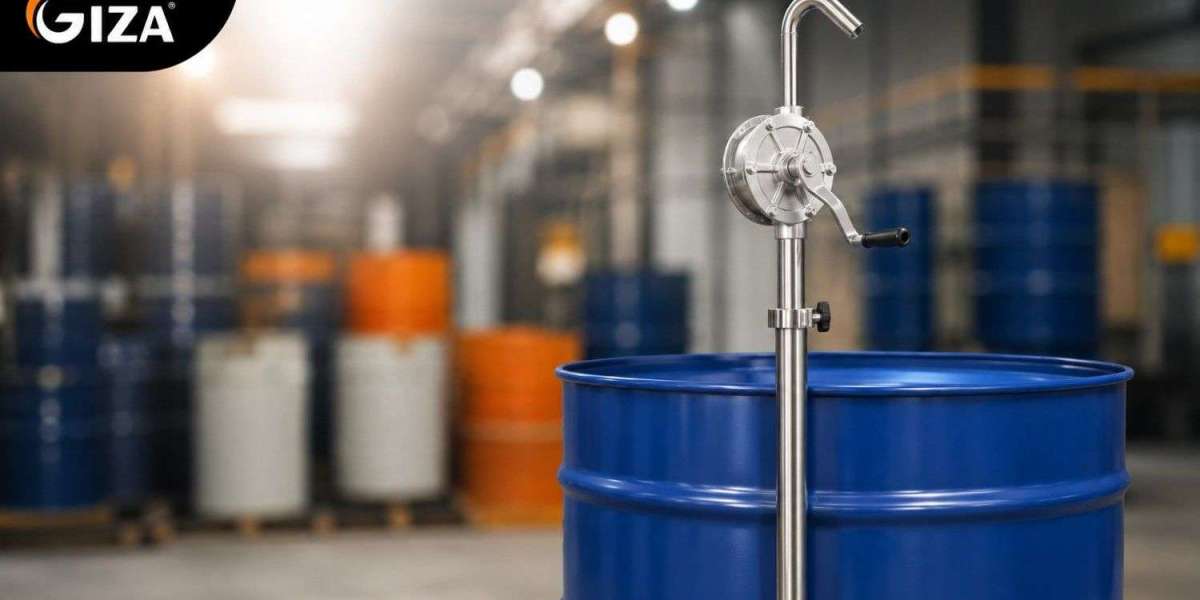

A leaking pump does not remain a small purchasing mistake for long. It contaminates material, creates a slippery work area and leaves the maintenance team arguing with the supplier while production waits. Selecting the right Rotary Barrel Pump requires more than comparing prices and delivery dates.
Most buyers start with flow rate. That is backwards. Fluid type, viscosity, temperature, chemical compatibility and operating frequency should be confirmed first. Industrial barrels commonly hold around 200 litres, making manual lifting or tilting both impractical and risky.
Specifications That Decide Whether the Pump Survives
A rotary barrel pump draws liquid through a suction tube as the operator turns a handle or activates a powered drive. Depending on the design, internal gears, vanes or similar rotating components create suction and move the liquid toward the discharge outlet.
Manual, Electric and Air-Driven Types
Manual pumps work well for occasional transfer, smaller quantities and locations without a power supply. Electric models suit repeated transfers where speed matters. Air-operated pumps are generally considered where compressed air is available or electrical equipment is unsuitable for the operating area.
Manual pumps normally deliver less liquid per minute than electric or pneumatic units. Electric drum pumps usually offer the highest transfer rates, while pneumatic speed can be adjusted through air pressure.
Construction Material Must Match the Liquid
Giza lists four principal material choices:
SS 304 and SS 316: oils, fuels, lubricants and selected chemicals
Polypropylene: acids, solvents and other corrosive liquids
PVDF: highly reactive and aggressive chemicals
Cast iron: petroleum-based liquids and demanding mechanical applications
Giza also offers manual, electric-motor-driven and air-driven configurations.
Nobody tells you that the seal, vane and hose materials matter as much as the pump body.
A stainless-steel body does not automatically make the complete assembly chemically compatible. Compatibility data can change with temperature; one major pump-equipment guide bases many ratings on liquid at 21°C and warns that higher temperatures may accelerate chemical attack.
Drum Fit, Viscosity and Actual Output
Confirm the drum opening, suction-tube length, outlet size, viscosity and expected litres per minute. Some rotary hand pumps deliver about 0.25 litres per handle rotation, while other models are rated near 22 litres per minute under stated test conditions. Those figures are model-specific, not universal promises.
Five Supplier Answers Worth Testing Before You Order
Ask for written fluid compatibility.
A useful answer names the wetted materials, seals, temperature limit and exact liquid. A bad answer is: “Stainless steel works for every chemical.” It does not.Request the tested output conditions.
A credible supplier explains whether the stated flow was measured with water, oil or another liquid. A bad answer quotes one flow rate without viscosity, discharge height or test conditions.Confirm inspection stages.
Look for leak, rotation and assembly checks before dispatch. “Our quality is very good” is not an inspection record.Check spare-part availability.
Ask about vanes, seals, handles, tubes and discharge assemblies. A bad supplier treats a worn seal as a reason to sell another complete pump.Get dispatch and replacement terms in writing.
Ask what happens when units arrive damaged or fail initial testing. “We will handle it later” usually means nobody owns the problem.
How the Right Pump Protects Cost and Margin
Lower Spillage Loss
Controlled dispensing reduces overflow and splashing. That matters when the liquid is expensive, hazardous or difficult to clean.
Less Manual Handling
A pump allows liquid to leave the barrel through an enclosed route instead of requiring workers to tilt a 200-litre container. The operator inserts the tube, runs the mechanism and controls flow at the outlet.
Better Batch Control
Predictable output helps operators dispense closer to the required quantity. Which means fewer rejected mixes, less rework and tighter material accounting.
Reduced Corrosion Risk
Matching PP, PVDF, cast iron or stainless steel to the actual liquid slows premature component damage. The cheapest metal pump becomes expensive after seals swell or the body starts pitting.
Faster Repetitive Transfer
Electric or pneumatic operation reduces time per drum where several containers are emptied during one shift. That protects labour capacity without forcing operators to rush.
Lower Replacement Spend
Replaceable wear components and verified spare support extend usable service life. Buying an unserviceable pump to save a few hundred rupees is poor procurement, not cost control.
Availability Is a Supply-Chain Decision, Not a Pin Code
Buyers searching for Rotary Barrel Pump Suppliers in India should consider where the pump is manufactured, stocked and serviced. Giza operates from Shapar, Rajkot, Gujarat, an established engineering and manufacturing region with road access to major industrial markets.
That location matters. Dispatching from western India can support industrial clusters across Gujarat, Maharashtra, Rajasthan and central India without routing every order through a distant trading warehouse.
Procurement teams can approach Rotary Barrel Pump Manufacturers, or Rotary Barrel Pump Wholesalers, but the label means little unless stock visibility and technical support are real. Giza publicly states that it handles bulk and custom orders and maintains multiple material and drive configurations.
What We Check Before a Giza Pump Leaves Our Facility
We have worked in industrial pumping since 1999, giving us 27 years of operating experience as of 2026. Our published company figures also report more than 90% repeat orders and a response time below 48 hours.
We manufacture rotary barrel pumps in SS 304, SS 316, polypropylene, PVDF and cast iron for different fluid conditions. We inspect each pump through multiple manufacturing stages rather than waiting for the final packing table to reveal an assembly problem.
Here is the detail an experienced operator understands: a handle that feels slightly tight during dry rotation may become much harder to turn after a higher-viscosity liquid enters the chamber, so smooth movement must be checked before dispatch.
We respond to enquiries within 48 hours. Standard and custom-order MOQs depend on pump type, material and configuration, so we confirm the applicable quantity before quotation rather than publishing one misleading number for every model.
Send us the liquid name, concentration, temperature, viscosity, drum capacity, daily transfer volume, preferred drive type and delivery pin code. We will recommend the suitable Giza Pumps configuration and quote the confirmed MOQ, price and dispatch schedule.
Conclusion
A suitable Rotary Barrel Pump should match the fluid, working environment and daily transfer demand—not merely the current purchase budget. Written compatibility and serviceable construction are worth more than a vague “heavy-duty” claim. Select the pump around future operating conditions, and the next production increase will not force another hurried purchase.
Frequently Asked Questions
1. Which Rotary Barrel Pump material should I choose?
Use cast iron for compatible petroleum products, PP or PVDF for selected corrosive chemicals, and SS 304 or SS 316 for compatible oils, fuels, hygienic liquids and chemicals. Final selection still depends on concentration and temperature.
2. Can a rotary barrel pump handle acids?
PP and PVDF models can handle many acids, but not every acid at every concentration. Ask the supplier to approve the exact chemical, concentration and operating temperature in writing before ordering.
3. Are manual pumps suitable for continuous industrial work?
They suit regular controlled transfer, but high-volume, repetitive duty may tire operators and slow output. Electric or air-driven models are usually more practical where several drums are emptied per shift.
4. What information do Rotary Barrel Pump Manufacturers need?
Responsible Rotary Barrel Pump Manufacturers need the liquid name, viscosity, temperature, chemical concentration, drum size, required flow, operating frequency and site conditions before recommending a model.
5. Do Rotary Barrel Pump Dealers keep spare parts?
Some Rotary Barrel Pump Dealers stock seals, vanes, handles and tubes; others only resell complete units. Confirm the exact spare list, lead time and replacement policy before placing a bulk order.
6. Can Rotary Barrel Pump Wholesalers supply customised units?
Established Rotary Barrel Pump Wholesalers may arrange custom materials, tube lengths, outlets or drive configurations. Customisation usually affects MOQ, price and dispatch time, so request written commercial terms.
7. How do Rotary Barrel Pump Suppliers in India test pumps?
Reliable Rotary Barrel Pump Suppliers in India check assembly, handle movement, leakage and material specification. Testing methods differ between suppliers, so ask for the actual inspection scope rather than accepting a generic quality claim.