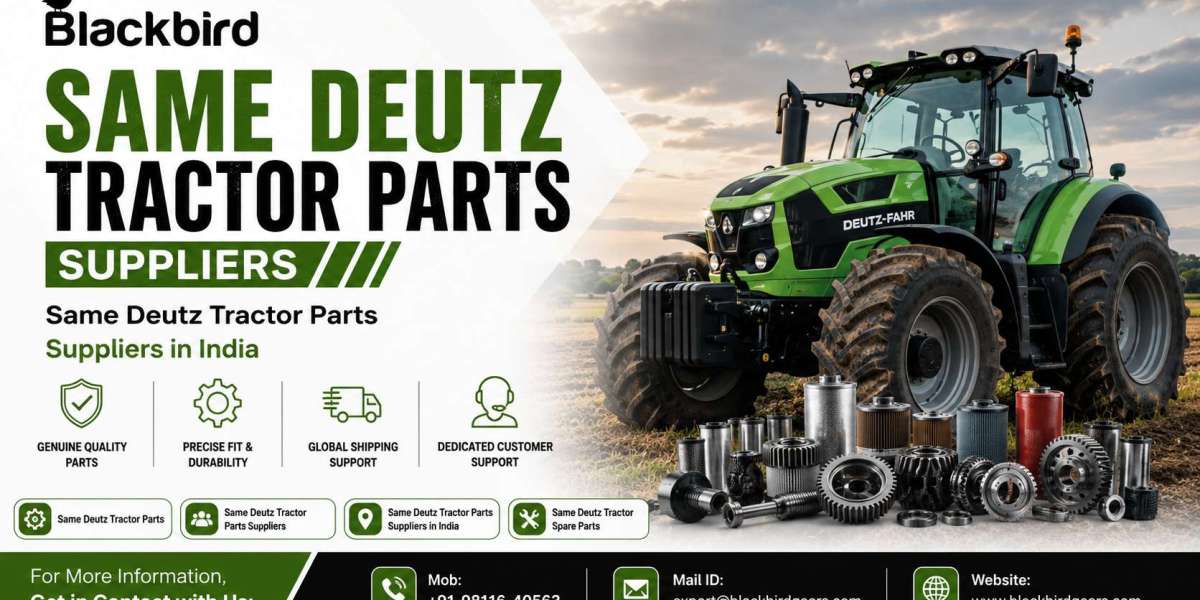

The invoice said "genuine parts." The gasket that arrived wasn't. That's the moment most procurement managers first understand why sourcing Same Deutz tractor parts is a different game than sourcing generic agri-components the tolerances are tighter, the fakes are better made, and a mismatch doesn't show up until the tractor is already in a field 400 kilometres from your warehouse.
Same Deutz tractors run on a mix of legacy and current engine platforms, and a huge share of India's fleet is well past a decade old. Which means the parts market is split between two very different buyers: dealers restocking for current models, and export houses hunting for components on discontinued lines. Neither group has patience for a supplier who says "we'll check and get back to you."
The Spec Detail Most Buyers Skip
Same Deutz tractors span multiple engine families air-cooled and water-cooled variants, different horsepower classes, and regional spec changes made for the Indian market versus export markets. A part number that fits a 45 HP domestic unit will not automatically fit the same horsepower class built for a Southeast Asian buyer.
Common Part Categories
Engine components piston rings, liners, gasket sets, injector nozzles
Transmission and clutch assemblies pressure plates, clutch discs, gear sets
Hydraulic system parts lift pumps, cylinder seals, control valves
Electrical components starter motors, alternators, wiring harness sets
Sheet metal and body parts mudguards, bonnets, fuel tank assemblies
The Detail Buyers Usually Miss
Casting batch numbers matter more than most buyers realise. Two parts with an identical part number can come from different casting runs with slightly different tolerances — usually harmless, occasionally the reason a bearing seizes at 600 hours instead of 2,000. A supplier who can't tell you the casting batch on a bulk order is guessing, not manufacturing.
What Actually Separates a Real Supplier From a Reseller
Most sourcing guides list vague qualities like "reliable" and "trusted." That's not a filter. Here's what to actually check, and what a bad answer sounds like when you ask it.
Material traceability documentation Good: mill test certificates tied to the specific batch shipped. Bad answer: "Our quality team checks everything before dispatch." That's not traceability that's a slogan.
Minimum tolerance specs on wear components Good: written tolerance ranges for rings, liners, and bushings, in microns. Bad answer: "It's OEM standard." Whose standard? Measured how?
Defect and warranty policy in writing Good: a documented return window and defect threshold before your first order ships. Bad answer: "We'll handle defects case by case." That's not a policy that's a negotiation you'll lose after the shipment lands.
Export documentation history Good: prior shipping bills, phytosanitary or quality certificates relevant to the part category. Bad answer: "We can arrange that when you place the order." Meaning they've never done it before.
Actual factory or warehouse capacity Good: a real address you can verify, photos or a video call from the floor. Bad answer: Only a WhatsApp number and a catalogue PDF with no company letterhead.
Why the Right Supplier Protects Your Margin, Not Just Your Timeline
Fewer warranty claims eating into your margin. A part that fails at 300 hours costs you the replacement, the freight, and the customer relationship three losses from one bad component.
Predictable lead times you can quote to your own customers. Wholesalers lose deals when they can't commit to a delivery date, not when their price is slightly higher.
Batch consistency across repeat orders. Buying the same part number twice shouldn't mean two different tolerance ranges.
Reduced customs friction on export orders. Suppliers who already hold the right documentation cut days off clearance, not just paperwork.
Fewer SKUs to manage per machine model. A supplier who stocks full assemblies, not scattered components, cuts your inventory complexity.
Leverage in your own price negotiations. Verified quality lets you sell on reliability instead of racing competitors to the bottom on price.
None of that shows up on a spec sheet. It shows up eighteen months later, in your return rate.
Why Location Is a Supply Chain Decision, Not Just an Address
India's tractor parts trade runs heavily through Punjab, Haryana, and parts of Gujarat, where a dense network of casting units and machine shops means faster turnaround on custom or discontinued parts than importing from overseas. A supplier based near this belt isn't just closer on a map they're closer to the foundries that actually make the raw components, which matters when a customs delay overseas would otherwise stall your whole order.
For wholesalers and export houses working across Delhi NCR and northern India, sourcing locally also means physical inspection is realistic. You can visit. You can pull a sample off the line before a container is sealed. That single option removes most of the risk that comes from sourcing parts sight-unseen from a supplier three time zones away.
About Us
We've been supplying tractor components out of the Delhi NCR belt since 2013, and most of what we've learned came from shipments that went wrong before they went right. We stopped stocking a particular clutch disc supplier in 2021 after two consecutive batches showed premature wear in field trials we switched sources within six weeks rather than keep selling something we didn't trust ourselves. That's the kind of call you only make when the relationship with the buyer matters more than the invoice.
Our catalogue at Blackbird Gears covers Same Deutz tractor parts across engine, transmission, hydraulic, and electrical categories, sourced and verified through our own inspection process before anything leaves our warehouse.
Send us your part numbers or the model and engine variant if you don't have exact numbers yet along with your required quantity, and we'll respond with pricing and lead time within 24 hours on business days. Minimum order quantity varies by part category; smaller trial orders are available for new buyers who want to verify quality before committing to bulk. Email your requirement list to us through www.blackbirdgears.com, or call our sourcing desk directly. Blackbird Gears handles both domestic wholesale orders and export documentation for international buyers.
Conclusion
Sourcing Same Deutz tractor parts in India isn't complicated once you know which questions actually separate a manufacturer from a reseller with a good catalogue. Ask about casting batches. Ask for the warranty policy in writing before the first order, not after the first complaint. The Same Deutz Tractor Parts Suppliers in India who answer plainly are usually the ones worth building a five-year relationship with.
Frequently Asked Questions
1. What is the typical lead time for Same Deutz tractor parts orders in bulk?
For components we stock, 3 to 5 business days. For parts requiring custom casting or a low-volume production run, plan for 3 to 4 weeks anyone promising faster on a custom part is probably pulling from unverified stock.
2. Do Same Deutz tractor parts suppliers in India offer export documentation?
The established ones do, yes mill certificates, shipping bills, and phytosanitary documentation where applicable. Ask to see a sample document set before placing your first export order; not every supplier who claims this has actually done it before.
3. Can I get samples before placing a bulk order?
Yes, and you should insist on it for any new supplier relationship, regardless of what they quote you. A sample order costs you a small amount now; a bad bulk order costs you the customer later.
4. Are aftermarket Same Deutz tractor parts as reliable as OEM parts?
Some are, some aren't it depends entirely on the manufacturer's tolerance control, not on the aftermarket label itself. We test aftermarket batches against OEM tolerance specs before listing them, and we'll tell you plainly when a part doesn't meet that bar.
5. What's the minimum order quantity for wholesalers?
It varies by part category electrical components typically have a lower MOQ than cast engine parts, where tooling costs make small runs inefficient. We'll confirm the exact number against your specific part list.