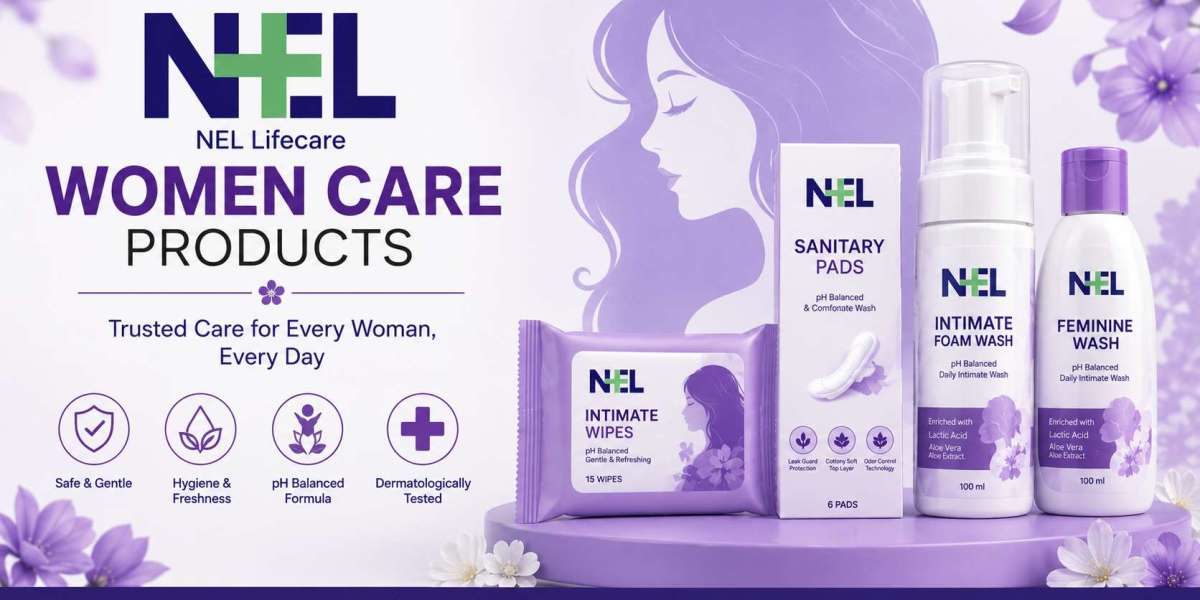

A pad that feels rough, shifts, leaks under pressure, or arrives with inconsistent sealing is not a “small defect” at retail. It becomes a return, complaint, and sometimes a lost account. That is why Women Care Products Manufacturers are judged on repeatable performance, not packaging claims. NFHS-5 analysis published by UNFPA found that 78.0% of girls aged 15–19 used a hygienic menstrual-protection method in 2019–21, while 64.5% used sanitary napkins. And yet, buyers still approve products from one sample packet without asking how the production lot will be controlled.
What Women Care Products Manufacturers Must Lock Before Production
Start With the Product Format
NEL Lifecare’s Women Care catalogue lists sanitary pads and period panties, while BIS groups disposable sanitary napkins, panty liners, maternity pads and period panties under IS 5405:2025.
For sanitary pads, procurement should define top sheet, absorbent core, bottom layer, fastening, size, pack count and carton configuration. BIS testing under the 2025 standard includes pH, pressure after absorption, bacterial and fungal bioburden, Staphylococcus aureus testing and phthalates.
Here’s the detail buyers skip: “high absorbency” is not a specification. Ask for the test method and acceptance limit.
Locking dimensions, absorbency expectations, adhesive behaviour, artwork and carton quantity before a private-label run is harder than first-time buyers expect.
Five Supplier Checks That Prevent Expensive Surprises
1. Ask for the Test Standard
A good answer names the standard and records. A bad answer is “our quality is premium.” IS 5405:2025 gives buyers a concrete reference.
2. Check Batch Consistency
Ask how incoming material, in-process output and finished goods are checked. A bad answer is “we inspect before dispatch” with no batch record.
3. Confirm OEM Control
Artwork, pack count, barcode, carton marking and approved sample should be frozen before production. A bad answer is “we can adjust during packing.”
4. Test Supply Capability
Rural hygienic-method use among adolescent girls was 73%, versus 90% in urban areas. A bad answer is nationwide supply promised without lead-time or freight discussion.
5. Put Defect Handling in Writing
Define shortages, leakage, sealing and specification deviations before the PO. A supplier who says defects are handled “case by case” is postponing the argument until your money is committed.
Benefits: Where Better Manufacturing Protects Margin
Better Women Care Products reduce risk in returns, repeat orders, distributor confidence and brand reputation. Hygienic-method use among girls aged 15–19 rose from 58.3% in NFHS-4 to 78.0% in NFHS-5—a 19.7 percentage-point change.
Lower Complaint Exposure
Consistent absorbency, fastening and sealing reduce avoidable complaints.
Cleaner Private-Label Launches
Approved specifications stop pack count and product construction drifting between sample and commercial lot.
Better Inventory Planning
Stable pack and carton configurations simplify warehouse counts and replenishment.
Stronger Retail Confidence
Retailers reorder more comfortably when the same SKU performs consistently across batches.
Better Margin Protection
A cheaper pad that creates returns is not cheaper. It transfers the manufacturing problem to the buyer.
India Is Not One Uniform Women-Care Market
For buyers comparing Women Care Products Manufacturers in India or Women Care Products Suppliers in India, geography changes the sales plan. UNFPA found 213 districts above 90% hygienic-method usage, while seven districts remained below 40%.
Which means one national pack strategy can miss local price points and reorder patterns. Suppliers should discuss destination, transport mode and monthly movement before quoting landed economics.
NEL Lifecare: OEM Support Starts Before Packing
We have operated since 2021, and our website identifies NEL Lifecare as a WHO-certified manufacturer across hygiene and personal-care categories. India Health’s exhibitor listing also identifies us as a disposable-hygiene manufacturer providing OEM facilities.
We present sanitary pads and period panties in our Women Care Products range, with flexible MOQ positioning for new and existing product lines.
And we treat the approved product specification as the master document; attractive artwork cannot rescue a weak pad.
We accept enquiries through our published 24×7 customer-care channel, which the site describes as offering quick-response support, and we keep MOQ flexible/customizable by product and launch requirement.
Send us your target market, product format, size, pack count, expected monthly quantity, artwork status, delivery city or port and required test documents. We will confirm the applicable MOQ and quotation timeline after reviewing the complete brief.
Conclusion
Choosing Women Care Products Manufacturers should come down to measurable performance, controlled production and commercial accountability. With 78.0% of adolescent girls in NFHS-5 using hygienic methods, demand is visible, but buyers still carry the cost of vague specifications. The next stronger women-care brand will treat comfort and consistency as procurement requirements, not advertising language.
FAQs
1. What should buyers check before choosing Women Care Products Manufacturers?
Check the standard, absorbency basis, materials, fastening, pack specification, batch controls, OEM process and written defect policy before commercial approval.
2. What can Women Care Products Manufacturers in India supply?
NEL publicly lists sanitary pads and period panties; BIS IS 5405:2025 also covers panty liners and maternity pads.
3. Do Women Care Products Suppliers offer private-label manufacturing?
Many do, but capability varies. NEL is listed by India Health as providing OEM facilities; confirm testing, artwork, packing and MOQ per SKU.
4. How do Women Care Products Suppliers in India handle MOQ?
There is no useful one-number answer across every SKU. NEL states flexible/customizable MOQ options for new launches and scaling lines.
5. Why does sanitary-pad testing matter?
Current BIS testing addresses pH, absorption under pressure, hygiene-related bioburden and other requirements; visual inspection alone does not cover those risks.