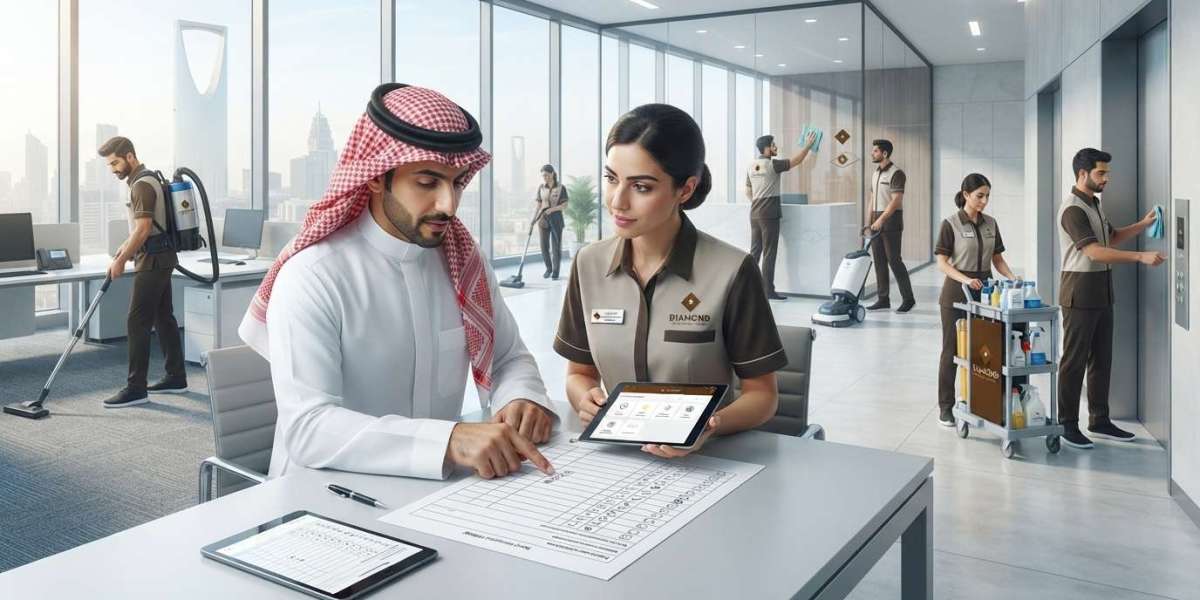

The building looked spotless during the trial month. By month four, washrooms run out of supplies before noon and nobody has touched the glass partitions since handover. The provider did not change. Your specification was never written clearly enough to hold them to anything. Commercial cleaning standards in Riyadh only survive when frequency, method, and measurement appear in writing.
Why Commercial Cleaning Standards in Riyadh Slip After Month Three
Most contracts describe outcomes vaguely. "Maintain a clean and presentable environment" cannot be enforced or disputed.
Staffing then quietly reduces. A provider that mobilised with twelve cleaners settles at nine, and nobody notices until complaints accumulate.
Task frequency drifts next. Daily tasks become alternate day tasks, and periodic deep cleaning disappears entirely because nobody scheduled or tracked it.
Turnover accelerates the decline. New cleaners arrive without induction, learn the routine informally, and inherit whatever shortcuts the previous team developed.
Clear commercial cleaning standards in Riyadh fix this by removing interpretation. Every task gets a frequency, a method, and a way to verify it happened.
Zone Your Building Before Setting Frequencies
Uniform cleaning across a whole building wastes effort in quiet areas and under serves busy ones.
Divide the property into zones by footfall and visibility.
High Traffic and High Visibility: Main entrances, reception, lift lobbies, and primary corridors. These form first impressions and need attention multiple times daily, particularly given how quickly dust accumulates in Riyadh.
Sanitary Areas: Washrooms, ablution facilities, prayer rooms, and pantries. These carry hygiene risk and generate the majority of complaints. Schedule checks at fixed intervals with a logged sign off, not a single morning clean.
Working Areas: Offices, meeting rooms, and workstations. Daily waste removal and surface cleaning, with periodic deep cleaning of carpets and upholstery.
Back of House: Storerooms, loading bays, plant rooms, and service corridors. Lower frequency, but never zero. Neglected back of house areas attract pests and create fire risk.
External Areas: Entrances, car parks, and signage. Dust and sand require more frequent attention here than temperate climate schedules assume.
Assign frequencies per zone, per task. A specification that lists twenty tasks against four zones gives both parties something concrete to work from, which is what practical commercial cleaning standards in Riyadh require.
Turning Standards Into Measurable SLAs
Write each service level so a third party could verify it without asking your opinion.
Replace "washrooms kept clean" with a defined checking interval, a logged inspection record, and a maximum time to replenish consumables after a report.
Replace "prompt response to spillages" with a stated response time in minutes for high traffic zones.
Set periodic tasks on a calendar with dates. Carpet deep cleaning, facade glass cleaning, floor scrubbing and restoration, and upholstery cleaning all need scheduled dates and completion evidence.
Define staffing explicitly. State the number of cleaners per shift, the shift hours, and the supervisor coverage. Then require an attendance record.
Set consumables responsibility clearly. Specify who supplies hand soap, tissue, bin liners, and hand dryers, and what stock levels the provider must maintain.
Include a rectification window. When an audit finds a failure, the provider gets a defined period to correct it before any deduction applies. This keeps the relationship practical rather than punitive.
Finally, agree a small set of KPIs and review them monthly. Complaint volume by zone, audit score, task completion rate, and staff attendance give you enough signal without generating reports nobody reads.
Chemicals, Equipment, and Staff Safety
Cleaning quality depends on correct products used correctly, and this is where untrained teams cause damage.
Require material safety data sheets for every chemical on site, stored where staff can reach them. Chemicals need labelled containers, correct dilution, and secure storage away from food areas.
Match products to surfaces. Acidic cleaners damage natural stone. Aggressive alkaline products strip floor sealants. Repairing a damaged marble lobby costs far more than the cleaning contract saved.
Never allow mixing of products. Combining certain cleaning chemicals produces dangerous gases, and this remains a genuine incident cause in commercial buildings.
Specify equipment too. Colour coded microfibre systems prevent cross contamination between washrooms and food areas. Vacuum cleaners with HEPA filtration matter in offices where dust circulates.
Require induction training records for every cleaner, covering chemical handling, equipment use, and emergency procedures. Strong commercial cleaning standards in Riyadh depend on trained staff more than on premium products.
Auditing Without Becoming the Supervisor
Audit monthly using a fixed scoring sheet, and score the same zones every time so results compare across months.
Photograph findings. Photographs end disputes faster than written descriptions and help supervisors brief their teams accurately.
Vary your timing. A Sunday morning audit shows a different building than a Thursday afternoon audit, and the afternoon picture is usually the honest one.
Collect occupant feedback through a simple reporting route, then track which zones generate repeat complaints.
Contracting a provider that delivers Soft Cleaning Services with their own internal audit process reduces your workload considerably, because supervision, training, and quality checks sit with them rather than with your facility team.
Review results with the provider's manager, not the site supervisor. Structural issues such as understaffing get resolved at management level.
Frequently Asked Questions
How many cleaners does a commercial building need?
It depends on cleanable area, zone mix, and required frequencies rather than total floor plate. Buildings with heavy washroom use, food service, or public access need higher ratios. Ask providers to show their calculation method rather than accepting a headcount figure alone.
Should cleaning happen during or outside working hours?
Split the schedule. Deep cleaning, floor work, and noisy tasks belong outside occupied hours. Washroom checks, waste removal, and spill response must happen during the day, since problems arise while people are in the building.
What is included in soft services?
Soft services usually cover cleaning, waste handling, pest control, landscaping, security, and reception support. Hard services cover the physical building systems such as HVAC, electrical, and plumbing. Many buildings contract both together for single point accountability.