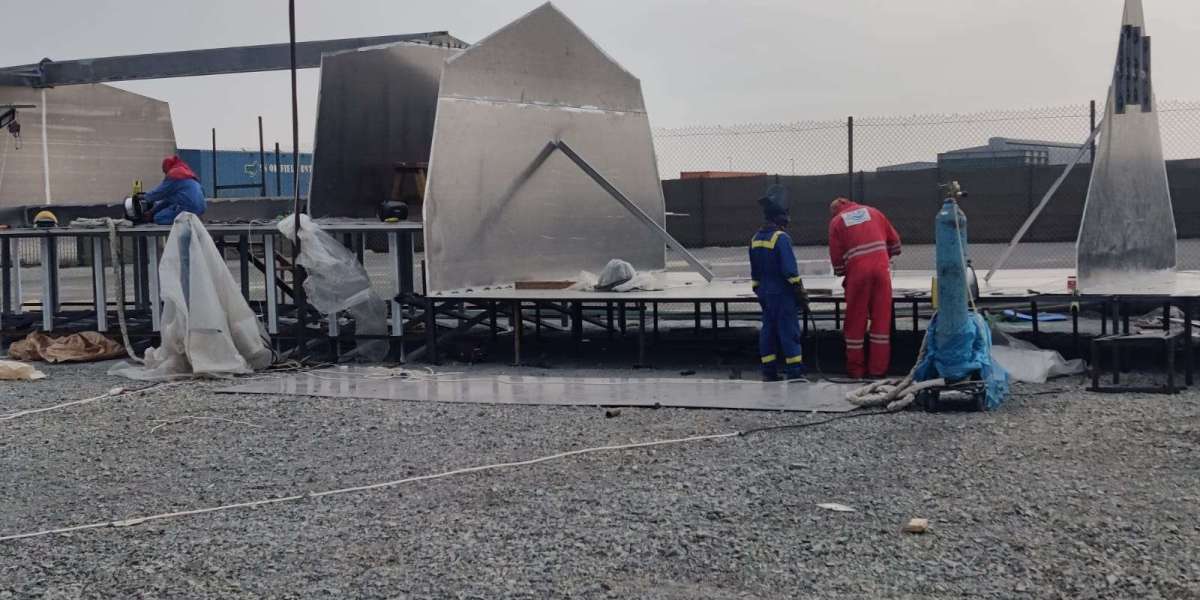

The UAE has built a strong reputation as a major maritime and logistics hub, and the demand for reliable working vessels continues to grow. Barges are an important part of this sector because they can transport heavy equipment, construction materials, machinery, and cargo across coastal and offshore areas. As marine operations become more demanding, barge builders in UAE are increasingly relying on advanced marine engineering to create vessels that are stronger, safer, and more efficient.
Modern barge construction is no longer limited to building a simple floating platform. Today's barges are designed according to their specific purpose, operating environment, load requirements, and expected working life. This shift toward specialized engineering is helping operators achieve better performance and lower long-term maintenance costs.
UAE's Growing Maritime Industry
The UAE's maritime sector has expanded significantly because of its strategic location between major global markets. According to the UAE Ministry of Energy and Infrastructure, the maritime sector contributes around AED 135 billion to the country's GDP, highlighting its importance to the national economy.
The country's ports also handle enormous volumes of cargo. UNCTAD recorded around 21.14 million TEUs of container port throughput in the UAE in 2024. Such activity creates demand for different types of support vessels, including cargo barges, work barges, utility barges, and offshore construction vessels.
With continued investment in ports, offshore infrastructure, and marine transportation, the need for professionally engineered barges is expected to remain strong.
Why Advanced Marine Engineering Is Important
Marine engineering plays a role in almost every stage of barge construction. Before fabrication begins, engineers need to understand how the vessel will be used. They consider factors such as cargo weight, deck loading, water depth, stability, operating conditions, and required endurance.
Computer-aided design and engineering software allow designers to create detailed models before construction starts. These models can help identify structural problems and improve the overall arrangement of the vessel.
This approach is especially useful for specialized barges. A vessel designed to carry heavy construction machinery will have different structural requirements from a barge used for cargo transportation or offshore support.
Aluminium and Lightweight Construction
Material selection is another important part of modern marine engineering. Aluminium is increasingly considered for applications where weight reduction is valuable. Aluminium has a density of approximately 2.7 tonnes per cubic metre, compared with around 7.8 tonnes per cubic metre for mild steel.
The lower weight can provide several benefits depending on the vessel's design. It may allow greater payload capacity, reduced draft, improved handling, or lower energy requirements.
Aluminium also provides good resistance to corrosion, which can be useful in marine environments. However, successful aluminium construction requires proper engineering, welding techniques, structural design, and maintenance.
For this reason, aluminium barge manufacturers need to focus on much more than simply reducing vessel weight. Strength, stability, durability, and operational requirements must all be considered together.
Stronger and Smarter Barge Designs
One of the biggest changes in modern barge construction is the move toward purpose-built designs. Instead of using the same configuration for every project, engineers can develop vessels around the actual requirements of the operator.
For example, a construction barge may need a heavily reinforced deck to support cranes and excavators. A cargo barge may require a different deck arrangement and cargo distribution system. An offshore support barge may need additional equipment foundations, storage areas, and specialized safety systems.
Digital modelling makes it easier to study these requirements before fabrication. Engineers can evaluate hull dimensions, structural arrangements, stability, and load distribution to create a more suitable design.
Safety and Stability
Safety is one of the most important considerations in barge construction. Barges often carry heavy machinery and large quantities of materials, so incorrect loading can affect stability.
Engineers consider displacement, buoyancy, centre of gravity, freeboard, ballast arrangements, and cargo distribution when developing a vessel. Structural reinforcement is also carefully planned to handle expected loads.
Modern engineering can therefore help reduce risks by identifying potential structural weaknesses during the design stage rather than after construction.
Modern Construction Technology
Advanced engineering is also improving the way barges are manufactured. Modern shipyards can use computer-controlled cutting, digital fabrication drawings, advanced welding procedures, and detailed inspection processes.
Accurate cutting helps ensure that components fit correctly during assembly. Consistent welding practices help maintain structural integrity, while inspections can identify defects before a vessel enters service.
For a barge building company, combining engineering knowledge with accurate fabrication is essential. A well-designed vessel still needs high-quality construction to perform reliably in demanding marine conditions.
Demand From Ports and Offshore Projects
The UAE's busy port sector is one of the major factors supporting demand for working vessels. In 2024, Jebel Ali Port handled approximately 15.5 million TEUs, representing its highest container volume since 2015.
Barges can support a wide range of activities connected with this level of maritime activity. They may be used for transporting equipment, supporting construction projects, moving cargo, assisting offshore operations, or providing temporary working platforms.
As marine infrastructure continues to develop, flexible and dependable vessels can provide practical solutions for projects where conventional transportation methods are difficult or expensive.
Sustainability and Long-Term Efficiency
Environmental performance is becoming increasingly important in marine construction. Modern engineering can help reduce a vessel's overall operating impact through lighter structures, efficient hull designs, improved machinery, and better energy management.
The industry is also becoming more focused on lifecycle costs. A barge that is durable, fuel-efficient, easy to maintain, and capable of operating for many years can offer better value than a vessel designed only around its initial construction price.
This is why advanced engineering is increasingly viewed as an investment rather than an additional cost.
The Role of VU Marine
VU Marine is involved in shipbuilding and marine services, including aluminium boat building, barge and tug construction, ship repair, retrofitting, maintenance, and other marine solutions.
Its approach reflects the broader direction of modern marine construction, where practical engineering and quality fabrication need to work together. Every barge has different operational requirements, so understanding the vessel's intended use is essential for developing an effective solution.
The Future of Barge Construction in the UAE
The future of barge construction in the UAE looks closely connected with advanced engineering. Growing port activity, offshore development, infrastructure projects, and marine transportation requirements will continue to create demand for specialized vessels.
Technology will help engineers design stronger structures, optimize weight, improve safety, and develop more efficient vessels. At the same time, greater attention to sustainability and lifecycle costs will encourage operators to look beyond the initial purchase price.
Ultimately, modern barge construction is about creating vessels that can perform reliably in real working conditions. Through better design, materials, technology, and engineering practices, barge builders in UAE can continue to support the country's expanding maritime industry while delivering safer, more efficient, and more durable marine solutions.