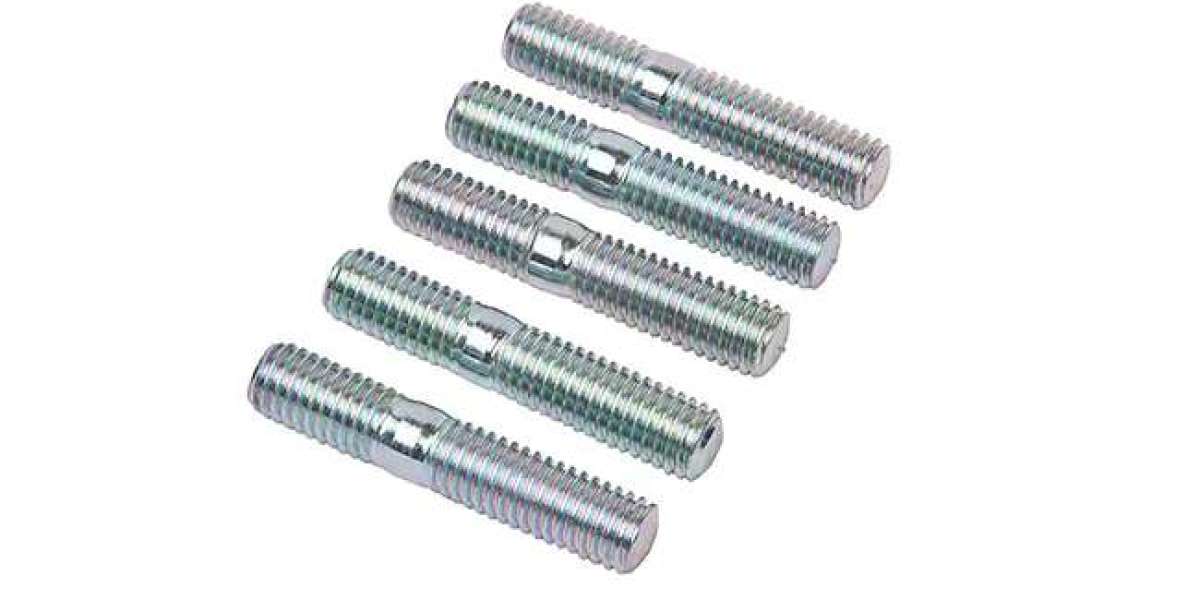

Mechanical assemblies often require fastening solutions that work in spaces where conventional bolts are difficult to position. Double-Ended Studs offer a practical alternative because their threaded ends can connect separate components without relying on a bolt head. The central section provides a fixed body, creating a fastening point that can remain in place during assembly and disassembly.
A typical Double-Ended Studs application involves mounting one component onto another. One end may engage with a threaded hole, insert, or other internal thread, leaving the opposite end exposed. A nut can then secure the second component. This arrangement can be useful for housings, machinery parts, mounting plates, covers, brackets, and equipment assemblies.
Different industries may require different stud configurations. Small-diameter studs can be suitable for compact components, whereas larger versions may be selected for heavier mechanical structures. Thread pitch also deserves attention because coarse and fine threads provide different engagement characteristics. The correct choice depends on the mating component and the mechanical design.
Material is another important consideration during sourcing. Steel studs are commonly used for general industrial fastening, while stainless steel options can be considered for applications where resistance to moisture and corrosion is relevant. Other material grades may be specified when a particular strength or operating requirement needs to be addressed.
OEM and ODM buyers may also request changes to the standard design. These changes can involve overall length, thread dimensions, thread distribution, material, surface treatment, or packaging. Supplying accurate technical drawings or sample dimensions can make communication between the buyer and manufacturer more efficient.
Double-Ended Studs can also support more organized assembly layouts. Since one threaded section can stay attached to the base component, the installer only needs to position the second component and secure it with the appropriate nut or threaded part. This can be useful when the installation area provides limited access for tools.