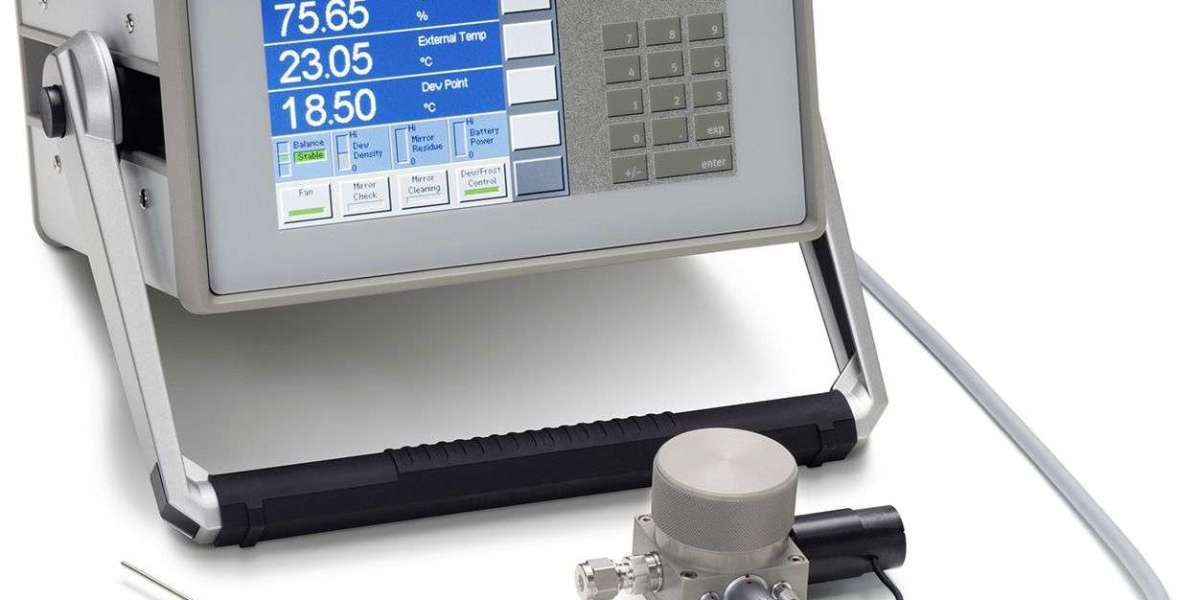

Moisture control is an important part of many industrial processes, particularly where water vapor can influence equipment reliability, product quality, or operating efficiency. Accurate measurement helps technicians understand changing environmental and process conditions and take action when moisture levels become unsuitable. Modern measurement instruments provide practical solutions for monitoring air and gas quality across different applications. ShawMeter offers professional measurement equipment designed to help engineers and technicians obtain dependable moisture and dew-point information.
What Is a Dewpoint Hygrometer?
A dewpoint hygrometer is an instrument used to measure the moisture condition of air or gas by determining its dew point. The dew point represents the temperature at which water vapor reaches saturation and condensation can begin.
This measurement is valuable in applications where moisture must be monitored carefully. Depending on the design, the instrument can be used for field inspections, maintenance work, process monitoring, and quality-control applications.
Why Dew Point Measurement Is Important
Excessive moisture can create several problems in industrial systems. Condensation may contribute to corrosion, contamination, equipment deterioration, and process instability.
Monitoring dew point gives engineers useful information about the moisture condition of a system. Regular measurements can help identify unexpected changes and provide an opportunity to investigate potential problems.
Reliable moisture information can also support preventive maintenance and equipment protection.
Industrial Applications
Dew-point measurement is relevant to a broad range of industries. Manufacturing facilities, compressed-air systems, pharmaceutical production, laboratories, chemical processing plants, gas systems, and power-generation facilities may all require dependable moisture monitoring.
The requirements can vary considerably between applications. Gas composition, pressure, temperature, measurement range, and required accuracy should be evaluated before selecting a suitable instrument.
Compressed-Air Quality Monitoring
Compressed air is widely used in industrial automation, machinery, and production processes. Moisture entering the system can cause condensation and potentially affect connected equipment.
Dew-point measurements allow technicians to assess air quality and monitor the performance of drying equipment.
Taking measurements at appropriate points can also help identify changes within a compressed-air network and provide useful information for maintenance teams.
Benefits of Accurate Moisture Measurement
Reliable measurements provide greater visibility into system conditions. Technicians can compare readings from different locations and identify unusual variations.
This can be particularly useful when investigating equipment performance or determining whether a drying system is operating as expected.
Consistent monitoring also provides historical information that can help engineers recognize trends and make better maintenance decisions.
Important Features to Consider
Selecting the right instrument requires consideration of several technical factors. Measurement range, accuracy, response time, sensor technology, stability, and repeatability can all influence performance.
Operating pressure and temperature should also be evaluated, especially when measurements are taken directly from industrial processes.
For portable applications, battery life, durability, display readability, and ease of use may be important considerations.
Dew-Point Measurement Technology
Different technologies can be used to determine moisture and dew point. The most suitable option depends on the required measurement range, environmental conditions, and application.
Industrial users generally need equipment capable of providing stable and repeatable readings.
ShawMeter provides professional measurement solutions designed to support reliable moisture monitoring across a variety of technical environments.
Portable and Fixed Monitoring Solutions
Portable instruments are useful when technicians need to inspect several locations within a facility. They can be carried between measurement points and are particularly useful for troubleshooting and routine maintenance.
Fixed monitoring equipment, on the other hand, can provide continuous measurements at critical locations.
Using both approaches can give an organization a more complete understanding of moisture conditions throughout its processes.
Supporting Preventive Maintenance
Moisture measurement can play an important role in preventive maintenance programs. A gradual increase in dew point may indicate a problem with a dryer, filter, seal, or another system component.
Identifying such changes early allows technicians to investigate the issue before it develops into a more serious operational problem.
Historical data can also help maintenance teams compare current conditions with previous measurements.
Calibration and Measurement Accuracy
Regular calibration is important for maintaining confidence in measurement results. Sensors and instruments can experience measurement drift over time depending on their operating environment and usage.
Following the manufacturer's recommended calibration schedule can help maintain reliable performance.
Users should also keep suitable calibration and maintenance records when required by their internal quality procedures.
Sampling and Installation Considerations
Proper installation and sampling practices are essential for obtaining dependable measurements. Leaks, contamination, unsuitable tubing, and poor connections can affect the quality of the sample.
The sampling system should be appropriate for the gas and operating conditions being measured.
When measuring very low moisture levels, minimizing contact with ambient humidity becomes particularly important.
Choosing the Right Instrument
Before purchasing equipment, users should define the application's measurement requirements. Expected dew-point range, gas composition, operating pressure, temperature, and required accuracy all influence the appropriate choice.
The intended environment should also be considered. Field technicians may prioritize portability and durability, while process engineers may require continuous monitoring and system integration.
Why Choose ShawMeter?
ShawMeter focuses on professional measurement solutions for moisture and dew-point applications. Its equipment can support technicians and engineers working across industrial, manufacturing, and technical environments.
Selecting an instrument based on actual application requirements can help users achieve more consistent measurements and better long-term monitoring performance.
Improving Process Efficiency
Accurate moisture data can support more effective process management. Engineers can use measurement information to identify unusual conditions, evaluate equipment performance, and plan maintenance activities.
Consistent measurements can also make it easier to establish normal operating conditions and recognize deviations.
This combination of monitoring and analysis can contribute to improved equipment reliability and operational efficiency.
Conclusion
The Dewpoint hygrometer provides a practical way to evaluate moisture conditions in air and gases. Accurate dew-point measurements can support compressed-air monitoring, industrial processes, preventive maintenance, equipment protection, and quality assurance.
Choosing suitable equipment requires careful consideration of measurement range, operating conditions, accuracy, installation, and calibration requirements. With professional solutions from ShawMeter, businesses can improve moisture monitoring and gain reliable information for better technical and operational decisions.