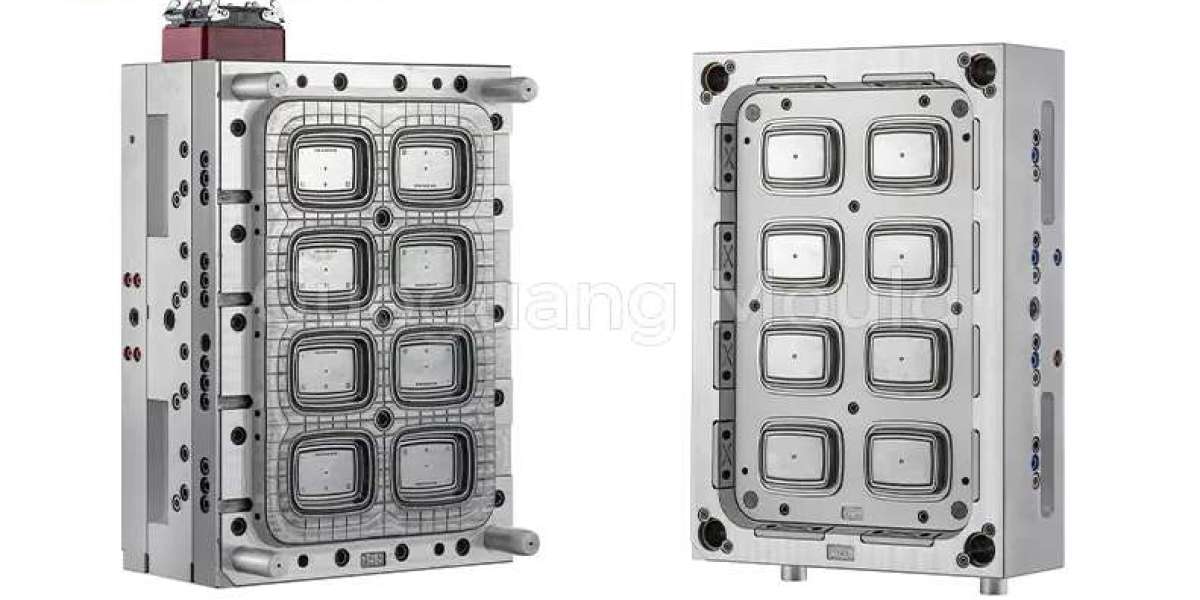

A food container can look like a simple plastic box, but producing one with thin walls requires careful attention to every part of the molding process. The Plastic Injection Thin Wall Food Container Mold determines the basic geometry of the container, including wall thickness, rim shape, corners, stacking features, and bottom structure. Small differences in these areas can influence how the finished container comes out of the mold.
Thin-wall injection molding is closely connected to material flow. Molten plastic needs to travel through the cavity before it cools and becomes difficult to move. A suitable runner layout and gate position can help the material reach different areas of the cavity within the available filling time. For a container with a large surface area and relatively thin walls, this becomes an important design consideration.
The cavity itself must reproduce the intended container shape accurately. Corners may require carefully designed transitions because abrupt changes in thickness can affect material flow and cooling behavior. The rim also deserves attention because it needs to form cleanly while providing the shape required for lids, stacking, or sealing applications.
A Plastic Injection Thin Wall Food Container Mold may use multiple cavities when production requirements call for several containers to be molded during one injection cycle. Cavity arrangement needs to consider runner balance, mold dimensions, cooling layout, and ejection space. A balanced configuration can help maintain similar filling conditions between cavities.
Cooling is another major part of the mold structure. Thin plastic sections can solidify quickly, so cooling channels need to be positioned around the cavity in a way that supports consistent heat transfer. The arrangement is particularly relevant around corners, the base, and thicker sections such as rims or reinforced areas.
Ejection also presents an interesting challenge. Once the plastic has cooled sufficiently, the container needs to leave the cavity without unwanted deformation. Ejector pins, stripper plates, or other mechanisms can be selected according to the container geometry. Their positions need to correspond with suitable areas of the molded part.
The Plastic Injection Thin Wall Food Container Mold is therefore more than a metal block containing a cavity. Its runner system, cooling channels, cavity geometry, gate arrangement, and ejection structure all influence how a thin container is formed.