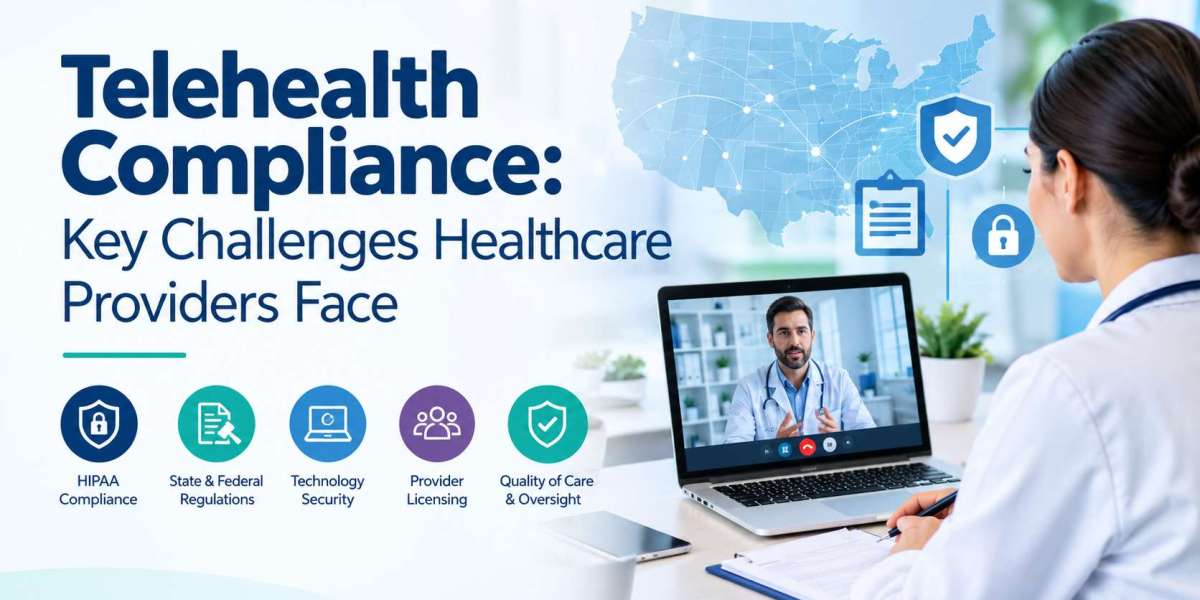

Telehealth has transformed how healthcare providers connect with patients, offering greater convenience, accessibility, and flexibility. However, expanding healthcare services through virtual platforms also introduces a complex set of regulatory and operational responsibilities.
Healthcare providers must consider state licensing requirements, patient privacy, clinical documentation, prescribing rules, physician oversight, and technology security. These requirements can become even more challenging when a telehealth organization operates across multiple states.
Understanding the major telehealth compliance challenges can help healthcare organizations reduce risk while creating a safer and more sustainable virtual care model.
Understanding Telehealth Compliance
Telehealth compliance refers to the policies, procedures, technologies, and clinical practices that healthcare organizations use to meet applicable healthcare laws and regulations.
Unlike traditional healthcare environments, telehealth often involves providers and patients located in different places. This creates additional considerations around state licensing, patient location, documentation, prescribing, and clinical supervision.
Compliance is not simply a legal requirement. It also supports patient safety, protects sensitive information, improves operational consistency, and helps organizations establish trust with patients.
1. Navigating Different State Regulations
One of the biggest challenges for telehealth providers is the variation in healthcare regulations between states.
A provider may need to meet different requirements depending on where the patient is physically located during a telehealth appointment. Licensing rules, physician supervision requirements, prescribing regulations, and corporate practice of medicine laws can vary significantly.
For organizations operating across multiple states, manually monitoring these differences can quickly become complicated.
Providers should establish a structured compliance process that tracks licensing requirements and regulatory changes in every state where services are offered. Organizations expanding nationally may also benefit from professional guidance and appropriate corporate structures designed for multi-state healthcare operations.
2. Maintaining Effective Medical Oversight
Physician oversight is another important component of telehealth compliance, particularly for organizations working with nurse practitioners, physician assistants, or other healthcare professionals.
A medical director can help establish clinical protocols, oversee treatment standards, review prescribing practices, and support quality assurance processes.
Organizations should clearly define the responsibilities of their medical leadership rather than treating physician oversight as a paperwork requirement. Effective medical director oversight can provide a structured framework for clinical governance and regulatory alignment.
The exact requirements depend on the organization's services and the laws applicable to each state, so healthcare businesses should evaluate their model carefully.
3. Protecting Patient Information
Patient privacy is a major consideration for every telehealth organization.
Virtual healthcare platforms handle sensitive information such as medical histories, prescriptions, diagnostic information, appointment details, and patient communications. Organizations therefore need appropriate safeguards for collecting, storing, transmitting, and accessing patient information.
Security measures may include:
- Secure communication systems
- Appropriate access controls
- Data encryption
- Strong authentication procedures
- Employee security training
- Proper documentation and record-management processes
- Regular review of technology and security practices
Healthcare providers should also make sure that third-party technology vendors understand their responsibilities when handling protected health information.
4. Maintaining Accurate Clinical Documentation
Good documentation is essential for both patient care and compliance.
Telehealth providers should maintain clear records of patient evaluations, treatment decisions, prescriptions, communications, and follow-up activities. Documentation should accurately reflect what occurred during the virtual encounter.
Patient location can also be an important part of telehealth documentation because state-specific requirements may depend on where the patient is physically located at the time of care.
A standardized documentation process can help reduce inconsistencies between providers and make it easier to demonstrate compliance when records are reviewed.
5. Managing Prescribing Requirements
Prescribing through telehealth introduces another layer of compliance.
Healthcare providers need to understand the prescribing rules that apply to the medications they provide and the states in which their patients are located. Additional requirements may apply to controlled substances, including rules concerning provider licensing, registrations, patient evaluations, and prescription monitoring.
Organizations should avoid assuming that a prescribing workflow that is acceptable in one state will automatically be acceptable in another.
Clinical protocols should be reviewed regularly and updated when relevant laws or regulatory requirements change.
6. Using the Right Telehealth Technology
Technology is the foundation of virtual healthcare delivery, but simply having a video-conferencing system is not enough for a mature telehealth operation.
A comprehensive platform may need to support patient intake, clinical documentation, communication, prescribing, scheduling, and compliance tracking.
Organizations should evaluate whether their technology supports secure and efficient workflows. Features such as electronic prescribing, patient management, clinical charting, audit logs, and secure communication can help create a more organized operational environment.
A well-designed telehealth technology platform can bring several of these functions together and help providers manage virtual care more efficiently.
7. Keeping Providers Properly Credentialed
Provider credentialing becomes increasingly important as a telehealth organization expands.
Organizations should maintain accurate records of provider licenses, credentials, certifications, and other applicable documentation. Expired licenses or incomplete credentialing records can create serious operational and compliance problems.
Multi-state organizations face an even greater challenge because a provider may require appropriate authorization in multiple jurisdictions.
A centralized credentialing system can help organizations monitor renewal dates and identify potential gaps before they affect patient care.
8. Staying Current With Regulatory Changes
Telehealth regulations continue to evolve.
Federal agencies, state medical boards, licensing authorities, and other regulators may introduce new requirements or modify existing rules. Healthcare organizations that rely on outdated policies can unintentionally create compliance gaps.
Regular compliance reviews should therefore be part of normal telehealth operations rather than something performed only after a problem occurs.
Organizations can establish a process for monitoring regulatory updates, reviewing clinical protocols, updating provider training, and documenting policy changes.
9. Building a Scalable Compliance Framework
A compliance strategy should grow alongside the organization.
A small telehealth practice may initially operate in one state with a limited provider network. As the business expands, it may need additional providers, multiple state licenses, more complex corporate structures, stronger technology, and expanded clinical oversight.
Trying to solve these issues only after expansion can create unnecessary delays and regulatory exposure.
Instead, organizations should build compliance into their growth strategy from the beginning. This includes establishing clear clinical governance, appropriate corporate structures, documented workflows, provider credentialing systems, and regular compliance reviews.
For organizations expanding across multiple jurisdictions, understanding multi-state telehealth compliance can be an important part of creating a sustainable operating model.
Creating a Culture of Compliance
Telehealth compliance should not be viewed as the responsibility of one person or department. Physicians, nurses, administrators, technology teams, and business leaders all play a role in maintaining compliant operations.
Regular training can help providers understand documentation standards, privacy requirements, prescribing policies, patient-location procedures, and other responsibilities relevant to virtual care.
Organizations should also encourage employees to report potential compliance concerns and create a process for reviewing and correcting problems.
Conclusion
Telehealth offers healthcare organizations an effective way to expand access to care, but growth must be supported by a strong compliance framework.
State regulations, physician oversight, patient privacy, documentation, prescribing, technology, provider credentialing, and regulatory monitoring are among the key challenges healthcare providers need to address.
Organizations that build compliance into their operations from the beginning are better positioned to scale responsibly and maintain consistent standards of patient care.
As telehealth continues to evolve, proactive compliance will remain an essential part of building trustworthy, secure, and sustainable virtual healthcare services.