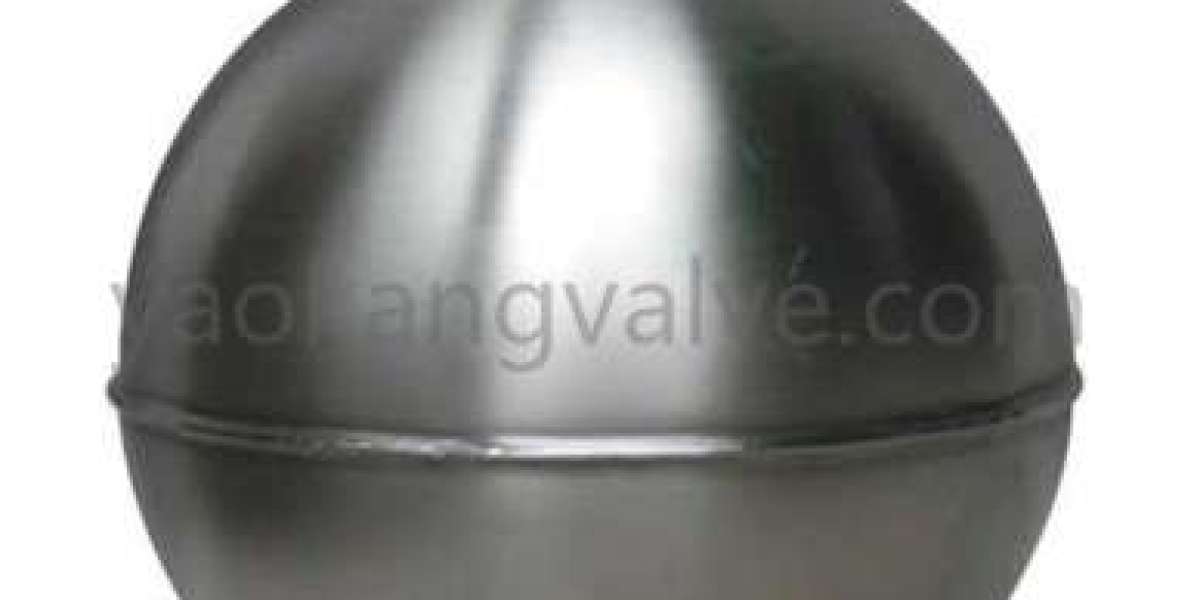

Fluid-control equipment may expose mechanical components to moisture, treated water, process liquids, or other demanding environments for extended periods. When selecting a Stainless Steel Float Ball Manufacturer, buyers should evaluate material control, production accuracy, surface quality, connection dimensions, inspection practices, and application knowledge rather than considering stainless construction alone.
Stainless steel is commonly evaluated for industrial applications because it can provide a combination of corrosion resistance and mechanical strength. However, different stainless grades have different characteristics. The correct material should be selected according to the liquid, temperature, cleaning conditions, surrounding environment, and other factors affecting the complete system.
A floating component operates through buoyancy. Changes in liquid level cause the component to move, and this movement can be transferred to a valve through a lever, stem, or related mechanism. Although the principle is relatively simple, consistent physical characteristics are important for predictable operation.
The component's geometry influences buoyancy and movement, making forming accuracy an important manufacturing consideration. Controlled forming can help maintain the intended shape and reduce deformation. Consistency between individual components is particularly important when they are installed in repeated equipment assemblies.
Machining can provide accurate connection features where required. Threads, mounting sections, and other interfaces need to correspond with the connected valve structure. Proper dimensional control can simplify assembly and help equipment manufacturers maintain consistent installation procedures.
Joining is another area that requires process control. Designs consisting of multiple sections may require welding or another joining technique. Heat and mechanical forces during joining can influence geometry, so appropriate procedures can help reduce deformation while maintaining structural integrity.
Surface management is important for components operating in liquid environments. Manufacturing residues and surface irregularities should be controlled through suitable finishing and cleaning procedures. The specific requirements depend on the intended application and may be influenced by cleanliness, corrosion exposure, and maintenance practices.
Quality inspection should begin before the final assembly stage. Material verification can establish consistency at the beginning of production. Dimensional inspection can monitor critical features during processing, while visual checks can identify surface or joining issues. Functional evaluation can be included when movement or operating characteristics need additional verification.
For OEM customers, batch-to-batch consistency is an important purchasing consideration. A Stainless Steel Float Ball Manufacturer should maintain controlled processes so that repeat orders remain compatible with existing equipment. Consistent production records and inspection procedures can help support long-term supply relationships.
Application conditions should guide the engineering process. A component used in general water equipment may experience different conditions from one installed in marine or chemical-processing equipment. Engineers should review liquid composition, temperature, installation position, movement range, connection requirements, and surrounding materials before confirming the final specification.
Automation also places greater emphasis on predictable mechanical behavior. A floating mechanism can interact with valves, sensors, switches, or other control elements. Consistent movement helps maintain a predictable relationship between the mechanical component and connected control equipment.
Customized production can be useful when standard designs cannot satisfy a particular equipment structure. Depending on manufacturing capabilities, customers may require different materials, connection configurations, shapes, or mounting arrangements. Providing technical drawings and application information allows engineering teams to assess these requirements before production.
International buyers should evaluate suppliers based on both manufacturing and technical capabilities. Material management, process consistency, inspection systems, engineering communication, customization experience, and familiarity with fluid-control applications can all contribute to a more informed sourcing decision.
Suitable material selection combined with controlled forming, accurate machining, careful joining, appropriate surface management, and systematic inspection provides a practical foundation for industrial liquid-level components. Companies evaluating related valve and fluid-control products can explore the available range at https://www.yaokangvalve.com/product/ as part of their supplier research.