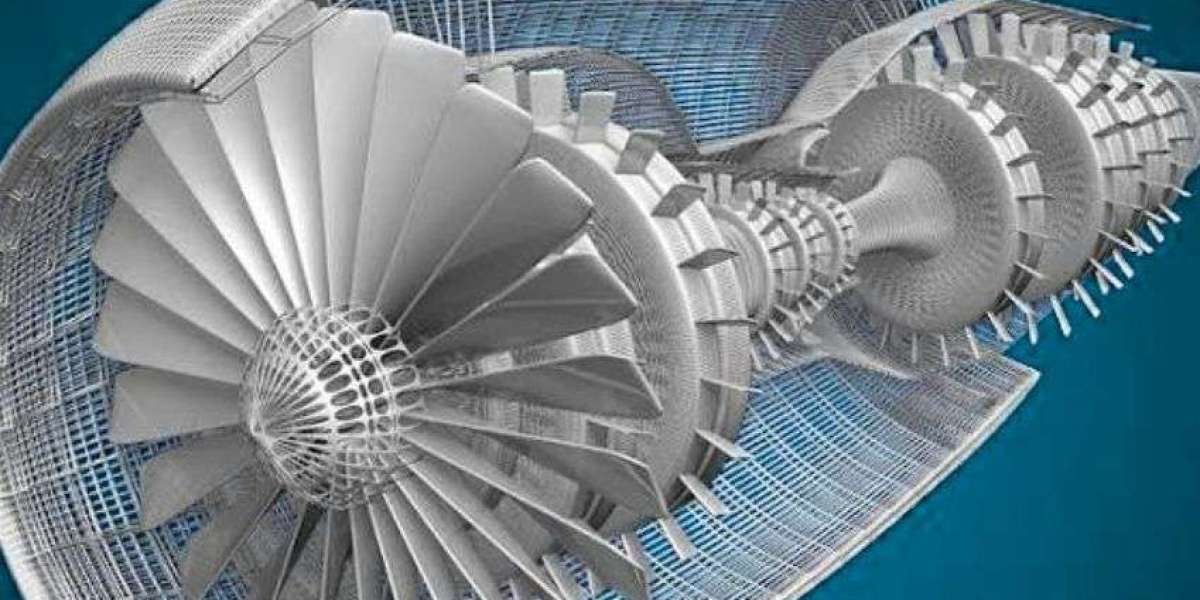

Additive manufacturing, commonly known as 3D printing, is changing how aerospace components are designed, produced, and maintained. Unlike conventional manufacturing methods that often involve cutting or shaping material from larger blocks, additive manufacturing builds components layer by layer. This approach allows engineers to create complex geometries while potentially reducing material waste and production time.
The global aerospace 3D printing market was valued at USD 4.53 Billion in 2025 and is expected to grow at a CAGR of 15.70% during the forecast period of 2026–2035, reaching a value of USD 19.47 Billion by 2035. The rapid adoption of advanced manufacturing technologies, increasing demand for lightweight aerospace components, and the need to improve production efficiency are supporting the expansion of 3D printing across the aerospace industry.
What Is Driving Aerospace 3D Printing?
The aerospace industry places strong emphasis on reducing aircraft weight while maintaining safety, durability, and performance. Even relatively small reductions in component weight can contribute to improvements in fuel efficiency and operational performance.
Additive manufacturing can support this objective by enabling engineers to develop lightweight structures and geometrically complex components that may be difficult or expensive to manufacture using traditional techniques.
Key Trends Shaping Aerospace Additive Manufacturing
Lightweight Component Production
Weight reduction is one of the most important applications of 3D printing in aerospace engineering. Additive manufacturing allows engineers to design components with internal structures, lattice patterns, and optimised geometries that can reduce weight while maintaining required strength.
Lightweight components can contribute to lower fuel consumption and improved aircraft efficiency. This makes additive manufacturing particularly attractive for aircraft manufacturers and suppliers seeking to optimise overall vehicle performance.
Design Freedom and Complex Geometries
Traditional manufacturing methods can limit the shapes and structures that engineers can produce economically. Additive manufacturing provides greater design flexibility by allowing complex geometries to be produced directly from digital models.
Engineers can combine multiple components into a single printed part in some applications. This can potentially reduce the number of joints, fasteners, and assembly steps required during production.
Advanced Aerospace Materials
Material development is another important area of innovation. Aerospace 3D printing increasingly involves advanced metals, polymers, and composite materials designed to meet demanding performance requirements.
Metal additive manufacturing is particularly relevant for components that require high strength and resistance to heat or mechanical stress. Research into new materials and improved printing processes is expected to expand the range of aerospace applications.
Reducing Material Waste
Conventional manufacturing can involve significant material removal when producing components from large blocks of metal or other materials. Additive manufacturing deposits material only where it is required to build the component.
This can reduce material waste in suitable applications and potentially improve resource efficiency. For high-value aerospace materials, reducing waste can also provide economic benefits by lowering material consumption during production.
3D Printing in Aircraft Maintenance
Additive manufacturing is not limited to new aircraft production. It can also support maintenance, repair, and replacement activities.
Airlines and maintenance providers can potentially produce selected replacement components closer to where they are needed, reducing dependence on large inventories and long supply chains. Digital design files can also support more flexible production strategies for certain approved components.
This capability can be particularly valuable when dealing with low-volume or difficult-to-source parts.
Additive Manufacturing in Space Applications
The technology is also creating opportunities beyond conventional aircraft manufacturing. Spacecraft and launch vehicles can benefit from lightweight components and complex designs produced through additive manufacturing.
3D printing can enable engineers to consolidate parts and develop specialised components for satellites, propulsion systems, and other space-related applications. The ability to manufacture components with complex geometries can support innovation in space engineering.
Digitalisation and Automation
The growing use of digital engineering is strengthening the role of additive manufacturing in aerospace. Computer-aided design, simulation, artificial intelligence, and automated production systems can work together to improve component development.
Engineers can simulate component performance before production, optimise designs, and adjust manufacturing parameters to improve consistency. Digital workflows can also create better connections between design, production, inspection, and quality control.
Challenges in Aerospace 3D Printing
Despite its advantages, additive manufacturing faces several challenges in aerospace applications. Components used in aircraft and spacecraft must meet strict safety, reliability, and performance requirements.
Manufacturers need to ensure consistent material properties and production quality across printed components. Certification and qualification processes can also be complex because aerospace parts must comply with stringent industry standards.
The cost of advanced printing equipment, specialised materials, skilled personnel, and post-processing can also remain a barrier, particularly for smaller manufacturers.
Future Growth Opportunities
The projected increase in the aerospace 3D printing market from USD 4.53 Billion in 2025 to USD 19.47 Billion by 2035 highlights substantial opportunities across the aerospace value chain.
Manufacturers can explore applications in aircraft interiors, structural components, engine parts, tooling, maintenance, and space systems. Continued improvements in printing speed, material performance, automation, and quality control could further expand the technology's commercial applications.
Partnerships between aerospace manufacturers, technology companies, material suppliers, and research institutions will also be important for developing and qualifying new additive manufacturing solutions.
Future Outlook
The future of additive manufacturing in aerospace engineering is expected to be shaped by the need for lighter, more efficient, and increasingly complex components. As printing technologies and materials improve, aerospace companies are likely to explore applications beyond prototyping and move towards greater use in end-use production.
The market's projected 15.70% CAGR between 2026 and 2035 reflects the growing interest in additive manufacturing as a strategic production technology. Improvements in certification, automation, material science, and digital engineering could accelerate its adoption across aircraft and space applications.