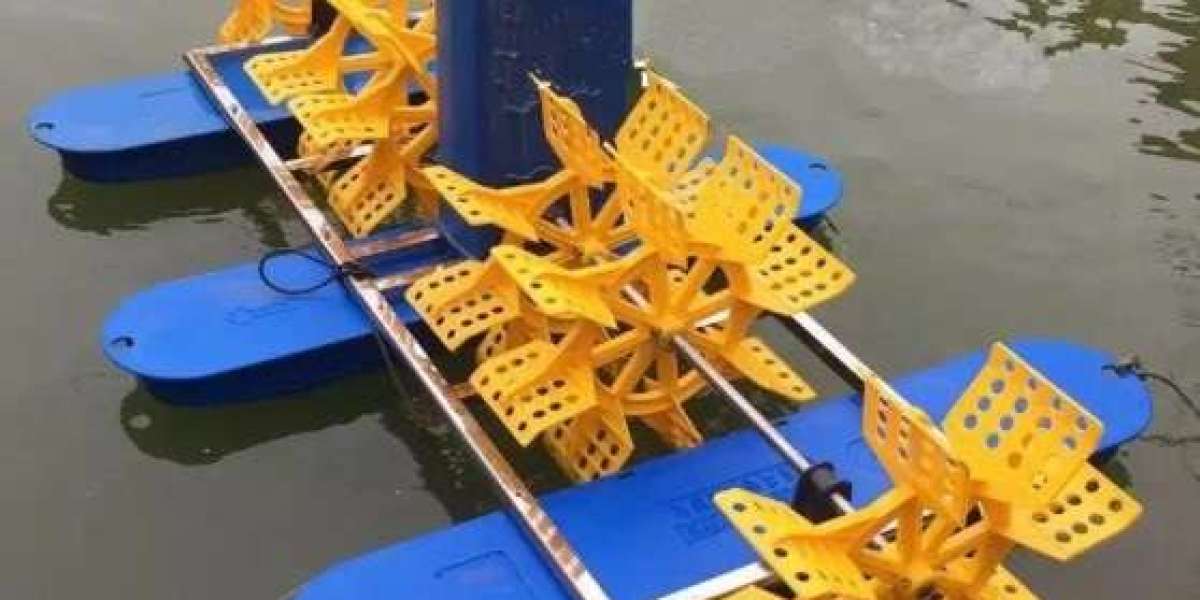

Different aquaculture ponds require different approaches to water movement, especially when farmers need to balance surface circulation with oxygen exchange. A Surge Aerator can create upward water movement that increases the contact between water and air, while a well-positioned Surge Aerator can also help move lower pond water toward the surface. Its working principle differs from conventional paddle wheel and impeller equipment, using a flower-shaped spiral impeller together with a floating bowl structure to produce an upward surge. This design creates visible surface activity while encouraging water circulation around the operating area. For fish and shrimp farms, such a configuration can be considered when the goal is to combine aeration with active water lifting and wave formation.
Understanding The Upward Surge Principle
The way an aerator moves water determines how it interacts with the pond environment. Instead of mainly pushing water horizontally, this type of equipment produces an upward eruption that spreads outward after reaching the surface.
The flower-shaped spiral impeller works together with the floating bowl to create this distinctive movement. As water is lifted and released upward, a larger portion of the water is exposed to surrounding air. The resulting turbulence can support air-water interaction while also creating circulation around the equipment.
This approach may be useful in ponds where vertical movement is an important part of the circulation strategy.
Bringing Lower Water Toward The Surface
Water conditions are not always uniform from the pond bottom to the surface. Different layers can contain different concentrations of gases and organic substances, so moving water between these areas can be an important part of pond management.
The product information describes the aerator as having strong water-lifting capacity, allowing bottom water to move upward and spread across the surface. This movement can help improve circulation between different water layers and may contribute to reducing certain undesirable substances in the pond environment.
For installation planning, operators can consider where stagnant areas may occur and position the equipment so its circulation pattern works with the existing pond layout.
Jinhulong Water-Cooling Structure
Long operating periods can place additional demands on aquaculture machinery. Heat management is therefore an important consideration when equipment is expected to run for extended periods.
This model uses a water circulation approach in which water moves around the motor and reducer. According to the product information, this water-cooling structure is intended to reduce overheating and help the equipment operate for longer periods. The aerator is also described as capable of normal operation at low voltages between 300 and 350V.
For farms where operating conditions fluctuate, these design details can be considered alongside power supply and expected running schedules.
Wave Formation And Pond Circulation
Surface waves are more than a visual effect when they are created as part of an aeration process. Moving water increases the area where water meets air, allowing the surface to remain active instead of completely still.
The surge design generates strong wave-making action, which can increase water-air contact. The product information also connects this process with aeration, air contact, algae photosynthesis, and ultraviolet exposure as part of broader pond-water management.
When several aeration devices are used, their positions should be planned carefully. Operators can consider pond shape, water depth, feeding areas, existing equipment, and circulation direction before deciding where each unit should be installed.
Selecting A Model For Different Ponds
Model selection should begin with the actual pond rather than simply focusing on equipment appearance. The listed YLZ-1.5 models include a 1.5 kW power rating, with 220V and 380V versions, while their listed loading areas differ. The product information also gives an aerobic capacity of 2.5 kg/h for these models.
These specifications provide a starting point for comparing equipment with the available power supply and pond conditions. Operators should also consider the number of units required, installation spacing, water depth, stocking conditions, and the desired circulation pattern.
A well-planned aeration layout can make better use of each machine's working area and help avoid concentrating water movement in only one section of the pond. Regular inspection should also cover the motor, reducer, floating structure, impeller, electrical connections, and other working components.
For fish and shrimp farmers looking for a different approach to pond circulation, upward water movement can offer another option alongside conventional aeration methods. The combination of wave formation, water lifting, water-air contact, and water-cooling operation makes this equipment suitable for consideration in various aquaculture environments. To explore more aeration machinery and related pond solutions, visit https://www.chinaaerator.net/ and review the available products for different water-management requirements.