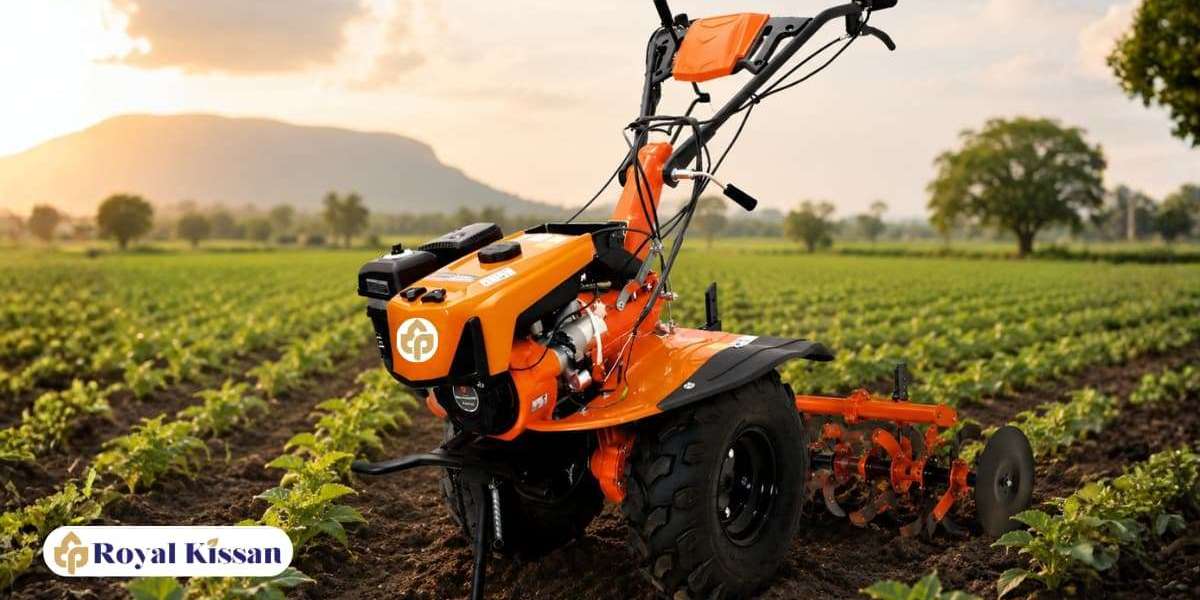

Power Weeder in India: Complete Maintenance Guide
A power weeder in India is an important agricultural machine used for weed control, soil preparation, inter-cultivation, and other farming operations. With increasing agricultural mechanization, farmers are choosing power weeders to reduce manual labor, save time, and improve field efficiency.
However, purchasing a power weeder is only the first step. Proper maintenance is essential to keep the machine working efficiently and extend its service life. Regular inspection and timely servicing can help prevent unexpected breakdowns, reduce repair expenses, and maintain consistent performance.
Royal Kissan , a leading agricultural machinery manufacturer, understands the demanding conditions in which agricultural equipment operates. Farmers across India may use machinery in different soil types, weather conditions, and farming applications, making proper maintenance particularly important.
Why Power Weeder Maintenance Is Important
Agricultural machinery frequently works in dusty, muddy, and uneven field conditions. Soil particles, moisture, crop residue, and continuous engine operation can gradually affect components such as blades, belts, filters, gears, and moving parts.
Regular maintenance helps farmers:
Maintain machine efficient performance
Reduce unnecessary fuel consumption
Minimize unexpected breakdowns
Increase component life
Maintain effective soil cultivation
Improve operator safety
Reduce long-term maintenance costs
A well-maintained power weeder can provide more dependable performance during important farming operations.
1. Clean the Power Weeder After Every Use
Cleaning is one of the simplest and most important maintenance practices.
After completing fieldwork, remove soil, mud, grass, roots, and crop residue from the machine. Pay particular attention to the rotary blades, transmission area, wheels, and underside of the machine.
Allow the machine to dry properly if it has been exposed to water or wet soil. Excess moisture left on metal components may contribute to corrosion over time.
Avoid directing high-pressure water at sensitive electrical or engine components unless the manufacturer's instructions specifically permit it.
2. Check the Engine Regularly
The engine is one of the most important components of a power weeder. Before operating the machine, inspect the engine for unusual noises, oil leakage, loose components, or other visible problems.
Check the engine oil according to the manufacturer's recommended schedule and use the correct grade of lubricant specified for your particular model.
Engine oil should be replaced at the recommended service interval. Operating with old, contaminated, or insufficient oil can increase component wear.
For diesel power weeders, regular attention to the engine and fuel system is especially important because these machines may be used for extended agricultural operations.
3. Maintain the Air Filter
Agricultural fields contain considerable amounts of dust. A clogged air filter can restrict airflow to the engine and affect performance.
Inspect the air filter regularly, particularly when operating in dusty conditions. Clean or replace the filter according to the manufacturer's maintenance instructions.
A clean air filter helps the engine receive the required airflow and supports efficient operation.
4. Inspect the Rotary Blades
The rotary blades are directly involved in soil cultivation and weed removal. Continuous contact with soil, stones, and roots can gradually cause wear.
Inspect the blades for:
Excessive wear
Cracks
Bending
Loose fasteners
Damage
Replace damaged or excessively worn blades rather than continuing to operate the machine with compromised components.
Sharp and properly maintained blades help the machine perform cultivation and weeding operations effectively.
5. Check the Gearbox and Transmission
The gearbox transfers engine power to the working mechanism and is therefore critical to machine performance.
Check gearbox oil levels and lubrication according to the manufacturer's recommended maintenance schedule. Inspect the transmission area for leakage or unusual sounds.
If the machine starts producing abnormal noise, vibration, or difficulty in changing gears, stop operation and have it inspected by a qualified technician.
Do not continue operating a machine when a significant transmission problem is suspected.
6. Inspect Belts, Cables, and Fasteners
Vibration during agricultural operations can gradually loosen nuts, bolts, and other fasteners.
Before regular use, inspect important connections and tighten loose components as recommended by the manufacturer.
Also check belts and cables for:
Cracks
Excessive wear
Fraying
Incorrect tension
Damage
Replacing worn components early can help prevent more serious mechanical problems.
7. Maintain the Fuel System
Fuel quality and storage are important for reliable engine performance.
Use the fuel recommended for your specific power weeder model. Keep the fuel tank and surrounding area clean and avoid allowing dirt or water to enter the fuel system.
If the machine will remain unused for an extended period, follow the manufacturer's storage instructions for fuel-system preparation.
For diesel power weeders, farmers should pay particular attention to fuel quality and filter maintenance.
8. Check Tyres and Wheels
Tyres provide traction and stability while the machine is operating in the field.
Inspect tyres regularly for:
Proper inflation
Cuts
Cracks
Excessive wear
Damage
Maintain tyre pressure according to the manufacturer's recommended specification. Incorrect tyre pressure can affect handling and machine stability.
9. Lubricate Moving Parts
Several moving components require appropriate lubrication to operate smoothly.
Follow the machine's service manual to identify lubrication points and recommended lubricants. Avoid applying excessive lubricant where it is not required, as it can attract dust and soil.
Regular lubrication helps reduce friction and component wear.
10. Check the Clutch and Controls
The clutch, throttle, gear controls, and other operating mechanisms should function smoothly.
Before starting fieldwork, check that controls respond correctly. If the clutch slips, the machine behaves unexpectedly, or a control becomes difficult to operate, arrange an inspection before continuing work.
Never ignore a control problem because it may affect safe operation.
11. Follow a Regular Service Schedule
Preventive maintenance is better than waiting for a breakdown.
Farmers should maintain a simple service record containing information such as:
Service date
Engine oil replacement
Air filter cleaning or replacement
Blade inspection
Gearbox inspection
Belt inspection
Lubrication
Repairs
Parts replaced
The exact service intervals should always follow the manufacturer's recommendations for the particular power weeder model.
12. Store the Power Weeder Correctly
Proper storage is especially important when the machine is not going to be used for several weeks or months.
Before storage:
Clean the machine thoroughly.
Remove soil and crop residue.
Inspect the blades and moving components.
Follow the manufacturer's fuel-storage instructions.
Store the machine in a dry, covered location.
Protect it from excessive moisture and direct weather exposure.
Check the machine before putting it back into operation.
Good storage practices help protect agricultural machinery from unnecessary deterioration.
Power Weeder in India: Maintenance Tips for Farmers
Indian farming conditions vary significantly from region to region. A power weeder may be used in dry soil, wet soil, orchards, vegetable fields, plantations, or other agricultural environments.
For this reason, maintenance requirements can vary depending on usage.
Farmers operating their machines in dusty environments should pay additional attention to air filters and cleaning. Those working in wet or muddy conditions should carefully clean and dry the equipment after use. Machines used for long hours may require more frequent inspection than equipment used occasionally.
The most important principle is simple: inspect the machine regularly and follow the manufacturer's maintenance recommendations.
Common Power Weeder Maintenance Mistakes to Avoid
Some maintenance problems occur because simple checks are ignored.
Avoid:
Operating with insufficient engine oil
Ignoring unusual sounds or vibrations
Using damaged rotary blades
Allowing soil to accumulate around moving parts
Neglecting air-filter maintenance
Using unsuitable lubricants
Ignoring loose bolts and fasteners
Storing the machine in an exposed location
Delaying recommended service
Using incorrect fuel
Addressing small issues early can help prevent larger repairs later.
Royal Kissan: Supporting Modern Agriculture in India
Royal Kissan is committed to supporting the modernization of Indian agriculture through dependable agricultural machinery. As an agricultural machinery manufacturer, the company focuses on developing equipment that helps farmers improve efficiency and reduce dependence on manual labor.
Power weeders are an important part of modern farm mechanization because they can support multiple agricultural operations, including weed management, soil preparation, and inter-cultivation.
For farmers considering a power weeder in India , it is important to evaluate not only engine power and machine specifications but also durability, service support, spare-parts availability, ease of operation, and maintenance requirements.
A reliable machine combined with proper maintenance can become a valuable long-term farming investment.
Conclusion
Maintaining a power weeder properly is essential for dependable agricultural performance. Regular cleaning, engine inspection, air-filter maintenance, blade checks, gearbox care, lubrication, tire inspection, and timely servicing can help keep the machine operating efficiently.
Farmers should always follow the maintenance schedule and technical recommendations provided for their specific power weeder model. Proper maintenance not only protects the machine but also helps farmers reduce avoidable downtime and operating problems.
With the growing adoption of agricultural mechanization in India, reliable equipment and responsible maintenance will continue to play an important role in improving farming efficiency. Royal Kissan aims to contribute to this transformation by providing agricultural machinery designed around the practical requirements of modern Indian farmers.