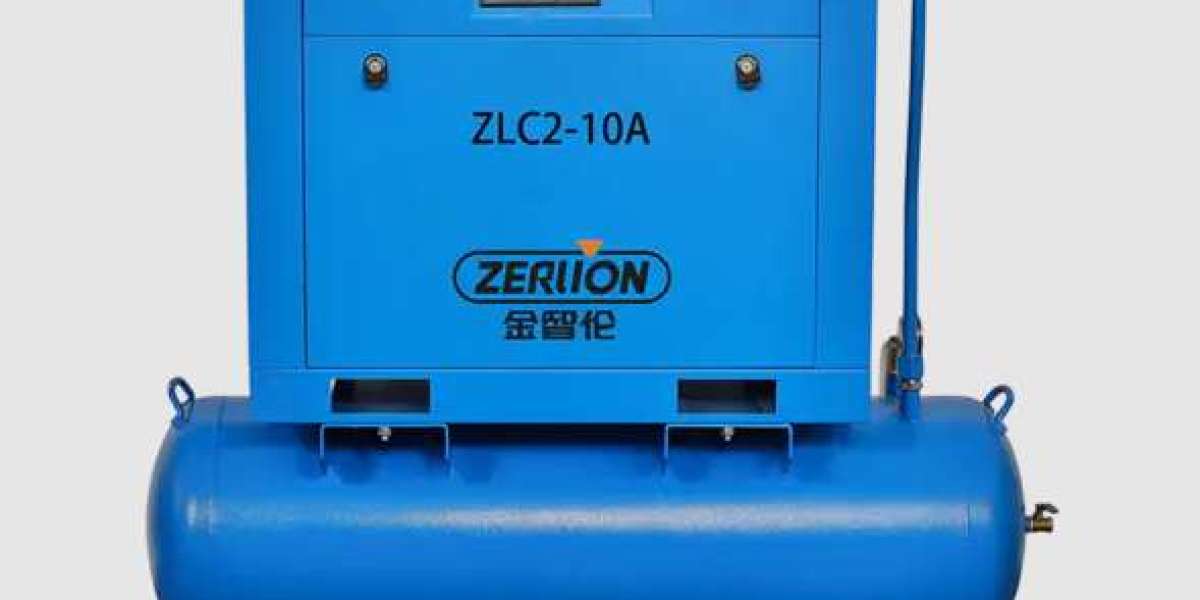

Compressed air does not always need to reach extremely high pressure. Many production processes operate at a lower pressure range, yet still require a stable supply for equipment, pneumatic tools, conveying systems, or air-assisted processes. In such situations, a Low-Pressure Screw Air Compressor can offer a practical approach to generating compressed air.
Screw compression technology uses rotating screw elements to compress incoming air continuously. Compared with systems designed around intermittent operation, this structure can suit applications that need a steady airflow during production. A Low-Pressure Screw Air Compressor can therefore fit factories where air demand remains relatively consistent during working hours.
Different industries have different air requirements. Packaging equipment may use compressed air for pneumatic movements, then textile machinery can need air for specific production functions. Food processing equipment, material handling systems, and general manufacturing lines may also use compressed air at pressure levels below those required for heavy pneumatic applications. A Low-Pressure Screw Air Compressor can be selected around these actual operating conditions.
Airflow demand is another important consideration. Choosing equipment only from a pressure figure can create an incomplete picture. Buyers should also consider required flow, operating hours, installation conditions, receiver capacity, and downstream equipment. If an application needs a large and stable airflow, compressor configuration becomes particularly important.
Control systems can also influence how equipment responds to changing demand. Production lines rarely consume exactly the same amount of air every minute. Some processes operate continuously, then others have short periods of higher demand. A Low-Pressure Screw Air Compressor can be integrated into a compressed-air system designed around these fluctuations.
For industrial buyers, physical installation should also receive attention. Available floor space, ventilation conditions, electrical requirements, piping layout, and access around the compressor can influence equipment selection. These factors should be considered before placing an order rather than after the machine arrives.
Different industries may also require different supporting components. Air receivers, filters, dryers, pressure controls, and distribution piping can all form part of a complete compressed-air system. A Low-Pressure Screw Air Compressor is only one part of that system, so buyers need to evaluate how each component interacts.
B2B purchasing decisions often involve more than selecting a machine from a specification sheet. Actual air consumption, pressure requirements, operating schedule, installation conditions, and production processes should all be reviewed together. For applications that do not require high-pressure output, a Low-Pressure Screw Air Compressor can provide a focused solution built around the pressure and airflow requirements of the production line.